Introduction to Artificial Intelligence
Introduction to Artificial Intelligence
What Is Artificial Intelligence?
Artificial Intelligence, or AI, is about creating machines that can think, learn, and solve problems like humans do. It's a broad field in computer science focused on simulating intelligent behavior in computers. Instead of just following a strict set of pre-programmed instructions, an AI system is designed to perceive its environment and take actions that maximize its chance of successfully achieving its goals.
Think of it this way: a regular calculator can perform complex math, but it only does what you tell it. An AI, on the other hand, can learn from data to make predictions or decisions on its own.
This ability to learn and adapt is what makes AI so powerful. The goal isn't just to mimic human intelligence, but to create systems that can handle tasks that are too complex, time-consuming, or dangerous for people.
A Quick Trip Through Time
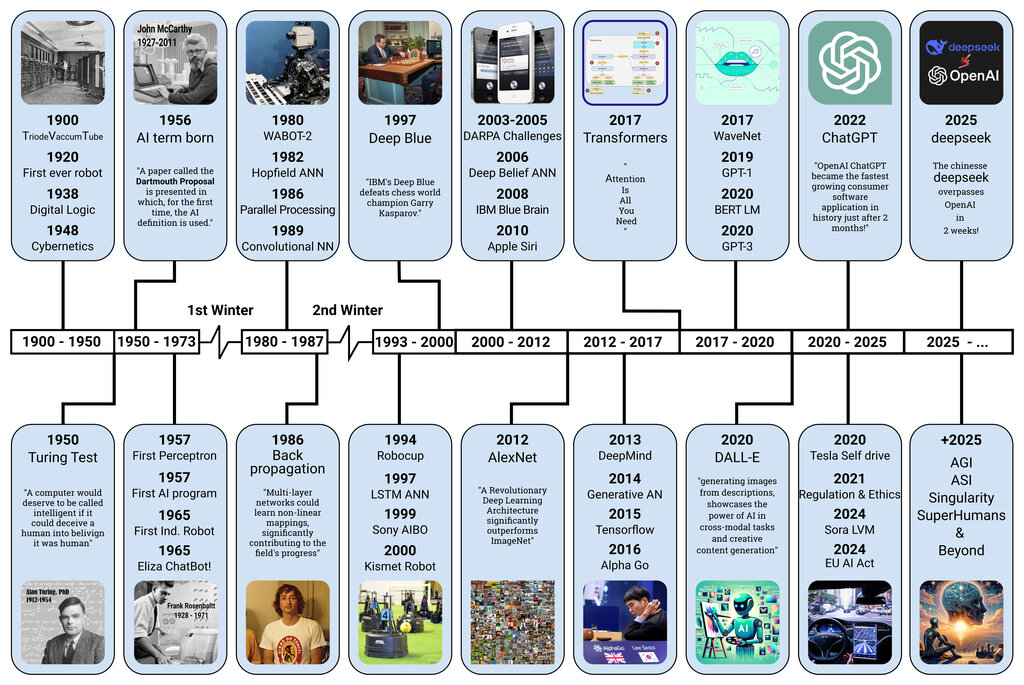
The idea of artificial beings with intelligence has been around for centuries, but the scientific field of AI is much younger. It officially began in the summer of 1956 at a workshop at Dartmouth College, where the term "artificial intelligence" was first coined.
Early researchers were incredibly optimistic. They believed that a machine as intelligent as a human being would exist in just a few decades. They made progress in areas like problem-solving and game playing, but the complexity of creating true intelligence was far greater than they imagined.
This led to periods known as "AI winters," when funding dried up and progress slowed. The initial excitement was met with the hard reality of computational limits and the sheer difficulty of tasks we humans find easy, like understanding language or recognizing objects in a photo.
However, breakthroughs in the 1990s and 2000s, fueled by faster computers and the availability of massive amounts of data, sparked a resurgence. The field shifted from trying to program rules for intelligence to creating systems that could learn those rules from data.
The Branches of AI
AI isn't just one thing; it's an umbrella term for several related fields. Each subfield focuses on a different aspect of intelligence. Let's look at three of the biggest ones.
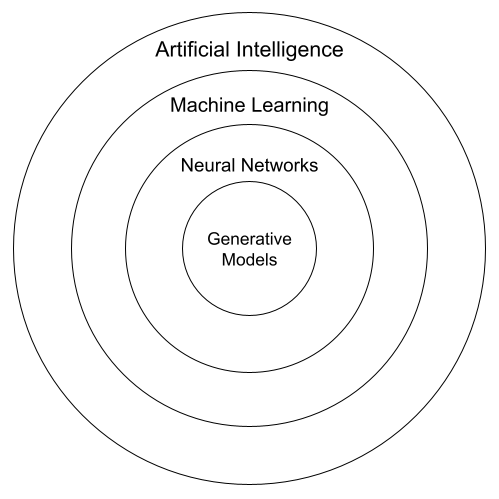
Machine Learning (ML) is the most common type of AI today. It's the science of getting computers to learn and act without being explicitly programmed. Instead of writing code for every possible scenario, developers create algorithms that allow the machine to learn patterns from vast amounts of data.
Natural Language Processing (NLP) focuses on the interaction between computers and human language. This field gives machines the ability to read, understand, interpret, and generate human languages. It's the technology that powers everything from translation apps to chatbots.
Robotics is the branch of AI that deals with building and operating robots. It combines computer science, engineering, and other disciplines to create machines that can move and interact with the physical world. While not all robots use AI, advanced robots use it to navigate complex environments and perform delicate tasks.
| Subfield | Core Focus | Example Task |
|---|---|---|
| Machine Learning | Learning patterns from data | Predicting stock prices |
| Natural Language Processing | Understanding and generating human language | Translating a sentence |
| Robotics | Interacting with the physical world | Assembling a car |
The Current State of AI
Today, AI research is advancing at an incredible pace. The combination of powerful computer hardware, sophisticated algorithms, and access to immense datasets has unlocked capabilities that were once science fiction. Researchers are constantly developing new models that can perform more complex tasks with greater accuracy.
The significance of this research is profound. It's not just about creating smarter machines; it's about developing new tools that can help us solve some of the world's most challenging problems. From discovering new medicines to understanding climate change, AI research is opening up new frontiers across science and technology.
The field of artificial intelligence (AI), regarded as one of the most enigmatic areas of science, has witnessed exponential growth in the past decade including a remarkably wide array of applications, having already impacted our everyday lives.
We've only scratched the surface of what's possible. Let's test your understanding of these foundational concepts.
What is the core capability that distinguishes an AI system from a traditional pre-programmed computer?
The periods in AI history characterized by reduced funding and slower progress due to unforeseen complexity are known as ______.