Introduction to Artificial Intelligence
Introduction to Artificial Intelligence
What Is Artificial Intelligence?
Artificial Intelligence, or AI, is a field of computer science focused on creating machines that can think, learn, and solve problems like humans. Instead of being explicitly programmed for every single task, AI systems are designed to recognize patterns, make predictions, and adapt to new information.
The core objective of AI is to build systems that can perform tasks that normally require human intelligence. This includes everything from understanding language to recognizing objects in a photo.
This ability to learn and adapt is what makes AI so powerful. It's the engine behind many modern technologies, from the recommendation algorithms that suggest what you should watch next to the software that helps doctors diagnose diseases. AI is about creating tools that can handle complexity and ambiguity, much like our own minds do.
A Quick History
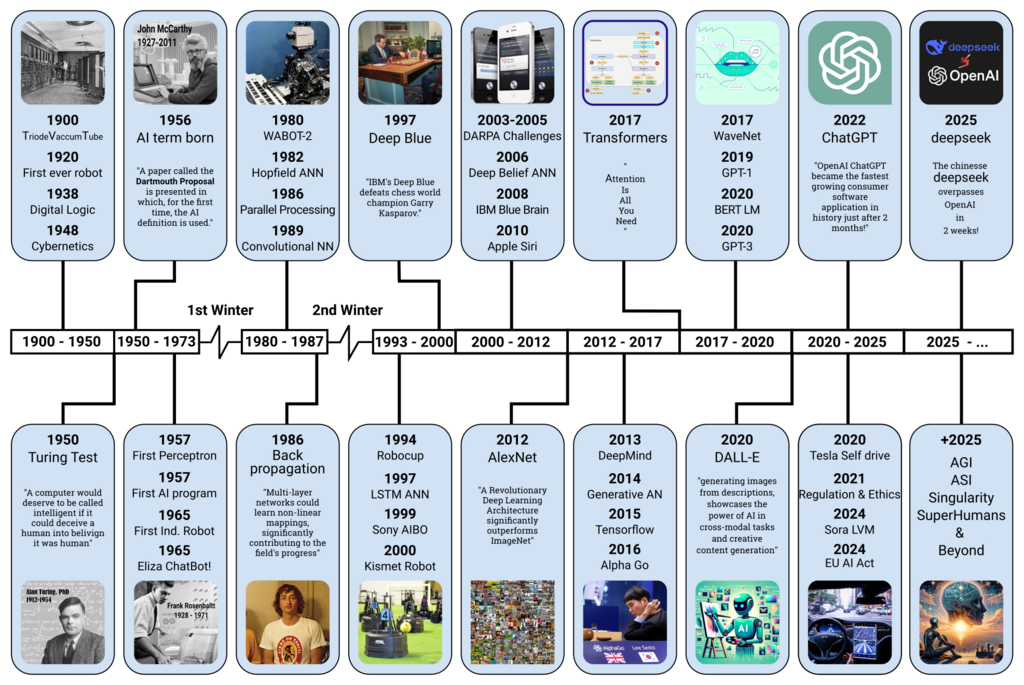
The dream of creating intelligent machines is ancient, but the formal field of AI is relatively new. It officially began in the summer of 1956 at a workshop at Dartmouth College, where the term "artificial intelligence" was first coined. Early researchers were optimistic, believing that a machine as intelligent as a human being was just a few decades away.
The history of artificial intelligence reveals a fascinating journey from philosophical thought experiments to technologies that are now reshaping our world.
Progress wasn't always a straight line. The field experienced several "AI winters"—periods when funding dried up and public interest waned because the technology couldn't live up to its initial hype. However, breakthroughs continued. In 1997, IBM's Deep Blue chess computer defeated world champion Garry Kasparov, a major milestone.
The last two decades have seen explosive growth, largely thanks to two things: the availability of massive amounts of data and significant increases in computing power. This combination fueled the rise of machine learning and deep learning, leading to the powerful AI we see today.
Two Kinds of AI
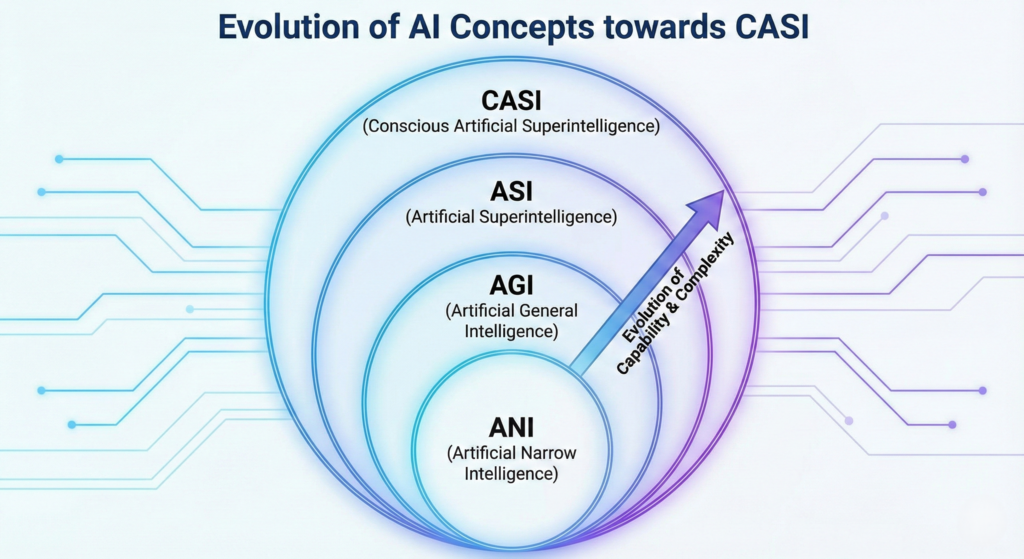
When people talk about AI, they are usually referring to one of two broad categories: Artificial Narrow Intelligence (ANI) or Artificial General Intelligence (AGI).
Artificial Narrow Intelligence
noun
AI that is designed to perform a single, specific task. It operates within a limited, pre-defined range and cannot perform tasks beyond its designated purpose.
ANI, sometimes called "Weak AI," is the only type of artificial intelligence we have successfully created so far. It’s everywhere. The spam filter in your email, voice assistants like Siri and Alexa, and the AI that recommends products on Amazon are all examples of narrow AI. They are incredibly effective at their specific jobs, but you can't ask your spam filter to give you driving directions.
Artificial General Intelligence
noun
A hypothetical type of AI that possesses the ability to understand, learn, and apply its intelligence to solve any problem, much like a human being.
AGI, or "Strong AI," is the kind of intelligence you often see in science fiction. It would have the flexible, creative, and abstract reasoning skills of a human. Building AGI is the ultimate goal for many AI researchers, but it remains a distant and incredibly complex challenge. Beyond AGI lies the concept of Artificial Superintelligence (ASI), an intellect that would far surpass the brightest human minds in virtually every field.
Time to review what you've just learned.
What is the primary focus of the field of Artificial Intelligence?
The term "artificial intelligence" was first coined at a workshop held at which institution in 1956?
Understanding these foundational ideas—what AI is, where it came from, and its different forms—is the first step to grasping its impact on our world.