Introduction to Artificial Intelligence
Introduction to Artificial Intelligence
What is AI?
Artificial intelligence, or AI, is a branch of computer science focused on building smart machines capable of tasks that typically require human intelligence. This includes things like learning from experience, solving problems, understanding language, and recognizing patterns in complex data.
The main goal isn't just to mimic human thought, but to create systems that can reason and act rationally. A rational agent is one that does the 'right' thing—it takes the best possible action in a situation to achieve its goals. This might involve anything from recommending a movie you'd like to navigating a self-driving car through city traffic.
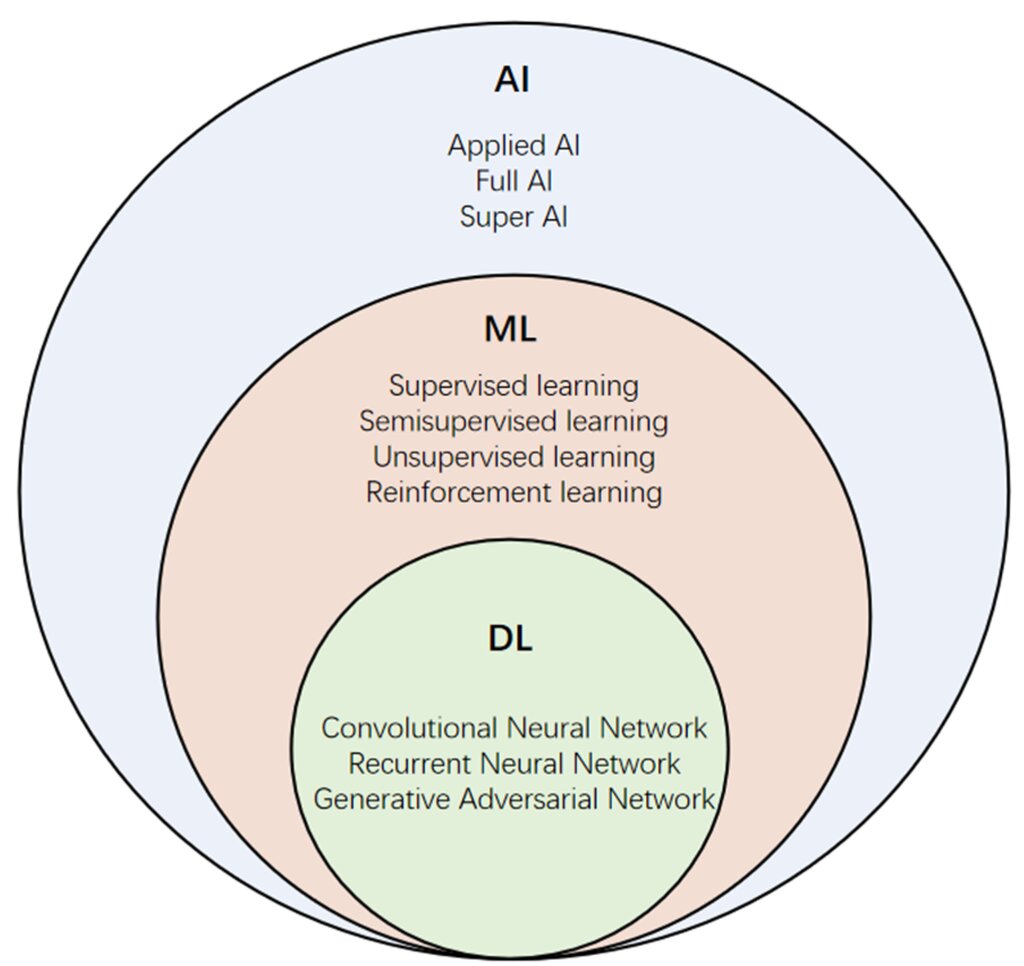
You'll often hear terms like 'machine learning' and 'deep learning' used alongside AI. They aren't the same thing, but they are related. Machine learning is a subset of AI where systems learn from data to improve their performance on a task without being explicitly programmed. Deep learning is a further subset of machine learning that uses complex, multi-layered neural networks to learn from vast amounts of data.
A Brief History
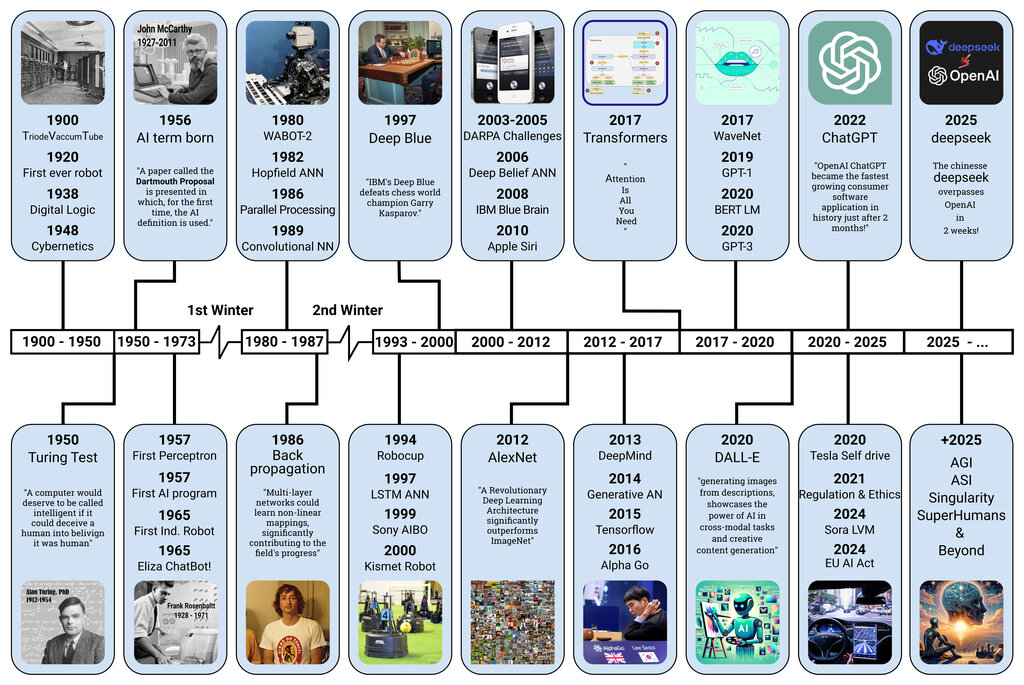
The idea of artificial beings with intelligence has been around for centuries, but the scientific field of AI is much younger. It officially began in the summer of 1956 at a workshop at Dartmouth College, where the term 'artificial intelligence' was coined. Early research was full of optimism, with pioneers predicting that machines with human-like intelligence were just a few decades away.
Progress was slower than expected. Early AI, known as symbolic AI or 'Good Old-Fashioned AI,' focused on writing rules to represent knowledge. This worked for well-defined, logical problems like playing chess, but it struggled with the messiness of the real world. A lack of computing power and data led to a period of reduced funding and interest known as the 'AI winter' in the 1970s and 80s.
The field saw a resurgence in the 1990s and has exploded in the 21st century. This boom was driven by two key factors: the availability of massive amounts of data (the internet) and the development of powerful, faster computers. This combination fueled the success of machine learning and, more recently, deep learning, leading to the powerful AI tools we see today.
Types of AI
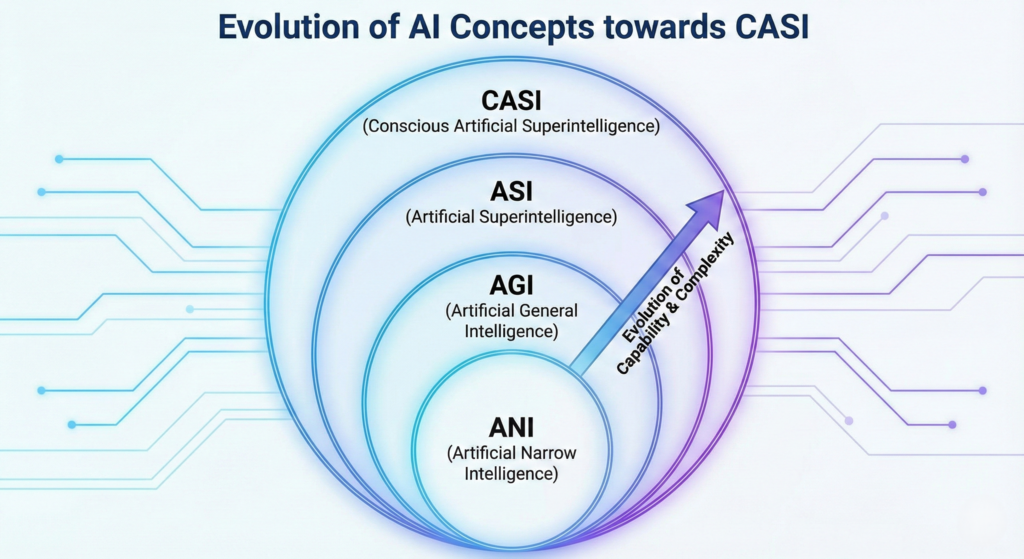
When we talk about AI, it's important to distinguish between the systems we have now and the systems we see in science fiction. AI is generally categorized into two main types: narrow and general.
Artificial Narrow Intelligence (ANI)
noun
Also known as Weak AI, this is AI that is designed and trained for a particular task. It operates within a limited, pre-defined range and cannot perform tasks beyond its specific domain.
All the AI we use today is ANI. This includes everything from the spam filter in your email to the AI that recommends products on Amazon. While these systems can be incredibly powerful and outperform humans at their specific tasks, they have no general understanding or consciousness. An AI that is brilliant at playing Go has no idea how to do your taxes or even what taxes are.
Narrow AI is a master of one trade. It excels at its single, designated task but lacks the flexibility and general understanding of a human.
Artificial General Intelligence (AGI)
noun
Also known as Strong AI, this is a theoretical form of AI where a machine would have intelligence equal to humans. It would have a self-aware consciousness and the ability to solve problems, learn, and plan for the future.
AGI is the type of AI you see in movies, like the androids in Westworld or HAL 9000 from 2001: A Space Odyssey. It would be able to understand the world with the same breadth and depth as a human being and could apply its knowledge to a wide range of different tasks. We are still a long way from developing AGI.
Capabilities and Limits
Today's AI systems (ANI) are incredibly capable. They can process and analyze data at a scale and speed humans can't match. This makes them excellent at tasks involving pattern recognition, prediction, and optimization.
However, they have significant limitations. AI systems lack common sense and a deep understanding of the world. They learn from the data they are given, which means they can inherit and even amplify biases present in that data. They are also brittle; they can fail in unexpected ways when faced with situations that fall outside their training. They don't 'understand' context in the same way a person does, which can lead to nonsensical or inappropriate outputs.
Time to check your understanding of these core concepts.
What is the primary goal of a "rational agent" in the context of AI?
Which statement accurately describes the relationship between AI, Machine Learning (ML), and Deep Learning (DL)?
Grasping these foundational ideas is the first step. You now have a framework for understanding what AI is, where it came from, and the key differences between the AI we have today and the AI of the future.