Introduction to Artificial Intelligence
Introduction to AI
What Is Artificial Intelligence?
Artificial intelligence (AI) is the science of making machines that can think and learn like humans. It's not about creating a single super-brain, but rather a broad field of computer science focused on building systems that can perform tasks requiring human intelligence. This includes things like recognizing speech, making decisions, translating languages, and identifying images.
Think of AI less as a specific technology and more as an umbrella term. Under this umbrella, you'll find numerous approaches and subfields, each tackling a different aspect of intelligence. The common thread is the goal of creating systems that can operate autonomously, adapting to new information and improving their performance over time without being explicitly programmed for every single task.
Algorithm
noun
A process or set of rules to be followed in calculations or other problem-solving operations, especially by a computer.
A Quick Trip Through Time
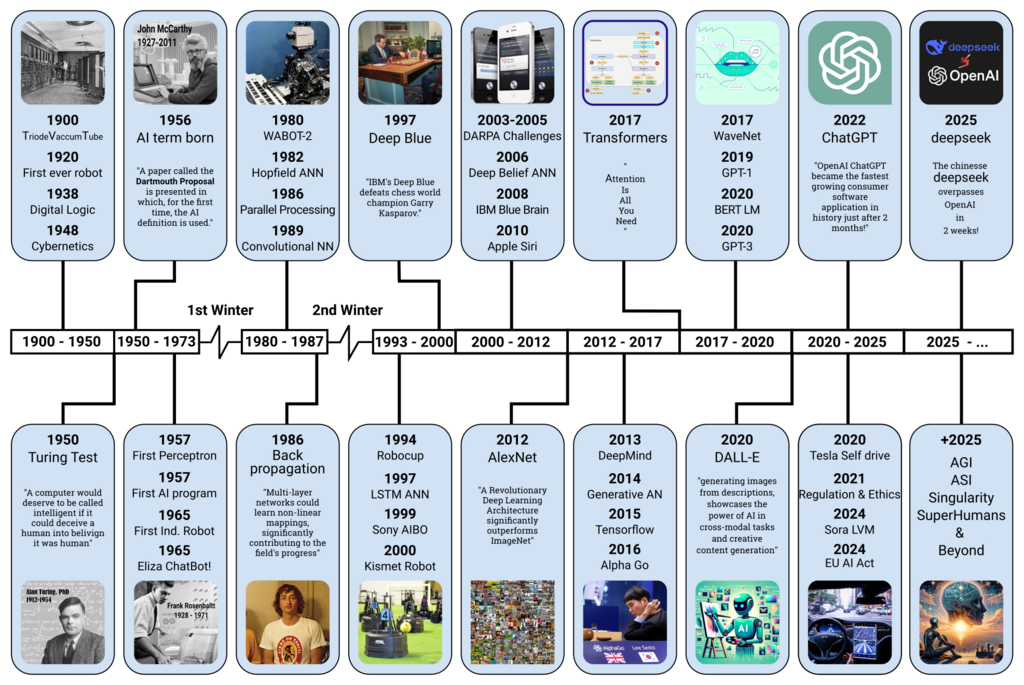
The dream of intelligent machines is ancient, but the formal field of AI research began in the summer of 1956 at a workshop at Dartmouth College. It was there that the term "artificial intelligence" was coined. Early researchers were incredibly optimistic, predicting that machines with human-like intelligence were just a few decades away.
Progress wasn't always a straight line. The field experienced several "AI winters"—periods when funding dried up and interest waned because the lofty promises of early AI couldn't be met with the technology of the time. However, breakthroughs in computing power and the availability of massive datasets in the late 20th and early 21st centuries led to a resurgence. This revival was powered by a subfield called machine learning, which changed the game entirely.
The Core Goals of AI
The ultimate goal of AI is to replicate or simulate human intelligence in machines. This broad objective can be broken down into several core principles that guide research and development:
Reasoning & Problem-Solving: The ability to use logic to solve problems and make decisions.
Knowledge Representation: Storing what the system knows or has learned in a way that it can be used for reasoning.
Planning: Setting goals and determining the best sequence of actions to achieve them.
Learning: Acquiring new knowledge and skills from data and experience, and improving over time.
Natural Language Processing (NLP): Understanding, interpreting, and generating human language.
Perception: Making sense of the world through sensory input, like images (computer vision) and sound (speech recognition).
The Branches of AI
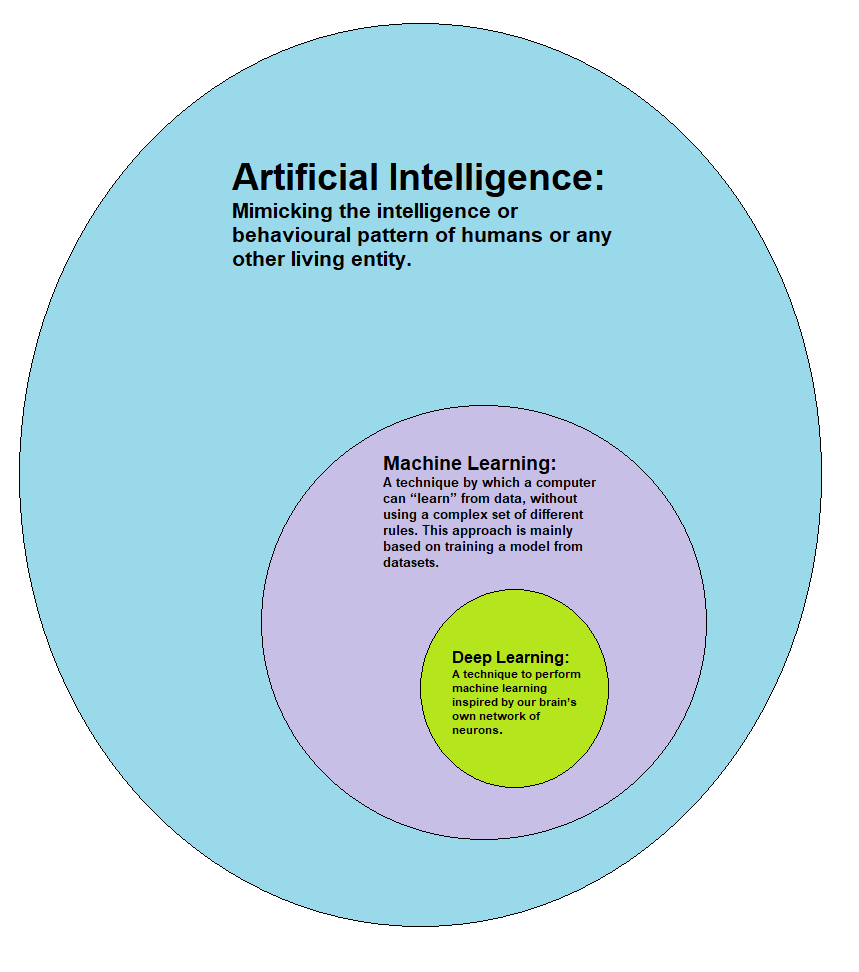
AI is a diverse field with many specializations. While these areas often overlap, they focus on different aspects of building intelligent systems. The most significant branch today is Machine Learning.
-
Machine Learning (ML): This is the most common type of AI in practice today. Instead of being programmed with explicit rules, ML systems are trained on large amounts of data, allowing them to learn patterns and make predictions. For example, an email spam filter learns to identify junk mail by analyzing millions of examples of spam and non-spam emails.
-
Deep Learning (DL): A powerful subfield of ML that uses structures called neural networks, which are inspired by the human brain. Deep learning is behind many of the most impressive AI advancements, like image recognition systems and sophisticated language models.
-
Natural Language Processing (NLP): This branch focuses on the interaction between computers and human language. NLP powers things like chatbots, language translation services (like Google Translate), and voice assistants (like Siri and Alexa).
-
Computer Vision: This field aims to give machines the ability to "see" and interpret visual information from the world. Applications include facial recognition, self-driving car navigation, and medical image analysis.
-
Robotics: This area combines AI with physical engineering to create robots that can move and interact with the physical world. AI provides the "brain" that controls the robot's actions.
Let's review these key concepts.
Ready to check your understanding?
What is the primary definition of Artificial Intelligence (AI) as described in the field?
The periods in AI history when funding and interest declined due to unfulfilled promises are known as:
Understanding these foundational ideas is the first step. From here, we can explore how these different branches of AI are applied to solve real-world problems.