Introduction to Artificial Intelligence
Introduction to Artificial Intelligence
What Is Artificial Intelligence?
At its core, artificial intelligence is about making machines smart. It's the science of teaching computers to perform tasks that typically require human intelligence, like learning from experience, understanding language, recognizing objects, and solving problems. Think of it less as creating a thinking robot from a movie and more as developing a specialized tool that can learn and adapt.
AI is the simulation of human intelligence processes by machines, especially computer systems.
This process relies on algorithms, which are sets of rules or instructions a computer follows to complete a task. By feeding vast amounts of data into these algorithms, the machine can learn to identify patterns and make predictions or decisions without being explicitly programmed for every single scenario. The more data it processes, the smarter it gets.
A Quick Trip Through Time
The idea of intelligent machines has been around for centuries, but the actual field of AI began in the 1950s. It was a time of great optimism, with pioneers believing that a machine as intelligent as a human being was just a few decades away.
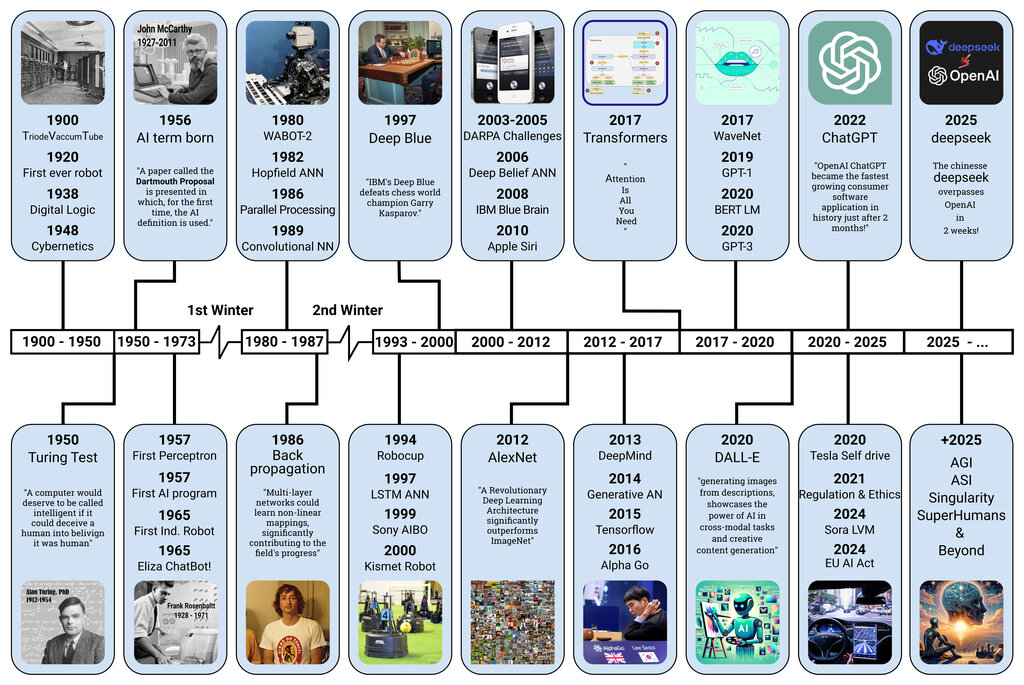
Progress wasn't a straight line. The journey included periods of excitement and major funding, followed by "AI winters" where progress stalled and interest waned. Early systems were good at specific, logical tasks but struggled with the common sense and flexibility that humans find easy.
The last couple of decades have seen an explosion in AI, largely thanks to two things: the availability of massive amounts of data (big data) and the development of much more powerful computers. These advances have made it possible to train complex AI models that are now part of our daily lives, from a simple web search to navigating with GPS.
The Building Blocks of AI
Artificial intelligence is a broad field with many sub-disciplines. You'll often hear terms like machine learning and neural networks used interchangeably with AI, but they're actually specific components within it.
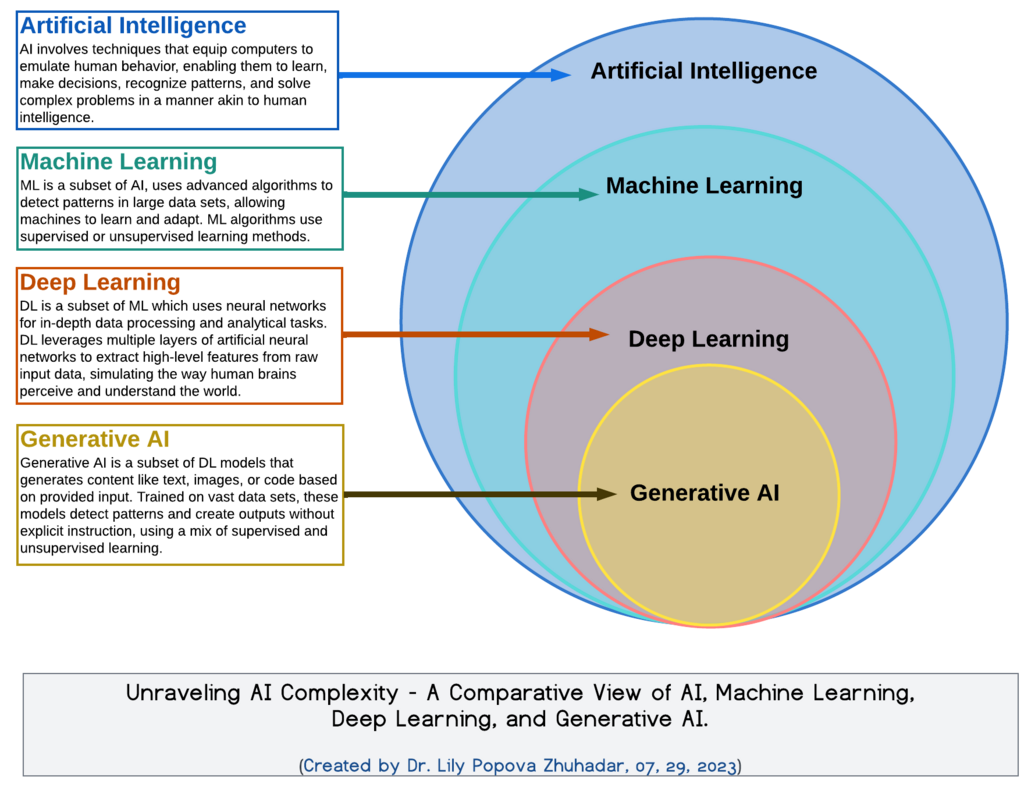
Let's break down these core concepts.
Algorithm
noun
A set of step-by-step instructions or rules that a computer follows to solve a problem or complete a task.
Algorithms are the foundation. They are the recipes that tell the AI what to do.
Machine Learning (ML) is a subset of AI. Instead of giving the computer instructions for every possible outcome, ML uses algorithms to analyze data, learn from it, and then make a determination or prediction. For example, your email service uses ML to learn what spam looks like and automatically filter it out.
Neural Networks are a type of machine learning inspired by the human brain. They are made of layers of interconnected nodes, or "neurons," that process information. When a neural network is trained on data, the connections between its neurons are adjusted, allowing it to recognize complex patterns in images, sounds, and text.
Why AI Matters
Artificial intelligence is more than just a buzzword; it's a technology that is fundamentally changing how we live and work. It has the power to analyze huge datasets far beyond human capability, uncovering insights that can lead to medical breakthroughs, more efficient business operations, and solutions to global challenges like climate change.
From personalized recommendations on streaming services to the voice assistants on our phones, AI is already woven into the fabric of modern society. It's helping doctors diagnose diseases earlier, enabling farmers to grow more food with fewer resources, and making transportation safer.
Artificial intelligence (AI) is a wide-ranging tool that enables people to rethink how we integrate information, analyze data, and use the resulting insights to improve decision making—and already it is transforming every walk of life.
Understanding the basics of AI is no longer just for computer scientists. It's becoming essential for everyone to grasp how these powerful tools work and to think critically about their impact on the world.
What is the primary goal of artificial intelligence?
What two main factors have driven the recent explosion in AI development?
As we move forward, a solid grasp of these foundational ideas will help you navigate the evolving landscape of technology and its role in our future.