Introduction to Artificial Intelligence
Introduction to Artificial Intelligence
What Is Artificial Intelligence?
Artificial intelligence is about making machines smart. The goal is to create systems that can perform tasks that typically require human intelligence, like learning, reasoning, problem-solving, and understanding language.
Artificial Intelligence
noun
The theory and development of computer systems able to perform tasks that normally require human intelligence.
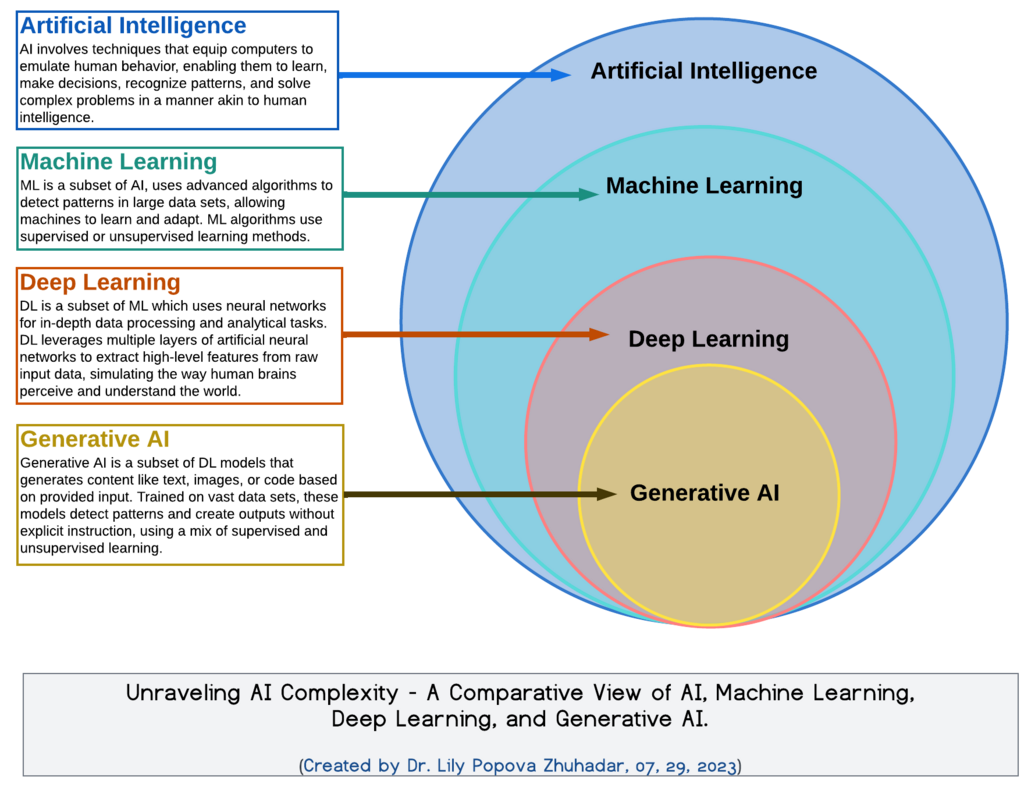
Think of it this way: when you recognize a friend's face in a photo, you're using your natural intelligence. AI tries to build machines that can do the same thing. This broad field includes more specific areas like machine learning and deep learning, which are ways to achieve this goal.
Two Kinds of AI
AI isn't a single entity. It's helpful to think of it in two main categories: the AI we have today and the AI we see in movies.
Artificial Narrow Intelligence (ANI) is what we have now. It's AI that is designed for a specific task. Your phone's voice assistant, the recommendation engine on a streaming service, or a spam filter for your email are all examples of narrow AI. They're very good at their one job, but they can't operate outside of it.
Artificial General Intelligence (AGI) is the stuff of science fiction, for now. This is a type of AI that could understand, learn, and apply knowledge across a wide range of tasks at a human level. An AGI could write a poem, compose music, and then figure out a complex scientific problem, all with the same general intelligence. We are not there yet.
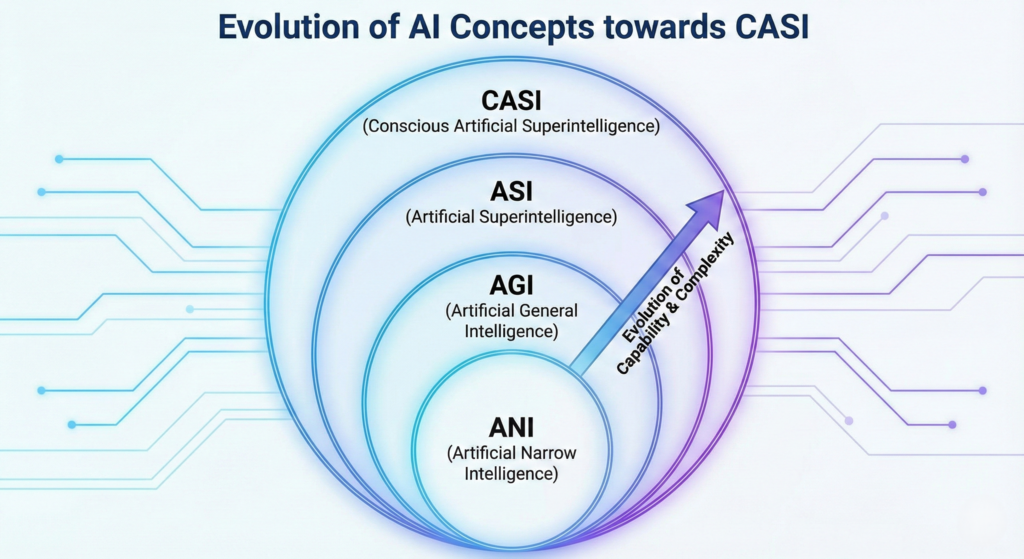
The distinction is crucial. All the AI you interact with daily is narrow AI. It's powerful but limited. AGI remains a long-term goal for researchers.
A Brief History of AI
The idea of thinking machines has been around for centuries, but the modern field of AI officially began in the summer of 1956. A group of researchers gathered at Dartmouth College for a workshop where they coined the term "artificial intelligence" and laid out the field's ambitious goals.
The modern journey of AI began with pioneers who believed thinking machines were possible.
The early years were filled with excitement and major breakthroughs. Computers learned to play checkers and solve word problems. But progress was slower than expected. The complexity of creating true intelligence led to periods known as "AI winters," when funding and interest dried up because the promises outpaced the reality.
Things began to change in the late 1990s and 2000s. A combination of more powerful computers and the availability of vast amounts of data fueled the rise of machine learning. Instead of programming rules by hand, developers could train systems on data to learn patterns on their own.
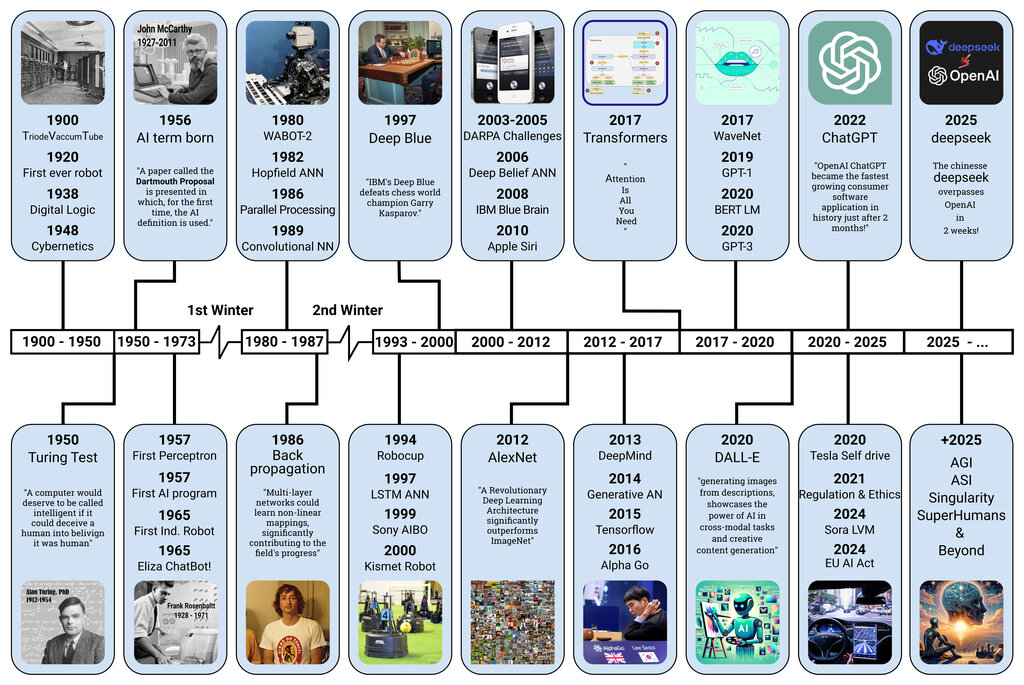
This led to some major milestones:
- 1997: IBM's Deep Blue computer defeated world chess champion Garry Kasparov.
- 2011: IBM's Watson won the quiz show Jeopardy!, showcasing its ability to understand natural language.
- 2016: Google DeepMind's AlphaGo beat Lee Sedol, a world champion Go player, a feat many thought was decades away.
- 2022: The public release of ChatGPT introduced millions to the power of large language models, capable of generating human-like text.
These events weren't just impressive stunts. They demonstrated significant leaps in AI's capabilities and pushed the field into the mainstream.
Now that you have a grasp of the basics, let's test your knowledge.
What is the primary goal of artificial intelligence?
The type of AI seen in science fiction that possesses human-like intelligence across a wide range of tasks is known as:
Understanding these foundational concepts is the first step in appreciating the power and potential of artificial intelligence.