Introduction to Artificial Intelligence
Introduction to AI
What Is AI Anyway?
Artificial Intelligence (AI) is about building machines that can think, learn, and act in ways that normally require human intelligence. It's not just about futuristic robots. It's the software that lets your phone recognize your face, a streaming service recommend a movie, or a navigation app find the fastest route through traffic.
The core goal of AI is to create systems that can perform tasks intelligently, from understanding language to solving complex problems.
Think of it this way: when you learn to ride a bike, you're not just following a set of pre-programmed instructions. You perceive your surroundings, make decisions in real-time, and learn from your mistakes. AI aims to give machines similar capabilities. The ultimate objective is to create technology that can reason, represent knowledge, plan, learn, communicate in natural language, and perceive the world around it.
A Family of Ideas
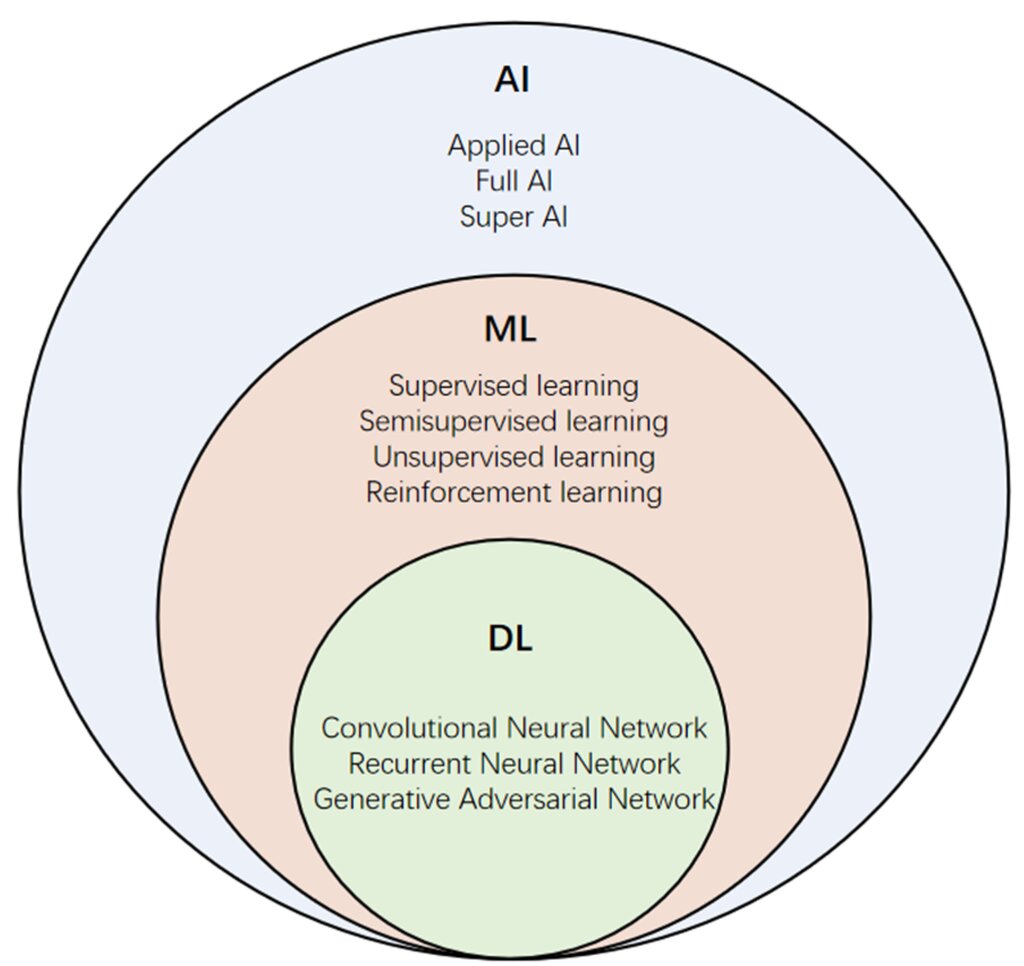
The term AI is often used interchangeably with other buzzwords like "machine learning" and "data science," but they aren't the same thing. They are related, but distinct, fields.
-
Artificial Intelligence (AI) is the broadest concept. It's the entire field dedicated to creating intelligent machines. It includes many different methods and approaches.
-
Machine Learning (ML) is a subset of AI. Instead of being explicitly programmed to perform a task, a machine learning system is trained on large amounts of data. It learns patterns from that data and then uses those patterns to make predictions or decisions. Most of the AI you interact with today is powered by machine learning.
-
Data Science is a related field that overlaps with AI and ML. It's a broader discipline that involves extracting insights and knowledge from data using scientific methods, processes, and algorithms. A data scientist might use machine learning as a tool to analyze data and make predictions, but their work also includes data cleaning, analysis, and visualization.
So, all machine learning is AI, but not all AI is machine learning. Data science uses both, but is its own distinct field focused on interpreting data.
Why AI Matters
AI is becoming fundamental to modern life because it offers a new way to solve problems. For centuries, we've relied on human brainpower or rigid, programmed automation. AI provides a third option: systems that can adapt, learn, and operate with a degree of autonomy.
This technology has the power to analyze vast amounts of information far beyond human capacity, uncovering patterns and insights that can lead to better decision-making. It's changing how we approach everything from scientific research to everyday logistics, making processes more efficient and personalized. Understanding these core concepts is the first step to seeing how AI is reshaping our world.
Which of the following best defines the primary goal of Artificial Intelligence (AI)?
Machine Learning is a subset of Artificial Intelligence.