Introduction to Artificial Intelligence
Introduction to Artificial Intelligence
What Is Artificial Intelligence?
Artificial intelligence, or AI, is the science of making computers do things that normally require human intelligence. This includes tasks like understanding language, recognizing images, making decisions, and solving problems. Think of it less as creating a conscious robot and more as building specialized tools that can learn and reason.
At its core, AI is about simulating human thought processes in a machine. Instead of programming a computer with a rigid set of instructions for every possible scenario, we design it to adapt and learn on its own.
The Journey of AI
The dream of intelligent machines is ancient, but the formal field of AI research began in the summer of 1956. A group of scientists gathered for a workshop at Dartmouth College to explore the idea that “every aspect of learning or any other feature of intelligence can in principle be so precisely described that a machine can be made to simulate it.” It was here that computer scientist John McCarthy coined the term “artificial intelligence.”
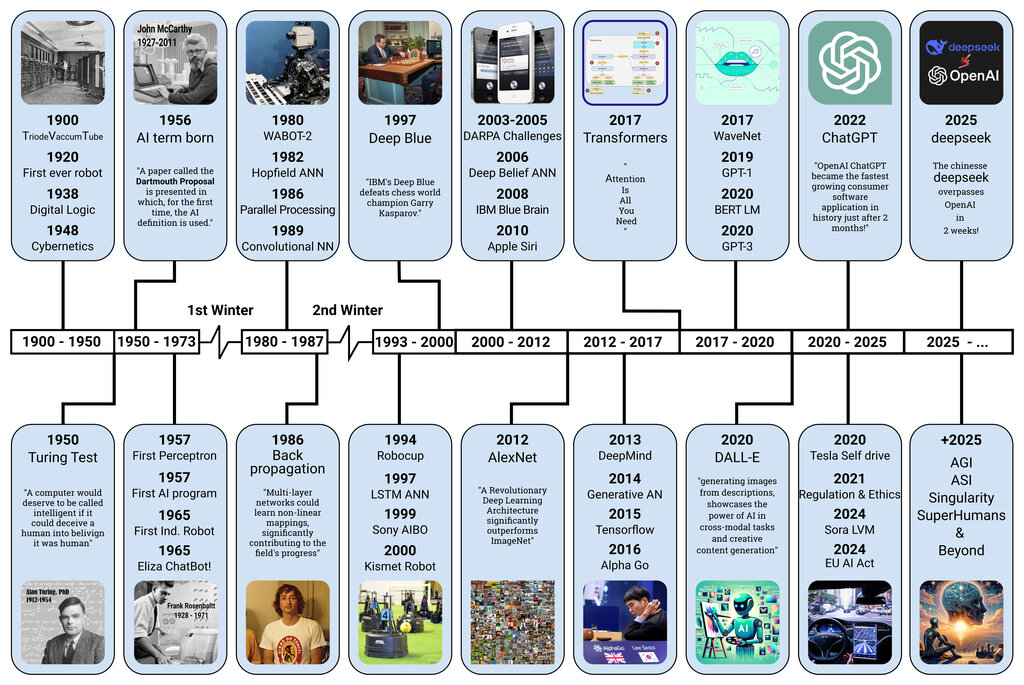
Early AI research, often called Symbolic AI or “Good Old-Fashioned AI” (GOFAI), focused on logic and rules. Researchers tried to program computers with the rules of human knowledge. For example, to understand language, they would feed the computer a vast set of grammatical rules. This approach had some early successes but quickly hit a wall. Human knowledge is often messy, intuitive, and hard to capture in a neat list of rules. Progress slowed, leading to periods known as “AI winters,” when funding and interest dried up.
A New Way to Learn
By the 1980s and 90s, a different approach gained traction: Machine Learning. Instead of teaching computers rules, researchers started letting them learn from data. You don't teach a child to recognize a dog by listing features like “four legs, fur, a tail.” They learn by seeing many examples of dogs. Machine learning works the same way. By processing thousands of labeled images of dogs, an algorithm can learn to identify a dog in a new picture.
This shift was a game-changer. A landmark moment came in 1997 when IBM's chess computer, Deep Blue, defeated world champion Garry Kasparov. Deep Blue didn't win by being programmed with every possible chess strategy. It learned by analyzing millions of games.
Deep Learning is a powerful subfield of machine learning. It uses structures called artificial neural networks, which are loosely inspired by the connections in the human brain. These networks have multiple layers that allow them to learn complex patterns from vast amounts of data. A major breakthrough happened in 2012 when a deep learning model named AlexNet made a huge leap in image recognition accuracy. This event kicked off the modern AI boom.
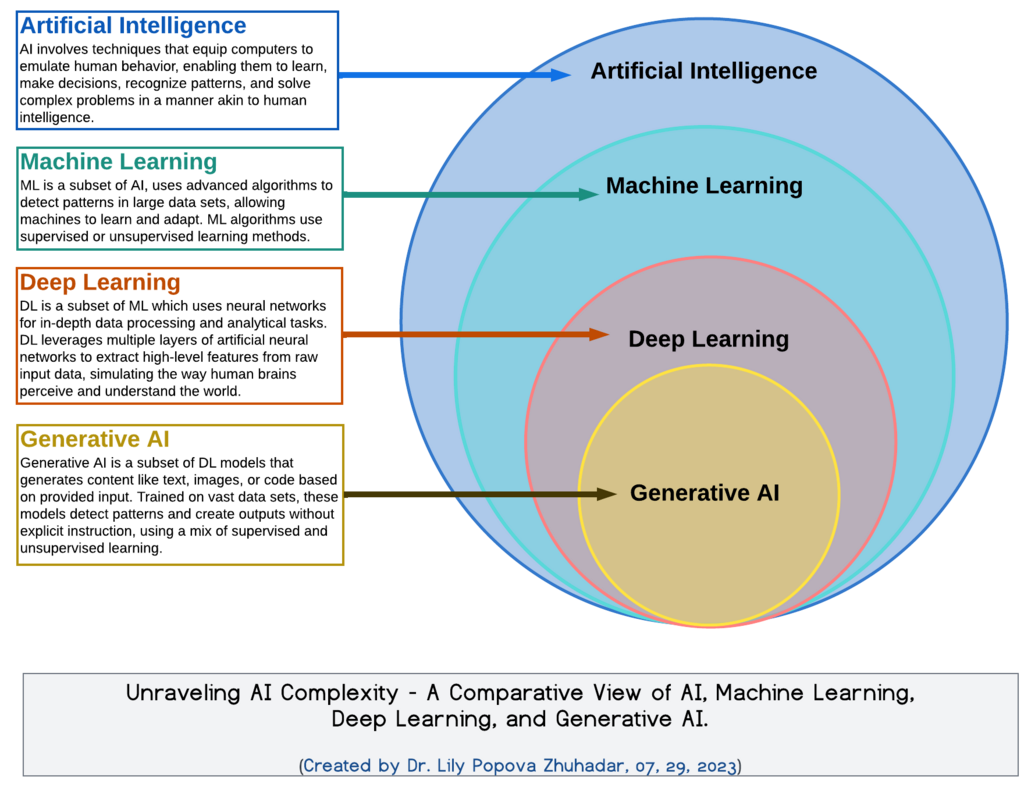
This evolution from rule-based systems to data-driven learning is the key to understanding modern AI. The pioneers of these fields, like Alan Turing who proposed a test for machine intelligence, John McCarthy who gave the field its name, and deep learning visionaries like Geoffrey Hinton and Yann LeCun, laid the groundwork for the technology we use every day.
Let's review what we've covered.
What is the core concept of artificial intelligence as described in the text?
The early approach to AI, known as Symbolic AI or GOFAI, was primarily based on what?
From early logical rules to systems that learn from data, the history of AI is a story of evolving ideas about how to create intelligence.