Introduction to Artificial Intelligence
Introduction to Artificial Intelligence
What Is Artificial Intelligence?
At its heart, artificial intelligence is about building machines that can think and learn like humans. It's a field of computer science dedicated to creating systems that can perform tasks that normally require human intelligence. This includes things like recognizing speech, making decisions, and translating languages.
Artificial Intelligence (AI) refers to the simulation of human intelligence processes by machines, especially computer systems.
Think about how you learn. You take in information from the world around you, process it, identify patterns, and use those patterns to make future choices. The goal of AI is to get computers to do the same thing, but on a much larger scale and at incredible speeds. It's not about creating conscious robots from science fiction, but about developing practical tools that can solve real-world problems.
A Quick Trip Through Time
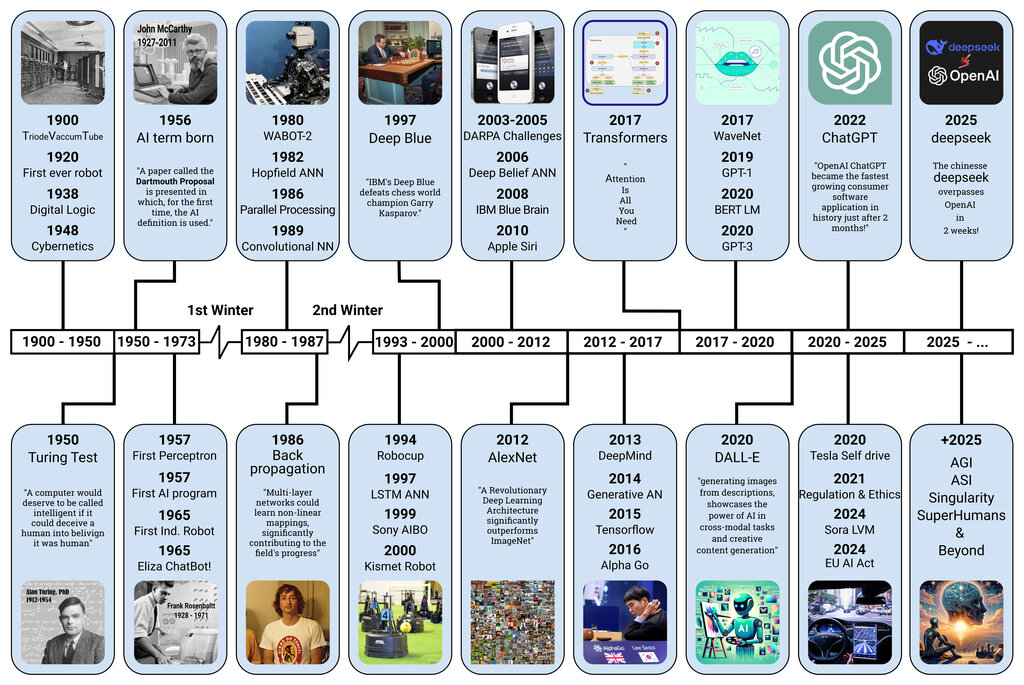
The idea of intelligent machines has been around for centuries, but the formal study of AI began in the mid-20th century. In 1950, computer scientist Alan Turing proposed a test, now called the Turing Test, to see if a machine could exhibit intelligent behavior indistinguishable from that of a human.
A few years later, in 1956, the term "artificial intelligence" was officially coined at a workshop at Dartmouth College. This event brought together the founding fathers of the field and kicked off decades of research.
The journey wasn't always smooth. There were periods known as "AI winters," when progress stalled and funding dried up. But breakthroughs in computing power and the availability of massive amounts of data led to a resurgence. Today, we are in an AI boom, driven by advances in machine learning and deep learning, which are subfields of AI.
Why AI Matters Now
AI is no longer just a concept in a research lab; it's a technology that is reshaping our world. It powers the recommendation engines that suggest what you should watch or listen to next. It's behind the virtual assistants on your phone and the spam filters in your email.
Beyond our daily lives, AI is transforming entire industries. In healthcare, it helps doctors diagnose diseases earlier and more accurately. In finance, it detects fraudulent transactions in real-time. In transportation, it's the brain behind self-driving cars. AI's ability to analyze vast datasets and find hidden patterns allows us to tackle complex challenges in science, business, and society.
The Core Goals of AI
Researchers in artificial intelligence focus on several core goals. These are the fundamental abilities they try to build into machines.
Learning: This involves acquiring data and creating rules for how to turn that data into actionable information. Just as we learn from experience, AI systems learn from data to improve their performance over time.
Reasoning: This is the ability to use the rules to reach conclusions. This can involve both formal logic, like in a math proof, and more intuitive judgments to solve problems where information is incomplete.
Problem-Solving: This goal combines learning and reasoning to achieve a specific objective. This could be anything from finding the shortest route for a delivery truck to winning a complex strategy game like chess or Go.
Perception: This is the ability to use input from sensors, like cameras and microphones, to understand the world. This allows an AI to see, hear, and feel its environment, which is crucial for tasks like navigating a robot or transcribing spoken words.
Now that you have an overview of what AI is and where it came from, let's test your knowledge.
What is the fundamental goal of artificial intelligence as described in the field's modern context?
The term "artificial intelligence" was officially coined at a workshop at Dartmouth College in 1956.
Understanding these fundamentals provides a solid base for exploring the more specific applications and concepts of artificial intelligence.