Introduction to Artificial Intelligence
Introduction to Artificial Intelligence
What Is Artificial Intelligence?
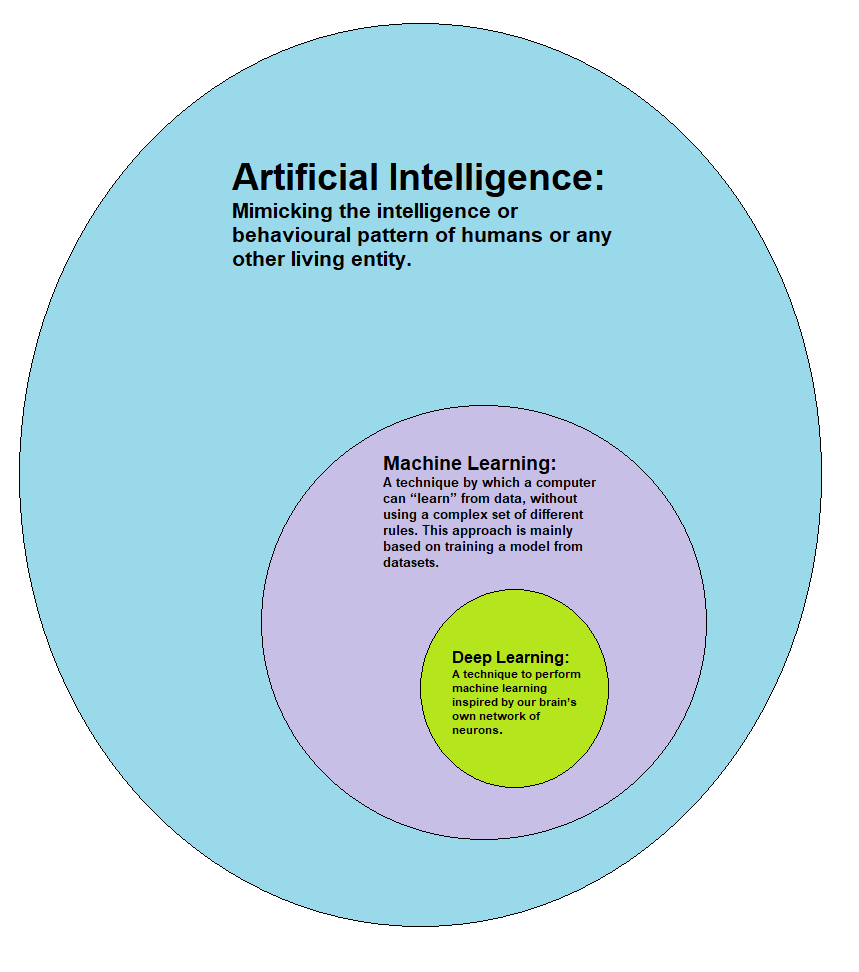
Artificial intelligence, or AI, is about creating machines and computer systems that can perform tasks that typically require human intelligence. This includes abilities like learning from experience, solving problems, understanding language, and recognizing patterns in the world around us. At its core, AI is the science of making things smart.
Artificial Intelligence
noun
The theory and development of computer systems able to perform tasks that normally require human intelligence, such as visual perception, speech recognition, decision-making, and translation between languages.
Think about how you learn. You observe, you try things, and you get better over time. The goal of many AI systems is to do something similar. Instead of being explicitly programmed for every single task, they are designed to adapt and improve on their own. This ability to learn is what makes AI so powerful and versatile.
The central idea of AI is simple: to build machines that can think and learn like humans.
A Brief History of AI
The dream of intelligent machines has been around for centuries, but the formal field of AI research is relatively new. It officially began in the summer of 1956 at a workshop at Dartmouth College. It was there that the term "artificial intelligence" was first used, and the pioneers of the field laid out its ambitious goals.
The early years were filled with excitement and bold predictions. Researchers developed programs that could solve algebra problems, prove theorems in logic, and speak simple English. But the initial optimism soon faced a reality check. The complexity of creating true intelligence was far greater than anyone had imagined.
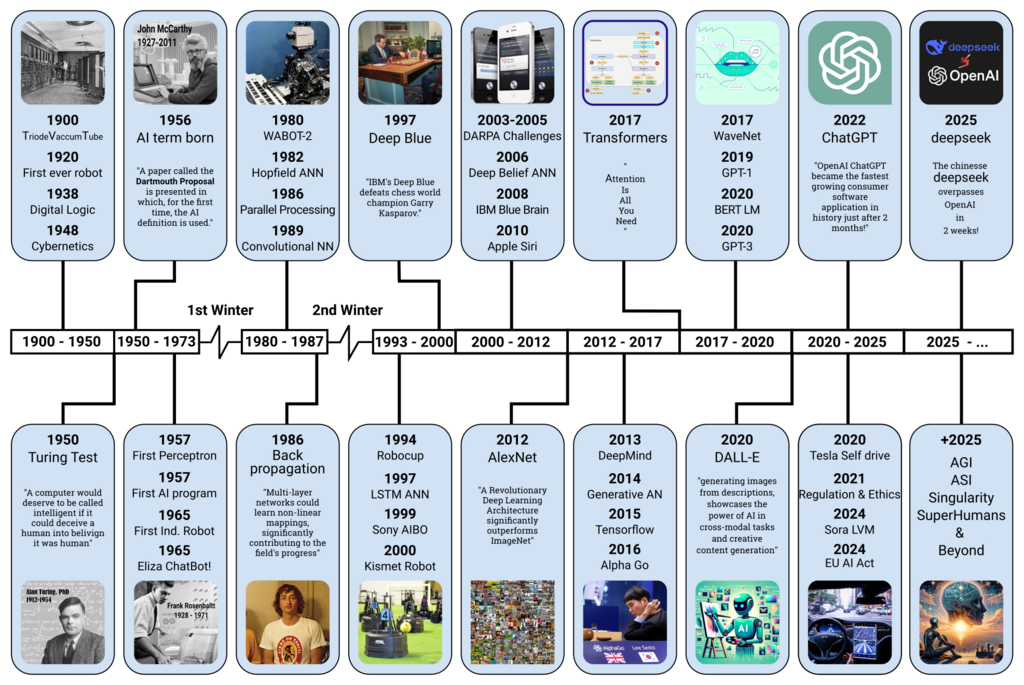
Progress slowed, and from the mid-1970s to the early 1990s, the field experienced what's known as the "AI winter." Funding dried up, and public interest waned. The promises had been big, but the results were limited by the available computing power and data.
Then, things started to change. The rise of the internet created massive amounts of data, and computer processors became exponentially more powerful. These two ingredients, data and computing power, were the fuel AI needed to reignite. Researchers developed more sophisticated techniques, and AI began a remarkable comeback, leading to the rapid advancements we see today.
Why AI Matters Now
Today, AI is no longer a futuristic concept from science fiction. It's a foundational technology that is quietly reshaping our world, much like electricity did a century ago. It powers the recommendation engines that suggest what you should watch next, helps your phone's camera take better pictures, and enables voice assistants to understand your commands.
AI's significance lies in its potential to augment human capabilities. It can process and analyze information at a scale and speed that is impossible for the human brain. This allows us to find new solutions to complex problems in science, medicine, and beyond. As AI continues to evolve, it will become an even more integral part of our daily lives, changing how we work, communicate, and interact with the world.
Let's review these foundational ideas.
What is the core goal of Artificial Intelligence?
The term "artificial intelligence" was first formally used at a workshop held in 1956 at which institution?
Understanding these core concepts gives you a solid base for exploring the more specific and powerful aspects of artificial intelligence.