Introduction to Artificial Intelligence
Introduction to Artificial Intelligence
What Is Artificial Intelligence?
At its heart, artificial intelligence is about creating machines that can think, learn, and solve problems like a human. It's not about robots that look and act exactly like us, but about systems that can perform tasks that typically require human intelligence.
Artificial Intelligence
noun
A branch of computer science focused on building smart machines capable of performing tasks that typically require human intelligence.
Think of AI as a broad field, like a big umbrella covering many different approaches and technologies. It includes everything from a simple calculator that follows pre-programmed rules to complex systems that can compose music or diagnose diseases. The goal is to create systems that can correctly interpret data, learn from it, and use that knowledge to achieve specific goals through flexible adaptation.
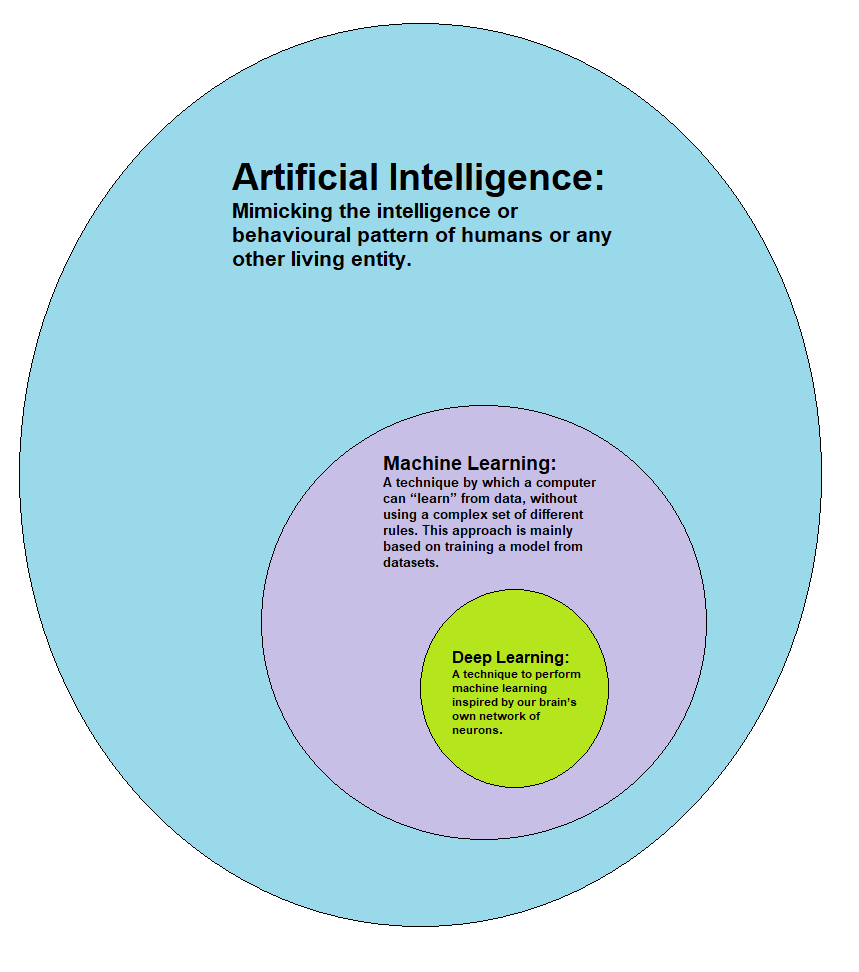
So, when we talk about AI, we're talking about a wide spectrum of capabilities. On one end, you have AI that can do one specific task very well, like playing chess. On the other end is the futuristic idea of an AI that can perform any intellectual task a human can. Most of what we see today falls into that first category of specialized intelligence.
A Quick Trip Through Time
The idea of artificial minds isn't new, but the scientific field of AI is relatively young. It officially kicked off in the summer of 1956 at a workshop at Dartmouth College. It was here that a group of scientists coined the term "artificial intelligence" and laid out the ambitious goal of making machines think.
Early AI research was full of optimism. Researchers developed programs that could solve algebra problems, prove geometric theorems, and speak simple English. They believed that human-level intelligence was just a few decades away.
The progress was exciting, but researchers soon hit a wall. The real world is messy and complicated, and the limited computing power and data of the time couldn't keep up. This led to periods known as "AI winters," when funding dried up and public interest faded.
But the field didn't die. It re-emerged stronger, thanks to two key developments: massive increases in computing power and the availability of huge amounts of data. This combination fueled the rise of a new approach called machine learning, where systems learn patterns directly from data rather than being explicitly programmed. A major milestone was in 1997, when IBM's Deep Blue chess computer defeated world champion Garry Kasparov, signaling a new era for AI.

The Core Ideas
So, how do these systems actually work? While the math can get complex, the basic principles are quite intuitive. AI technologies are built on a few key pillars.
- Learning: This is the most crucial principle of modern AI. Instead of writing step-by-step instructions for every possible scenario, developers create algorithms that allow a machine to learn from examples. If you want an AI to recognize cats, you don't describe what a cat is; you show it thousands of pictures of cats until it learns the patterns on its own.
- Reasoning: This involves using logic to make decisions and solve problems. An AI system uses reasoning to connect different pieces of information and draw conclusions. For example, a GPS app uses reasoning to analyze traffic data, road closures, and speed limits to calculate the fastest route for you.
- Perception: For an AI to be useful in the real world, it needs to be able to sense and interpret its surroundings. This is where perception comes in. Computer vision allows AI to "see" and understand images and videos, while natural language processing gives it the ability to understand and respond to human language, both written and spoken.
These principles—learning, reasoning, and perception—are the building blocks that allow AI to perform a vast range of tasks, from translating languages to driving cars.
What is the primary goal of artificial intelligence as described in the text?
The term "artificial intelligence" was first coined at which event?