Introduction to Artificial Intelligence
Introduction to AI
What Is Artificial Intelligence?
Artificial Intelligence (AI) is a broad area of computer science focused on building machines that can perform tasks that usually require human intelligence. Think about recognizing a friend's face, understanding a spoken sentence, or planning the best route to a destination. These are things humans do naturally. The goal of AI is to enable computers to do them too.
At its core, AI is about creating systems that can perceive their environment, think, learn, and make decisions to achieve specific goals.
The main objectives of AI include:
- Problem-Solving: Finding solutions to complex puzzles and logical challenges.
- Learning: Automatically improving performance on a task by learning from data and experience.
- Perception: Making sense of the world through visual, auditory, and other sensory data.
- Language: Understanding and generating human language.
AI and Its Relatives
You've likely heard terms like "machine learning" and "data science" used alongside AI. While they are closely related and often overlap, they aren't the same thing. Understanding their distinctions is key to understanding the field.
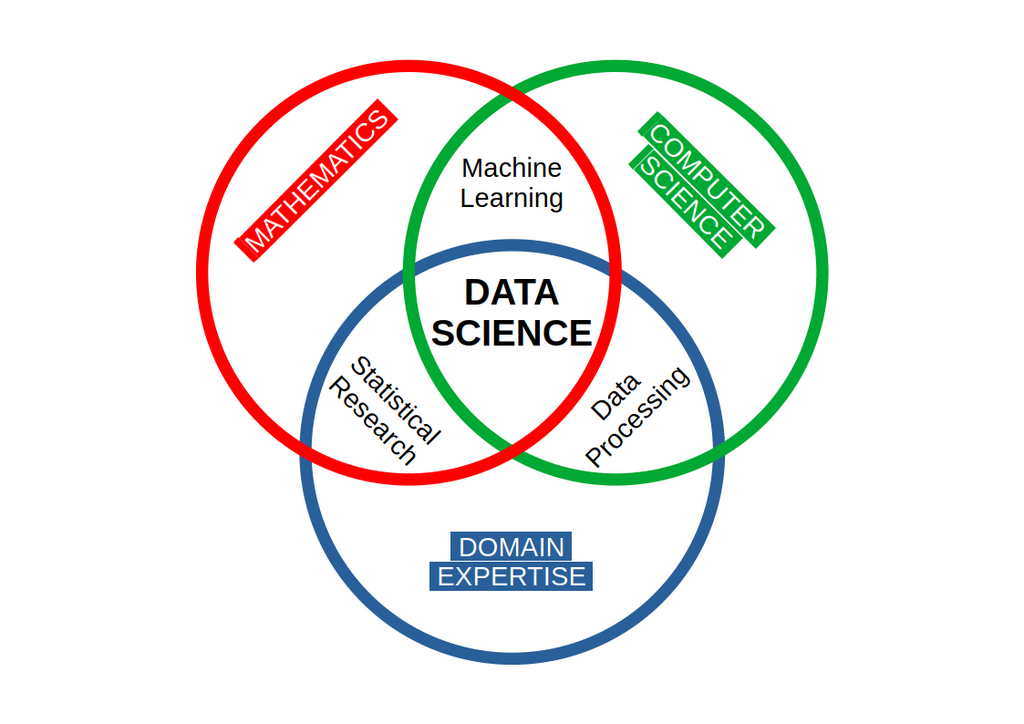
Artificial Intelligence (AI) is the widest field. It’s the overall concept of creating intelligent machines. It includes any technique that enables computers to mimic human intelligence, from complex logic systems to modern machine learning.
Machine Learning (ML) is a subset of AI. Instead of programming a computer with explicit rules for every possible situation, ML allows a machine to learn patterns for itself directly from data. It's the engine that powers many modern AI applications, like spam filters and recommendation systems.
Data Science is a broader discipline that encompasses the entire process of extracting insights from data. A data scientist might use machine learning as a tool, but their work also involves data collection, cleaning, analysis, and visualization. Their goal is to answer questions and inform business decisions using data.
| Artificial Intelligence (AI) | Machine Learning (ML) | Data Science | |
|---|---|---|---|
| Main Goal | Create intelligent machines that can simulate human thinking and behavior. | Enable machines to learn from data without being explicitly programmed. | Extract knowledge and insights from data to solve problems. |
| Scope | A broad field encompassing logic, learning, perception, and more. | A specific subset of AI focused on algorithms that learn from data. | An interdisciplinary field using scientific methods to analyze data. |
| Output | A smart system or agent that performs tasks. | A predictive model based on data patterns. | Insights, visualizations, reports, and data-driven products. |
Why AI Matters Now
AI is no longer a futuristic concept; it's a fundamental part of modern technology that shapes our daily lives. Its significance comes from its ability to process vast amounts of data and perform complex tasks at a scale and speed that humans simply can't match.
From navigating with GPS and unlocking your phone with your face to getting movie recommendations, AI is working behind the scenes. In industries like healthcare, it helps doctors diagnose diseases earlier. In finance, it detects fraudulent transactions. For scientists, it accelerates research by analyzing massive datasets.
The recent explosion in computing power and the availability of huge amounts of data have made today's AI systems more powerful and accessible than ever before. This combination has turned AI from a niche academic field into a transformative force across nearly every industry.
What is the primary goal of Artificial Intelligence (AI)?
How do Artificial Intelligence (AI), Machine Learning (ML), and Data Science relate to each other?
With these foundational concepts in place, you're ready to explore where AI came from and the different forms it can take.