Introduction to Artificial Intelligence
Introduction to Artificial Intelligence
What Is Artificial Intelligence?
Artificial intelligence, or AI, is the science of making machines that can think and act like humans. The goal is to create systems that can learn, reason, solve problems, and understand language. At its core, AI tries to simulate human intelligence in a machine.
Think of it this way: instead of programming a computer with a rigid set of instructions for every possible scenario, you design it to figure things out on its own.
This involves enabling a machine to interpret data, learn from it, and use that knowledge to achieve specific goals. Just like a person learns from experience, an AI learns from the information it's given.
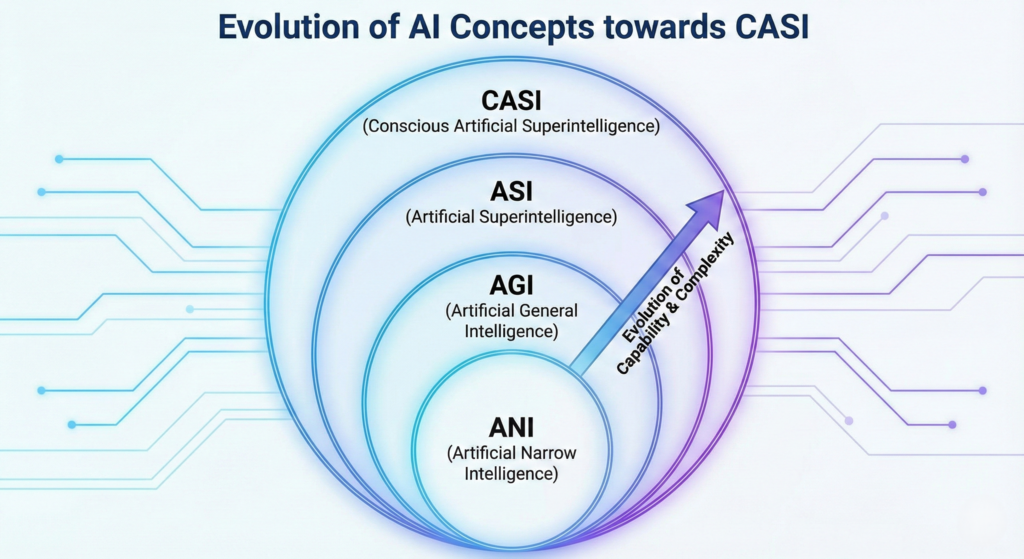
A Quick Trip Through Time
The idea of intelligent machines has been around for centuries in stories and philosophy, but the scientific journey began in the mid-20th century. The field was officially born in 1956 at a workshop at Dartmouth College, where the term “artificial intelligence” was coined.
AI as a scientific discipline can trace its roots back to the Dartmouth Summer Research Project on Artificial Intelligence, held at Dartmouth College in 1956.
Early research was filled with excitement. Pioneers believed that a machine as intelligent as a human was only a few decades away. However, progress was slower than expected. Limited computing power and a lack of data led to periods known as "AI winters," when funding dried up and interest waned.
But the field didn't die. It bounced back, fueled by faster computers and the explosion of data from the internet. These advances allowed old ideas to be tested on a scale never before possible, leading to the AI boom we see today.

Key Breakthroughs
Several key milestones mark AI's journey from a theoretical concept to a practical tool. In the 1970s and 80s, expert systems were a major focus. These programs used a set of rules to mimic the decision-making of a human expert in a specific field, like diagnosing diseases.
| Milestone | Year | Significance |
|---|---|---|
| Dartmouth Workshop | 1956 | The term "Artificial Intelligence" is coined and the field is formally established. |
| ELIZA | 1966 | An early natural language processing program that simulated a psychotherapist. |
| Expert Systems | 1970s-80s | AI programs that could make decisions in a specific domain based on expert knowledge. |
| Deep Blue vs. Kasparov | 1997 | An IBM computer defeats world chess champion Garry Kasparov, a major public milestone. |
| Deep Learning Boom | 2010s | Massive datasets and powerful processors (GPUs) enable major advances in machine learning. |
A major turning point came with the rise of machine learning. Instead of manually programming rules, developers created algorithms that allowed computers to learn patterns directly from data. This was a fundamental shift.
One of the most famous public demonstrations of AI's power was in 1997, when IBM's Deep Blue computer defeated world chess champion Garry Kasparov. It showed that a machine could strategize and win in one of humanity's most intellectually demanding games.
More recently, the 2010s saw the rise of deep learning, a subfield of machine learning inspired by the structure of the human brain. This approach, combined with vast amounts of data and powerful hardware, is behind many of today's most impressive AI applications, from voice assistants to self-driving cars.
Why AI Matters Now
Today, AI is no longer a niche academic field. It's a powerful force shaping our world. From the way we shop and communicate to how doctors diagnose illnesses and scientists conduct research, AI is everywhere.
It helps businesses operate more efficiently, powers recommendation engines on streaming services, and enables navigation apps to find the fastest route. The ability to analyze massive datasets and find hidden patterns makes AI a tool for solving some of the world's most complex problems.
Understanding its basic history and concepts is the first step toward grasping its impact on our lives and its potential for the future.
What is the primary goal of artificial intelligence?
The term "artificial intelligence" was first coined at a workshop in 1956. Where was this event held?