Introduction to Art Appreciation
Introduction to Art
What Is Art?
Art is a way humans express ideas and emotions. It's a visual language spoken across cultures and throughout history. From the earliest cave paintings to modern digital creations, people make art to tell stories, explore beauty, question the world, or simply show what it feels like to be alive.
Art
noun
The expression or application of human creative skill and imagination, typically in a visual form such as painting or sculpture, producing works to be appreciated primarily for their beauty or emotional power.
There’s no single purpose for art. A portrait might capture a person's character for future generations. A grand building can inspire awe and reflect a society's values. A photograph might document a critical moment in time. The purpose can be personal, political, religious, or purely decorative. It connects us to our own humanity and to each other.
Beginning with an identification of the formal elements of a work and description of their roles in the overall composition helps us orient ourselves within the bounds of the work of art.
To understand this language, we first need to learn its alphabet. Artists use a shared set of tools, known as the elements and principles of art, to compose their work. Think of them as the ingredients and the recipe for a visual masterpiece.
The Building Blocks
Every piece of art you see is made from a few basic ingredients called the elements of art. They are the fundamental units that make up an artwork.
Here’s a quick breakdown of the key elements:
| Element | Description |
|---|---|
| Line | A mark with length and direction. Lines can be straight, curved, thick, thin, or jagged. They guide your eye through a piece. |
| Shape | A two-dimensional area enclosed by lines. Shapes can be geometric, like circles and squares, or organic and free-flowing. |
| Color | The element that our eyes see when light reflects off an object. Color can create mood, show emphasis, and express emotion. |
| Texture | The surface quality of an object. It’s how something feels or looks like it would feel if touched, like smooth, rough, soft, or hard. |
| Space | The area within, around, above, or below an object. Artists use space to create a sense of depth and dimension. |
By combining these elements, an artist can construct any image imaginable.
Putting It All Together
If the elements are the ingredients, the principles of art are the recipe. They are the rules or guidelines that artists use to organize the elements and create a compelling final piece. The main principles help an artwork feel complete and unified.
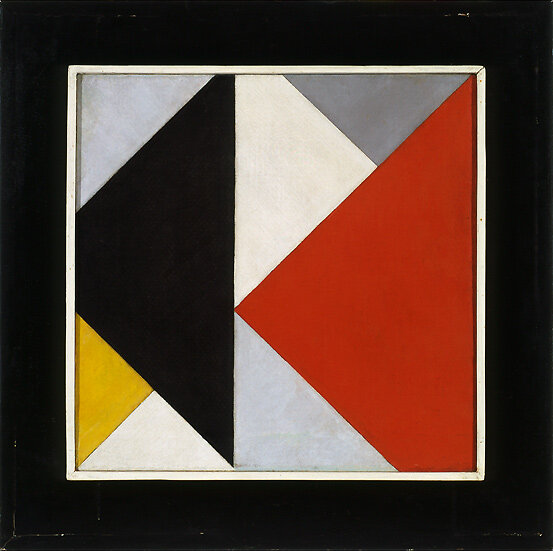
One of the most important principles is balance. This refers to how the visual weight of the elements is distributed in a work of art. A balanced piece feels stable and pleasing to the eye. Balance can be symmetrical, where both sides are a mirror image, or asymmetrical, where different elements on each side have equal visual weight.
Contrast is another key principle. It’s about creating visual interest by placing different elements next to each other. This could be a contrast between light and dark colors, smooth and rough textures, or large and small shapes. Contrast makes a piece more dynamic and prevents it from looking flat or boring.
Think of contrast as the spice in the recipe. A little bit adds excitement and flavor to the final dish.
Finally, harmony is the principle that brings everything together. It’s achieved when all the parts of an artwork seem to belong with each other, creating a sense of unity. Harmony ensures that the artwork doesn't feel chaotic or disjointed. All the elements and principles work together to form a cohesive whole.
Forms of Art
Art comes in many forms, each using the elements and principles in unique ways. While the list is nearly endless, a few major forms have shaped human history.
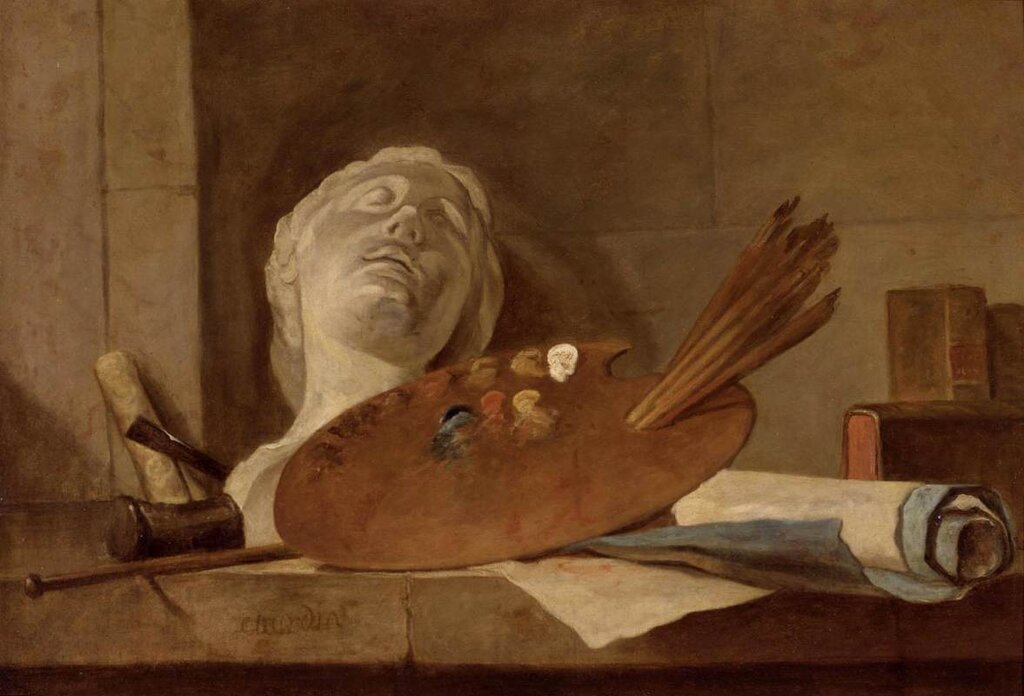
Painting is the practice of applying paint, pigment, or color to a surface like a canvas. It's a two-dimensional art form where artists use color, line, and texture to create illusions of light, space, and form.
Sculpture is a three-dimensional art form. Sculptors can carve stone, cast metal, model clay, or assemble found objects. Unlike paintings, sculptures have physical depth and can be viewed from all sides.
Architecture is often called the art of designing buildings and other physical structures. It balances function (what a building is for) with form (how it looks), using space, line, and material to create inhabitable art.
Photography is the art of capturing light with a camera to create an image. Photographers use principles like balance and contrast in their composition to frame a moment in time, telling a story through a single shot.
These are just a few examples. Art also includes drawing, printmaking, ceramics, film, and countless other creative fields. By understanding the basic building blocks, you can begin to appreciate the skill and intention behind any work of art you encounter.
Ready to test your knowledge? Let's see what you've learned about the fundamentals of art.
What is the primary role of the 'elements of art' in an artwork?
Which art form is primarily concerned with creating three-dimensional objects that can be viewed from all sides?