Introduction to Arabic Language
Arabic Alphabet
The 28 Letters
The first step into Arabic is learning its alphabet. Unlike the Latin alphabet used for English, Arabic is an abjad. This means it primarily consists of consonants, with vowels often indicated by optional marks or understood from context. We'll get to those marks later. For now, let's focus on the 28 core letters.
abjad
noun
A type of writing system where each symbol or glyph stands for a consonant, leaving the reader to infer the appropriate vowel.
Another key difference is that Arabic is written and read from right to left. It might feel strange at first, but you'll get used to it quickly. Here are all 28 letters in their isolated forms, which is how they look when they stand alone.
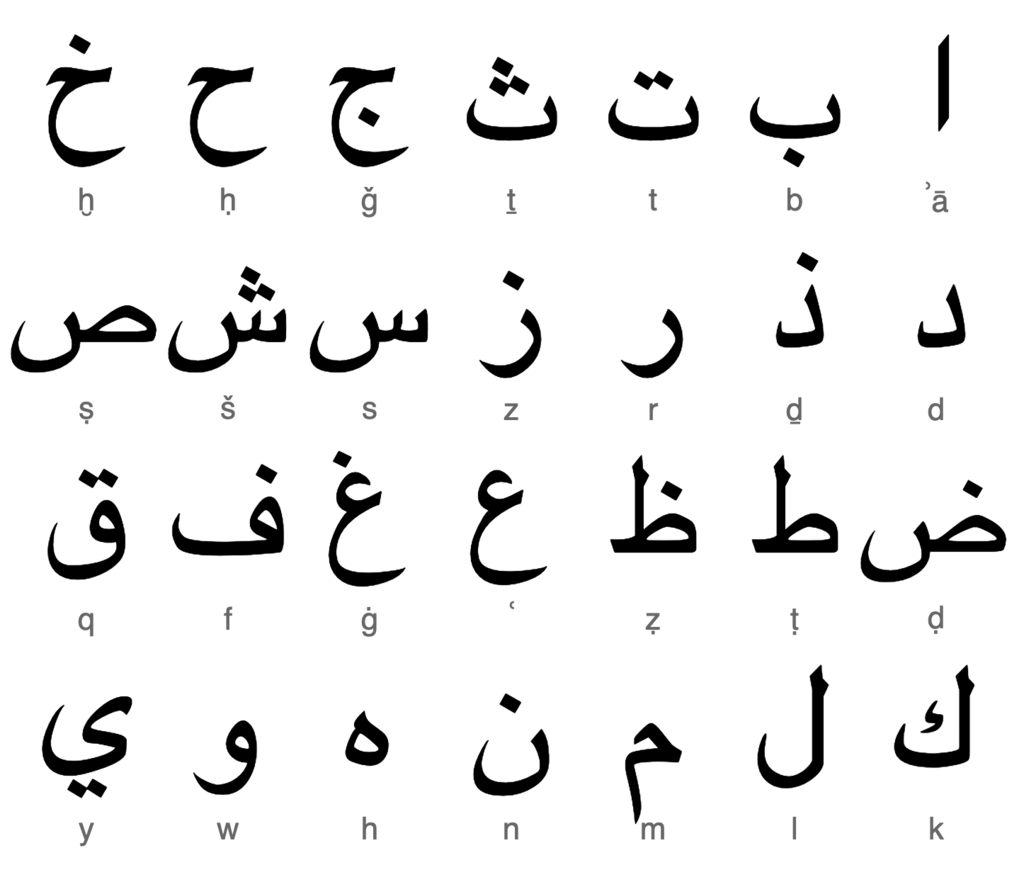
Start with the Alphabet: The Arabic alphabet may seem daunting at first, but with patience and practice, you’ll soon become familiar with its unique characters.
Connected Script
Arabic script is cursive, meaning the letters in a word connect to each other. Because of this, most letters have different forms depending on their position in a word. A letter can look one way at the beginning (initial), another in the middle (medial), and yet another at the end (final).
Think of it like cursive English, where the letter 's' might have a slightly different connecting stroke depending on whether it follows an 'o' or an 'a'. Arabic takes this concept further. Each letter has up to four shapes: isolated, initial, medial, and final.
Most letters connect to the letter that follows them. However, six letters are known as "non-connectors." They connect to the letter before them but never to the one after. This creates a small gap in the middle of a word.
The six non-connecting letters are:
• Alif (ا) • Dāl (د) • Dhāl (ذ) • Rā' (ر) • Zāy (ز) • Wāw (و)
Let's see an example of how a letter changes. The letter Bā' (ب) connects on both sides. Here’s how it looks in the word 'kitab', meaning 'book'.
book
Sounds and Pronunciation
Many Arabic letters have sounds familiar to English speakers, like Bā' (ب) which sounds like 'b', or Mīm (م) which sounds like 'm'. Others represent sounds that don't exist in English. For example, the letter 'Ayn (ع) is a deep, guttural sound produced in the back of the throat.
Learning correct pronunciation is key. It's best to listen to native speakers and imitate the sounds. Pay close attention to the difference between similar-sounding letters, like the light 's' sound of Sīn (س) and the heavier, emphatic 'ṣ' sound of Ṣād (ص).
| Letter | Name | Approx. Sound | Notes |
|---|---|---|---|
| ق | Qāf | 'q' | A deep 'k' sound from the back of the throat. |
| ك | Kāf | 'k' | A standard 'k' sound, like in 'king'. |
| ح | Ḥā' | 'ḥ' | A harsh, breathy 'h' sound, like fogging a mirror. |
| ه | Hā' | 'h' | A light, airy 'h' sound, like in 'hello'. |
| ض | Ḍād | 'ḍ' | An emphatic 'd' sound, unique to Arabic. |
| د | Dāl | 'd' | A standard 'd' sound, like in 'dog'. |
Vowels and Diacritics
So where are the vowels? In Arabic, short vowels are shown with small marks called ḥarakāt (diacritics) written above or below the consonants. There are three main ones:
While these marks are essential for beginners and are always written in the Quran and children's books, you won't see them in most everyday writing. Native speakers know how to pronounce words based on context and their knowledge of the language. As a learner, you'll rely on them heavily at first and gradually learn to read without them.
One thing you must get used to in the Arabic script is that short vowels, for instance a, i or u (as opposed to the long vowels aa, uu and ii), are not shown in the script.
Now that you've seen the letters, their forms, and the vowel marks, it's time to review.
Let's test your knowledge on the basics of the Arabic alphabet.
What is a key characteristic of an abjad writing system, like Arabic?
Why do most Arabic letters have different forms (initial, medial, final)?
Mastering the alphabet is the first and most critical step. With these building blocks, you're ready to start forming words and sentences.