Introduction to Arabic Language
Arabic Alphabet
The Arabic Script
The Arabic alphabet has 28 letters. Unlike the Latin alphabet used for English, Arabic is written from right to left. This might feel strange at first, but you'll get used to it quickly. Think of it as simply reversing the direction you're used to.
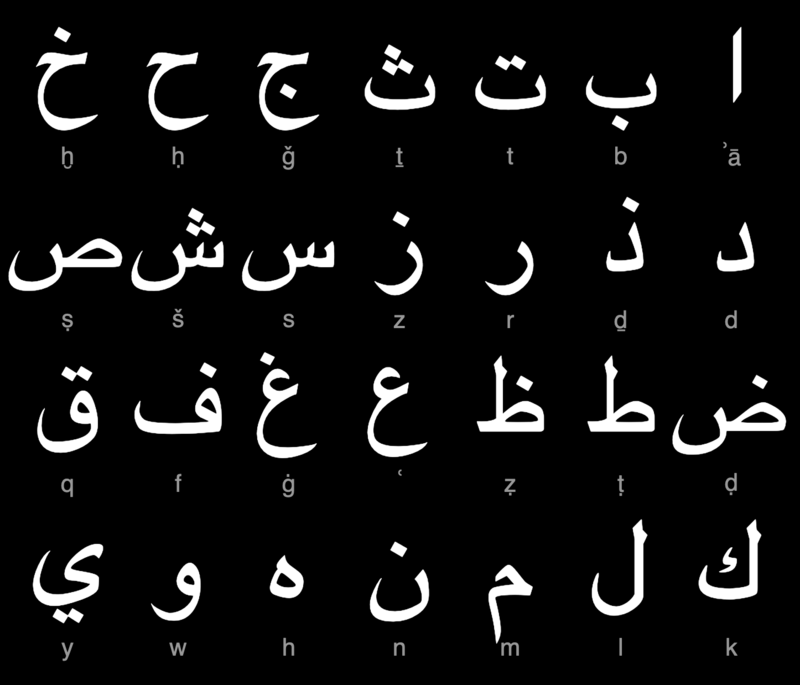
Arabic is also a cursive script. This means that letters in a word connect to each other, much like in English handwriting. But in Arabic, this isn't just a stylistic choice; it's the standard way to write. Almost all letters are designed to flow into the next one.
This connected, flowing nature gives Arabic calligraphy its famous beauty and complexity.
How Letters Change Shape
Because letters connect, their shape changes depending on their position in a word. A letter might look different at the beginning, middle, or end of a word. When a letter stands alone, it has its own unique "isolated" form.
Every letter has up to four forms:
- Isolated: When the letter stands by itself.
- Initial: When it's the first letter in a word.
- Medial: When it's in the middle of a word, connected on both sides.
- Final: When it's the last letter in a word.
Let's look at the letter Bā’ (ب) as an example. In its isolated form, it looks like a boat with a dot underneath. When it connects to other letters, it loses its extended tail to link up with its neighbors.
However, six letters in the alphabet are considered "non-connectors." They will connect to a letter on their right but will never connect to a letter on their left. This creates a small break in the middle of a word.
The six non-connecting letters are:
- Alif (ا)
- Dāl (د)
- Dhāl (ذ)
- Rā’ (ر)
- Zāy (ز)
- Wāw (و)
Dots Make the Difference
You'll notice that many Arabic letters look very similar. They might share the same basic shape or curve. What often distinguishes them is the number and placement of dots, called nuqaṭ (نُقَط).
For example, the letters for B, T, and Th all use the same boat-like shape. Their sounds are differentiated only by dots.
| Letter | Name | Sound | Description |
|---|---|---|---|
| ب | Bā’ | b | One dot below |
| ت | Tā’ | t | Two dots above |
| ث | Thā’ | th | Three dots above |
Similarly, the letters for J, Ḥ, and Kh share a looping form, but dots change everything.
| Letter | Name | Sound | Description |
|---|---|---|---|
| ج | Jīm | j | One dot inside |
| ح | Ḥā’ | ḥ | No dots |
| خ | Khā’ | kh | One dot above |
Learning to spot these dots is a crucial first step in reading Arabic. Paying close attention to them will prevent you from mixing up very different sounds and words.
Let's check what you've learned.
In which direction is the Arabic script written?
Why does the shape of an Arabic letter often change within a word?
Mastering these core concepts—the right-to-left direction, the connecting letters, and the role of dots—provides a solid foundation for reading and writing Arabic.