Introduction to Arabic Language
Arabic Alphabet
Meet the Alphabet
The Arabic alphabet is the foundation for reading and writing in Arabic. It has 28 letters, and unlike English, it's written from right to left. It might look intricate at first, but once you understand its logic, it becomes much simpler. The script is cursive, meaning the letters in a word connect to each other, much like handwriting in English.
A key difference: Arabic is written and read from right to left. So, you'll start at what an English reader would consider the 'end' of the page.
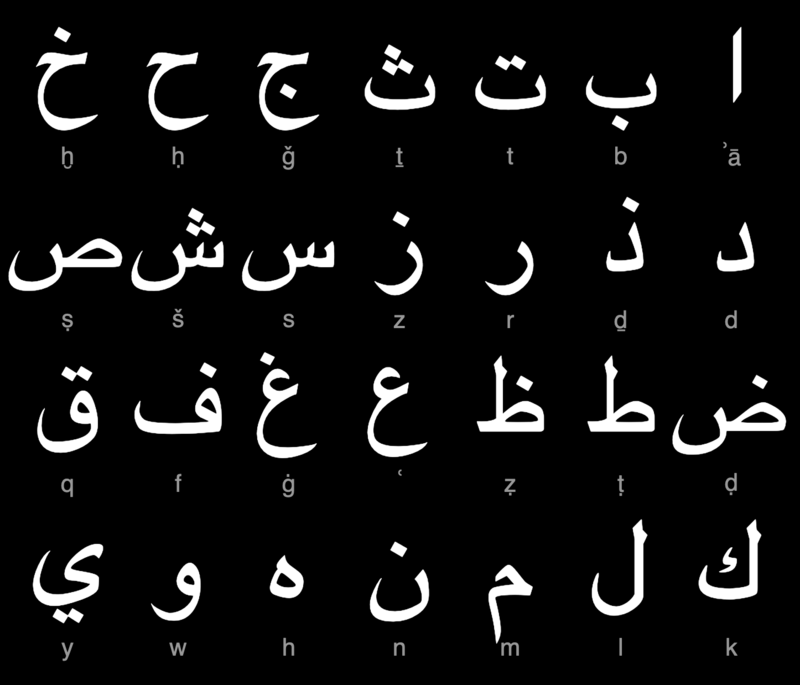
One Letter, Four Shapes
Most letters in the Arabic alphabet have four different forms, depending on their position in a word. This is the most important concept to grasp early on. Because the script is cursive, letters need to connect to their neighbors.
A letter can be:
- Isolated: When it stands alone.
- Initial: When it's the first letter of a word.
- Medial: When it's in the middle of a word, connected on both sides.
- Final: When it's the last letter of a word.
Think of it like puzzle pieces. The shape changes slightly to link up with the letter before or after it. Let's look at the letter Baa' (ب), which sounds like the English 'b'.
| Form | Shape | Example Word | Meaning |
|---|---|---|---|
| Isolated | ب | كتاب (kitāb) | book |
| Initial | بـ | بيت (bayt) | house |
| Medial | ـبـ | مكتب (maktab) | office |
| Final | ـب | كلب (kalb) | dog |
Notice how the letter always maintains its core feature, the single dot below, but its tail changes to connect. Some letters, called non-connectors, only connect to the letter before them, never after. We'll point these out as we go.
The Letters and Their Sounds
Let's go through the 28 letters. Many look similar, often distinguished only by dots. We'll group them by shape to make them easier to remember.
The Dot Group: ب, ت, ث, ن These letters share a similar boat or bowl shape, but the number and placement of dots change their sound.
| Letter | Name | Transliteration | Sound (like in...) |
|---|---|---|---|
| ب | Baa' | b | book |
| ت | Taa' | t | tea |
| ث | Thaa' | th | three |
The Hook Group: ج, ح, خ These three share a hook-like shape. Again, the dot is the only difference.
| Letter | Name | Transliteration | Sound (like in...) |
|---|---|---|---|
| ج | Jeem | j | jam |
| ح | Haa' | ḥ | A breathy 'h' from the throat |
| خ | Khaa' | kh | Like the 'ch' in the Scottish 'loch' |
The Non-Connector Group: ا, د, ذ, ر, ز, و These six letters are special. They can connect to a letter before them (to their right), but never to a letter after them (to their left). This means they only have an isolated and final form; their initial form is the same as their isolated form, and their medial form is the same as their final form.
| Letter | Name | Transliteration | Sound (like in...) |
|---|---|---|---|
| ا | Alif | ā | ah, as in father |
| د | Daal | d | door |
| ذ | Dhaal | dh | this |
| ر | Raa' | r | A rolled 'r', like in Spanish |
| ز | Zayn | z | zoo |
| و | Waaw | w / ū | water or loop |
And here are the rest of the letters. Pay close attention to their unique shapes and sounds.
| Letter | Name | Transliteration | Sound (like in...) |
|---|---|---|---|
| س | Seen | s | sun |
| ش | Sheen | sh | shoe |
| ص | Saad | ṣ | A heavier, emphatic 's' sound |
| ض | Daad | ḍ | A heavier, emphatic 'd' sound |
| ط | Taa' | ṭ | A heavier, emphatic 't' sound |
| ظ | Dhaa' | ẓ | A heavier, emphatic 'dh' sound |
| ع | 'Ayn | ' | A throaty consonant with no English equivalent |
| غ | Ghayn | gh | A gargling sound, like a French 'r' |
| ف | Faa' | f | fish |
| ق | Qaaf | q | A 'k' sound made deep in the throat |
| ك | Kaaf | k | kite |
| ل | Laam | l | lamp |
| م | Meem | m | moon |
| ن | Noon | n | nose |
| ه | Haa' | h | hello |
| ي | Yaa' | y / ī | yes or meet |
Learning the alphabet is the first and most important step. Practice writing the letters, saying their sounds aloud, and recognizing them in their different forms. This foundation will make everything that follows much easier.
How is the Arabic script typically written and read?
Most Arabic letters change their shape based on their position in a word. What are the four forms a letter can take?
With these letters, you have the building blocks for reading and writing millions of words.