Introduction to Application Development
Introduction to Programming
What is Programming?
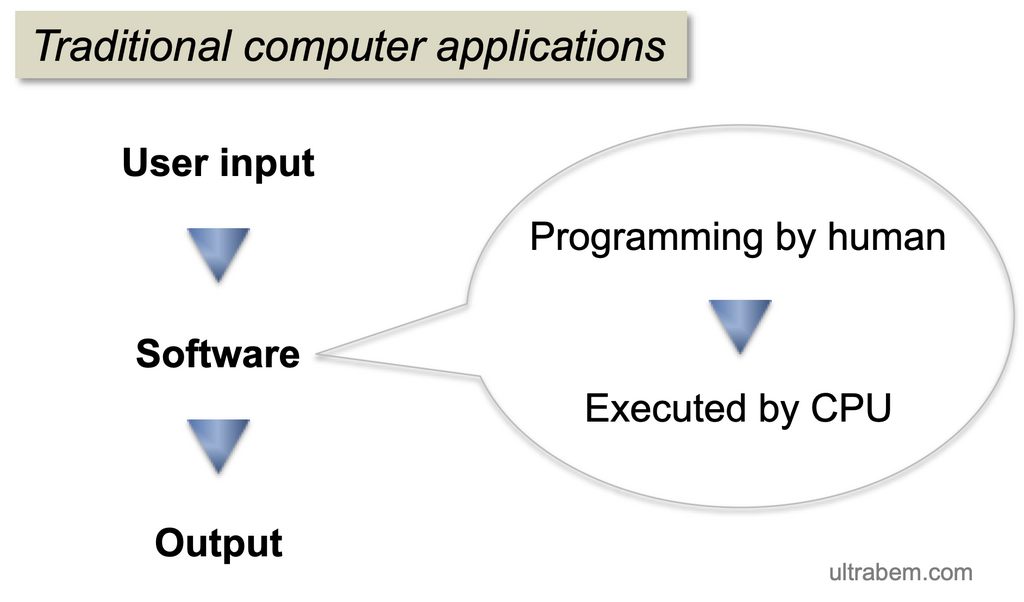
At its core, programming is the process of giving a computer a set of instructions to perform a specific task. Think of it like writing a recipe for a very literal-minded chef. You have to write down every single step, from preheating the oven to the exact measurement of each ingredient, in a language the chef understands. If you miss a step or write it unclearly, you won't get the cake you wanted.
A computer program is just a collection of these instructions. It tells the computer what to do, how to do it, and when to do it. These instructions, when executed, can do everything from adding two numbers together to powering the complex applications on your phone or the websites you visit every day.
Languages for Computers
Computers don't understand English, Spanish, or Japanese. They have their own languages, and these are what we call programming languages. Just as humans have many different languages, there are hundreds of programming languages, each designed for different purposes.
Some languages are great for building websites, others are better for analyzing data, and some are designed for creating video games. Each one has its own set of rules, called syntax, and vocabulary that programmers use to write their instructions. The choice of language often depends on the task at hand.
Styles of Programming
Beyond choosing a specific language, programmers also think about the style in which they write their instructions. These styles are called programming paradigms. They are different ways of thinking about problems and structuring the solution. Let's look at a few of the most common ones.
Imperative Programming
adjective
A programming paradigm that uses statements to change a program's state.
This is the most straightforward paradigm. You write code that describes the steps the computer should take to accomplish the goal. It's a list of commands: do this, then do that. Going back to our recipe analogy, an imperative approach would be a classic step-by-step instruction list. Languages like C, Fortran, and Pascal are classic examples of this style.
Object-Oriented Programming
adjective
A paradigm based on the concept of "objects", which can contain data and code to manipulate that data.
Often called OOP, this paradigm organizes programming around objects. An object is a self-contained unit that bundles together data and the functions that operate on that data. Think of building something with LEGOs. Each LEGO brick is an object. It has properties (data) like its color and size, and it has functions like the ability to connect to other bricks. In OOP, you create many of these objects and define how they interact with each other to build a larger application. This is a very popular paradigm, used in languages like Java, C++, and Python.
Functional Programming
adjective
A paradigm that treats computation as the evaluation of mathematical functions and avoids changing-state and mutable data.
Functional programming is a bit different. It's inspired by mathematics and treats programs as a series of function evaluations. A key idea is to avoid changing data. Instead of modifying the original information, you create new information from the old. Imagine an assembly line. Each station takes something, does one specific thing to it, and passes the result to the next station. No station changes a previous station's work; it just creates a new output. This approach can lead to more predictable and less buggy code. Languages like Haskell, Lisp, and F# are heavily influenced by this paradigm.
Logic Programming
noun
A paradigm based on formal logic, where programs consist of a set of facts and rules.
This paradigm is less common but very powerful for certain types of problems. Instead of telling the computer how to solve a problem, you describe the problem by providing a set of facts and rules. The computer then uses these to figure out a solution. It's like being a detective. You give the computer all the clues (facts) and logical principles (rules), and it deduces the answer. Prolog is the most well-known logic programming language.
Choosing a Language
With so many languages and paradigms, how do you choose where to start? Don't worry too much about picking the "perfect" language. Most programming concepts are transferable. Learning one language makes it much easier to learn the next.
A good starting point is to choose a language that is widely used, has a supportive community, and aligns with what you want to build. Python is often recommended for beginners because of its simple syntax. JavaScript is essential for web development.
The most important thing is to start. Pick a language, learn the basic rules, and begin building small projects. The journey of a programmer is one of continuous learning, and it begins with that first set of instructions.