Introduction to Animation Principles and Practices
Introduction to Animation
The Illusion of Life
Animation is the art of making still images move. At its core, it's a clever trick played on our eyes and brain. When we see a series of pictures flashed before us quickly enough, our brain blends them into a single, fluid motion. This phenomenon is called persistence of vision.
Each individual picture is called a frame. Most animations you see play at a rate of 24 frames per second (fps). That means for every one second of movement, you're actually seeing 24 distinct images.
Think of a simple flipbook. Each page has a drawing that is slightly different from the one before it. When you thumb through the pages quickly, the character on the page appears to dance or run. Animation, whether drawn by hand or generated by a computer, works on this exact same principle.
A Quick Trip Through Time
The desire to capture movement is ancient. Some cave paintings show animals with extra legs, suggesting an attempt to depict them in motion. But modern animation's roots lie in the 19th century, with inventions like the zoetrope—a spinning drum with slits that made a strip of drawings inside appear to move.
These simple devices paved the way for pioneers like Eadweard Muybridge, who used photography to study how animals and people move. His sequences of photos, like a horse mid-gallop, were a crucial step toward understanding the mechanics of motion, frame by frame.
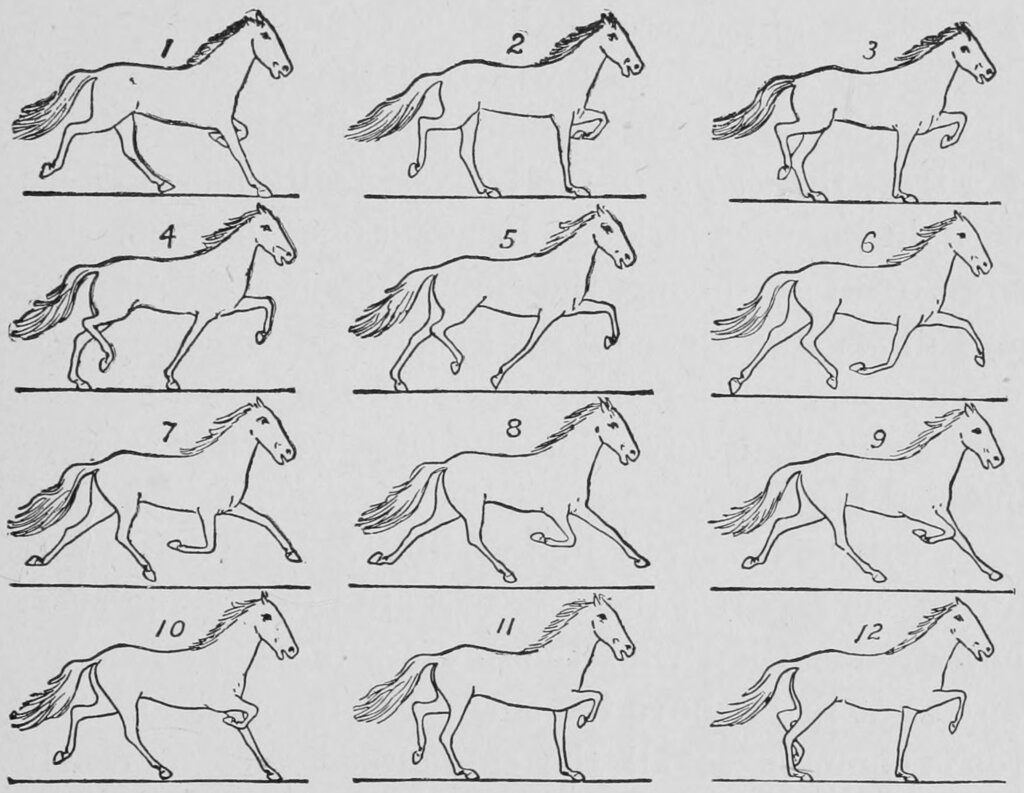
The 20th century brought cel animation, where characters were drawn on clear sheets of celluloid and laid over a painted background. This technique, popularized by studios like Disney, dominated for decades. Today, digital tools have revolutionized the process, but the fundamental goal remains the same: breathing life into the static.
Three Main Flavors
Animation isn't a single technique but a broad field with many styles. Most, however, fall into one of three main categories.
| Style | How It's Made | Classic Example |
|---|---|---|
| 2D Animation | Images are created in a two-dimensional space, like drawings on paper or a digital tablet. It has height and width, but no true depth. | The Lion King |
| 3D Animation | Digital models are built in a three-dimensional computer environment. Animators move these models like digital puppets. | Toy Story |
| Stop-Motion | A physical object (like a clay figure or puppet) is moved in small increments and photographed frame by frame. | Coraline |
Each style has its own unique feel and production process. 2D animation can feel classic and graphic. 3D animation often aims for realism and depth. Stop-motion has a distinct, tangible quality because everything you see on screen is a real, physical object.