Introduction to American Football
Introduction to American Football
A Uniquely American Game
American football didn't appear out of thin air. It grew out of sports like soccer and rugby, which were popular at American colleges in the mid-1800s. Early versions were chaotic, sometimes involving dozens of players and very few rules. The game we recognize today began to take shape in the late 19th century, thanks largely to a Yale University student and coach named Walter Camp. He introduced key changes, like the line of scrimmage and the system of downs, which fundamentally distinguished football from its rugby roots.
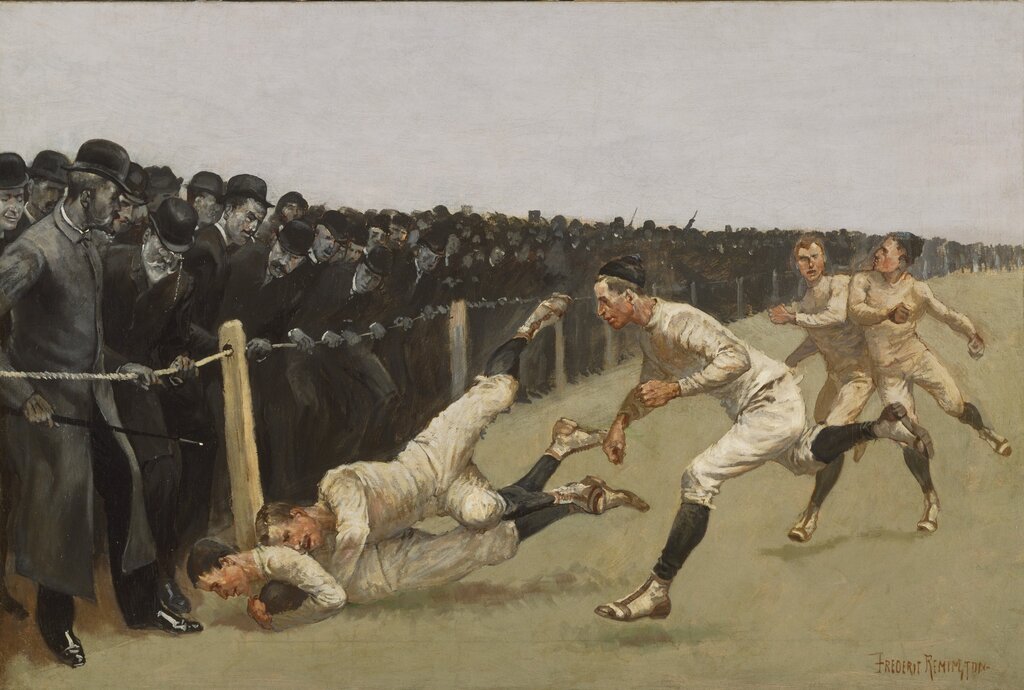
From these college origins, football exploded into a cultural phenomenon. It's more than just a sport; it's a staple of American life. The rhythm of the week often builds toward the weekend's games. Friday nights are for high school football, where local communities rally around their teams. Saturdays are dominated by the pageantry and fierce rivalries of college football. And on Sunday, millions tune in to watch professional athletes in the National Football League (NFL) compete, culminating in the Super Bowl, an unofficial national holiday.
The Field of Play
A football game is played on a rectangular field, which serves as the grid for all the action. The field of play is exactly 100 yards long, with two 10-yard areas called end zones at each extremity. The ultimate goal for the team with the ball is to get it into the opponent's end zone.
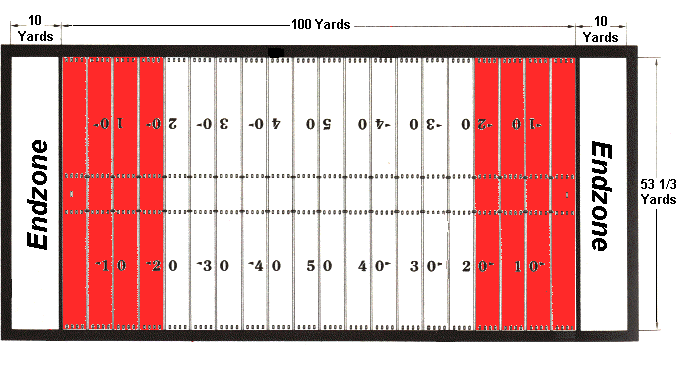
The field is covered in markings that help players, officials, and viewers track progress. Lines run across the field at 5-yard intervals, with the 50-yard line marking the exact center. Shorter lines, called hash marks, mark out each individual yard. At the back of each end zone, you'll find a goalpost, which comes into play for certain types of scoring.
How the Game Flows
At its core, football is a game of territory. Two teams, each with eleven players on the field, face off. The team with possession of the ball is called the offense. Their job is to advance the ball down the field, either by running with it or throwing it. The other team is the defense, and their objective is simple: stop the offense.
The game is played as a series of short bursts of action called plays. Before each play, the teams line up opposite each other at the line of scrimmage, an imaginary line that crosses the field where the ball is placed. The offense has a limited number of attempts, known as downs, to gain a certain amount of yardage. If they succeed, they get a fresh set of downs to continue their advance. If they fail, they usually have to turn the ball over to the other team.
This back-and-forth continues throughout the game, which is divided into four quarters. The team that manages to score the most points by the time the clock runs out is the winner.
Now that you have a grasp of the basic layout and flow, let's test your knowledge.
Who is credited with introducing key rules like the line of scrimmage and the system of downs, fundamentally shaping modern American football?
What is the length of a standard American football field between the two end zones?
This covers the high-level view of the game. Next, we'll dive into the specifics of how teams score points and the roles each player has on the field.