Introduction to American Football
Game Basics
The Goal of the Game
At its heart, American football is a game of territory. Two teams compete on a rectangular field, and the main goal is simple: score more points than your opponent. You do this by advancing an oval-shaped ball down the field and into a special area called the end zone.
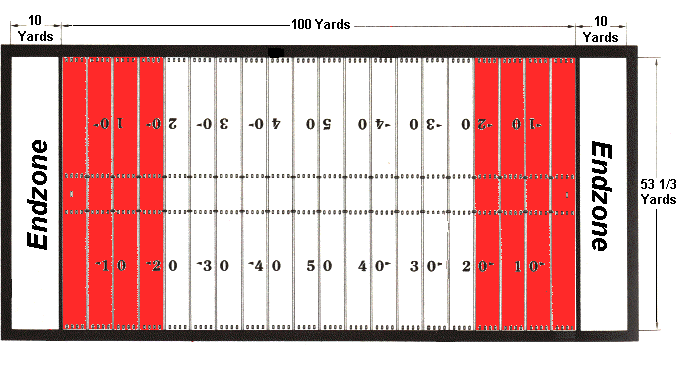
During a play, one team is on offense, trying to move the ball forward, while the other is on defense, trying to stop them. The offensive team can advance the ball in two ways: by running with it or by throwing it to a teammate. The defense tries to prevent the offense from gaining ground by tackling the player with the ball.
After a score, or if the offensive team fails to advance the ball far enough, the roles flip. The team that was on defense goes on offense, and vice versa.
How the Game Moves
The game doesn't just flow continuously. It's broken into a series of plays, or "downs." The offense gets a set of four downs to advance the ball at least 10 yards. If they succeed, they earn a "first down" and get a fresh set of four downs to go another 10 yards. This continues as they move down the field.
Markers on the sideline show the officials and fans where the 10-yard target is. You'll often hear announcers say something like "2nd and 5," which means it's the second down, and the offense needs to gain five more yards for a first down.
The core rhythm of football is this: the offense has four chances to gain 10 yards.
If the offense reaches its fourth down and hasn't gained the 10 yards, they have a decision to make. They can:
- Punt: Kick the ball to the other team, forcing them to start their offensive drive much farther down the field.
- Attempt a field goal: If they're close enough to the opponent's end zone, they can try to kick the ball through the goal posts to score points.
- Go for it: They can try one last play to gain the remaining yards. This is risky. If they fail, the other team takes over possession of the ball right where the play ended.
Scoring Points
Advancing the ball is great, but the ultimate goal is to score. There are several ways to put points on the board.
| Score Type | Points | Description |
|---|---|---|
| Touchdown | 6 | Carrying or catching the ball in the opponent's end zone. |
| Extra Point | 1 | A kick through the uprights after a touchdown. Also called a Point After Touchdown (PAT). |
| Two-Point Conversion | 2 | A running or passing play into the end zone after a touchdown, instead of a kick. |
| Field Goal | 3 | A kick through the uprights, usually on fourth down. |
| Safety | 2 | When the defense tackles an offensive player with the ball in their own end zone. |
A touchdown is the most valuable score. After a touchdown, the scoring team gets a bonus opportunity. They can kick an extra point from short range, which is usually successful. Or, they can opt for a riskier two-point conversion, where they must run or pass the ball into the end zone again from just two yards away.
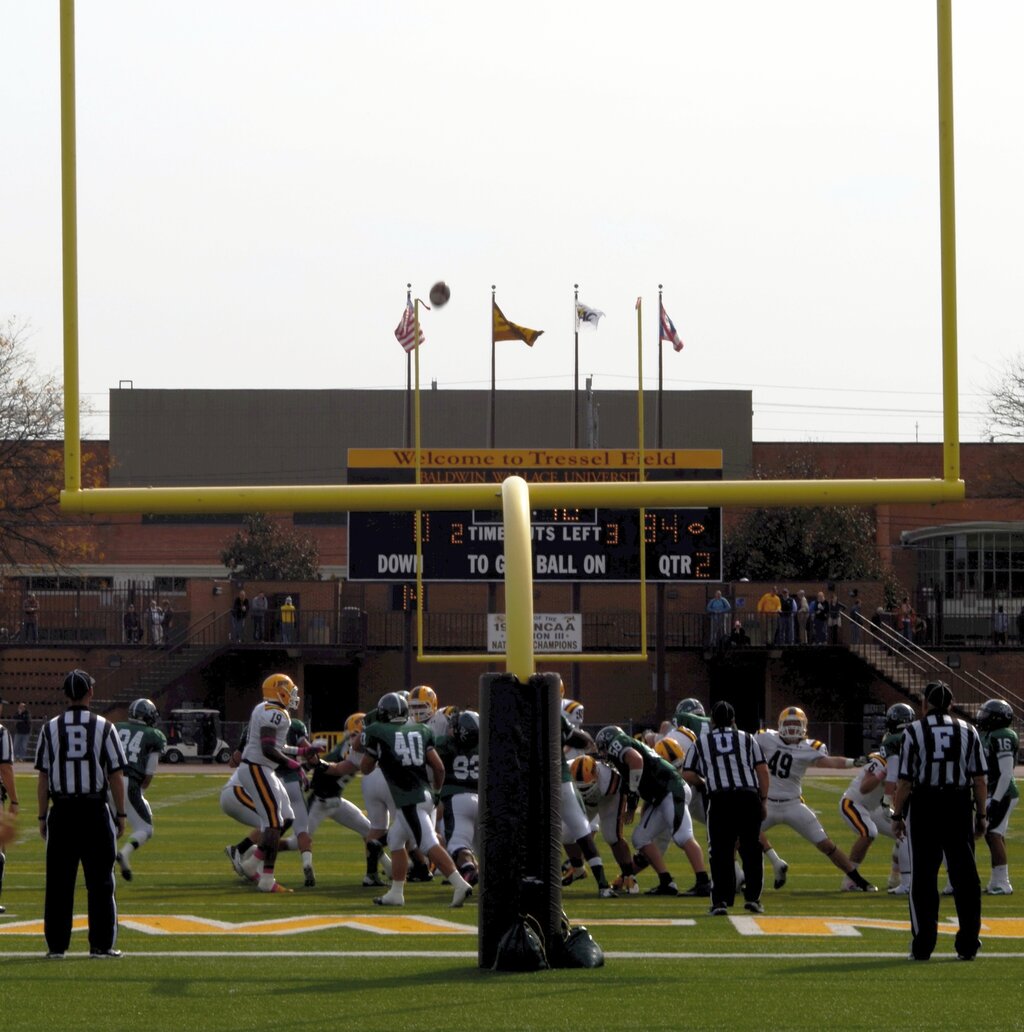
A field goal is a way to score when the offense can't get a touchdown but is close enough for their kicker to make a shot. It's a common play on fourth down.
The final way to score is a safety, and it's unique because the defense scores the points. A safety also forces the team that gave up the points to kick the ball back to the scoring team, making it a major momentum swing.
Think you've got the fundamentals? Let's check your understanding.
What is the offensive team's primary goal during a set of four downs?
An announcer says, "It's 3rd and 2." What does this mean?
That's the basic framework of the game. Understanding downs, distance, and scoring is the foundation for everything else that happens on the field.