Introduction to AI Agents
Introduction to AI Agents
What Is an AI Agent?
At its core, an AI agent is a system that can perceive its environment and act upon it to achieve a specific goal. Think of it as an autonomous entity that can make decisions and perform tasks without direct human command for every step. The word “agent” comes from the idea of acting on behalf of someone or something else. In this case, an AI agent acts to complete objectives we set for it.
agent
noun
Anything that can be viewed as perceiving its environment through sensors and acting upon that environment through actuators.
This basic loop of perceiving, thinking, and acting is fundamental to all AI agents, from a simple thermostat that senses room temperature (perception) and turns on the heat (action) to a complex self-driving car navigating busy city streets. What makes them so powerful in the world of AI is this ability to operate independently and adapt to changing conditions.
Key attributes define every AI agent:
- Autonomy: Agents can operate on their own without constant human oversight. They have control over their actions and internal state.
- Adaptability: They can react to changes in their environment. A truly advanced agent can also learn from experience, improving its performance over time.
- Goal-Orientation: Agents are designed with a purpose. Every action they take is a step toward achieving a specific, predefined objective, whether it's winning a game of chess or booking a flight.
Types of AI Agents
AI agents aren't all the same. They range from simple to highly complex, based on how they make decisions. We can classify them into a few key types.
Simple Reflex Agents: These are the most basic agents. They react to what they perceive right now, ignoring past history. Their decisions are based on a simple condition-action rule: if this happens, do that. A smart thermostat is a good example. If the temperature drops below 68°F, it turns on the heat. It doesn't remember that it was 75°F an hour ago.
Model-Based Reflex Agents: These agents are a step up. They maintain an internal "model" or understanding of how the world works. This allows them to handle situations where they can't see everything at once. For example, a self-driving car needs to know that a car in front of it will likely continue moving forward, even if its own sensors are temporarily blocked. It uses its internal model of traffic to make a better decision than just reacting to the immediate sensor data.
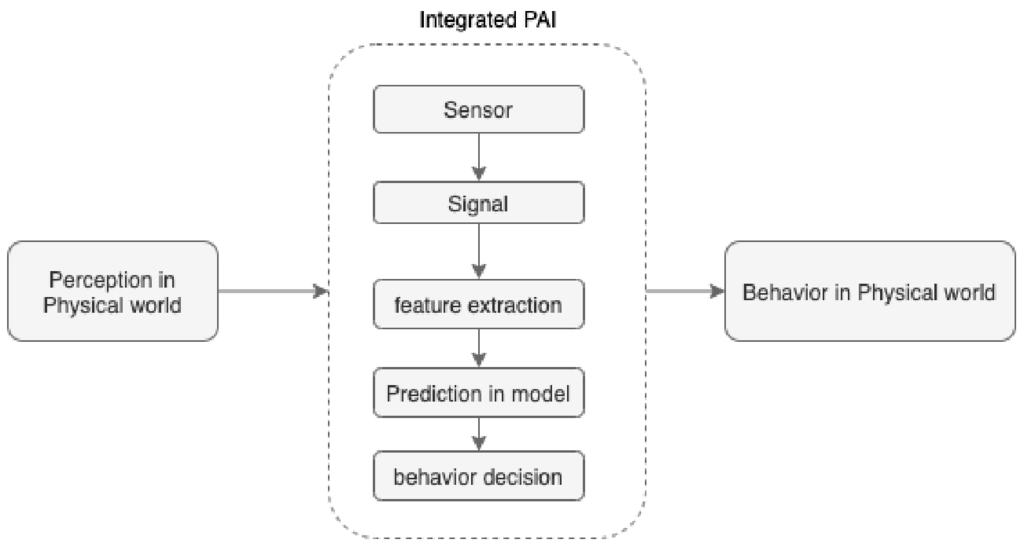
Goal-Based Agents: These agents don't just react; they plan. They consider the consequences of their actions to achieve a specific goal. Think of a GPS navigation app. Its goal is to get you to your destination. It doesn't just make the next turn based on the current street; it considers the entire route and chooses actions (turns) that lead to the final goal efficiently.
Utility-Based Agents: What if there are multiple ways to reach a goal? Utility-based agents choose the best one. They have a "utility function" that measures how desirable a particular state is. A travel-booking agent might have the goal of finding a flight. But a utility-based agent would aim for the best flight, balancing cost, travel time, and number of layovers to maximize your satisfaction, or "utility."
Learning Agents: The most advanced agents can learn from their experiences and improve their performance. A learning agent has a "learning element" that analyzes its own actions and the outcomes, then suggests improvements to its decision-making component. A spam filter is a classic learning agent. When you mark an email as spam, it learns what spam looks like and gets better at filtering it out in the future.
| Agent Type | How it Decides | Example |
|---|---|---|
| Simple Reflex | Based on current perception | Thermostat |
| Model-Based | Uses internal world model | Self-driving car changing lanes |
| Goal-Based | Plans sequence of actions | GPS navigation |
| Utility-Based | Chooses best path to goal | Flight booking assistant |
| Learning | Improves with experience | Spam filter |
A Brief History and Today's Applications
The idea of autonomous agents has been a part of AI since its beginnings in the 1950s. Early concepts focused on symbolic reasoning and logic, creating systems that could solve puzzles and play games like chess. These early agents were heavily rule-based and lacked the flexibility we see today.
The rise of machine learning and big data in recent decades transformed what agents could do. Instead of being programmed with explicit rules for every situation, they could now learn from vast amounts of data. This shift paved the way for the sophisticated agents we interact with daily.
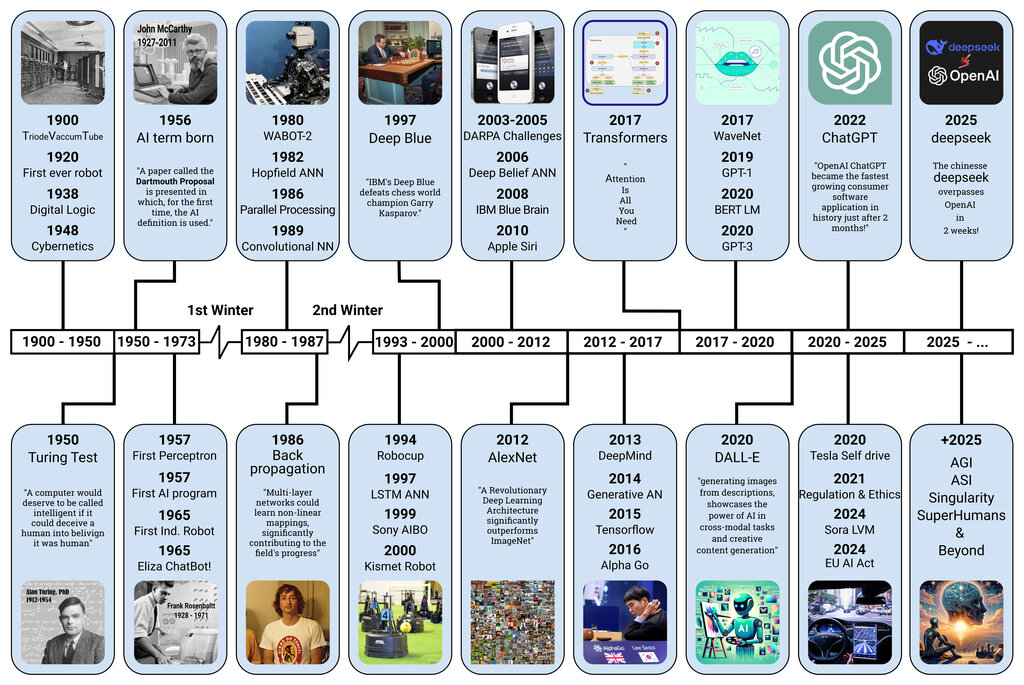
Today, AI agents are everywhere.
- E-commerce: Recommendation engines that suggest products you might like are utility-based agents trying to maximize the utility of your shopping experience.
- Gaming: Non-player characters (NPCs) in video games are agents that react to the player's actions, often using a combination of reflex and model-based approaches.
- Finance: Algorithmic trading bots are agents that analyze market data to make buy or sell decisions, aiming to achieve the goal of maximizing profit.
- Robotics: From robotic vacuums cleaning our floors to advanced robots performing surgery, physical agents are a rapidly growing field.
As Large Language Models (LLMs) become more powerful, they are acting as the "brain" for a new generation of even more capable agents. These systems can understand complex instructions, use software tools, and perform multi-step tasks that were once unimaginable, like planning an entire vacation or managing a business's social media.
Time to check your understanding of AI agents.
What is the fundamental operational loop of all AI agents?
Which attribute of an AI agent refers to its ability to operate on its own without constant human supervision?
Understanding agents is the first step to understanding how modern AI translates knowledge into action. By perceiving, thinking, and acting, they form the foundation for systems that can navigate our complex world.