Introduction to AI Agents
Introduction to AI Agents
What Is an AI Agent?
In the world of artificial intelligence, an "agent" is anything that can observe its environment and then act on it. Think of it as an autonomous entity with a job to do. It could be a piece of software, a robot, or even something as simple as your home thermostat.
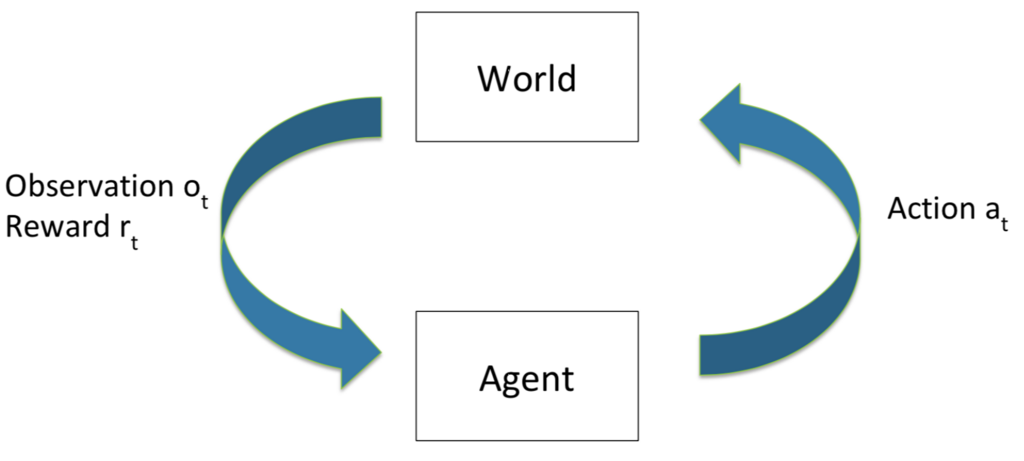
An agent perceives its environment through sensors and acts upon that environment through actuators.
This is the fundamental loop of any AI agent. It senses, thinks, and acts. The goal is to make decisions that help it achieve a specific objective, whether that's winning a game of chess, navigating a busy street, or simply keeping a room at a comfortable temperature.
How Agents Interact
Every agent needs two key things to function: sensors and actuators. These are its connections to the world.
Sensor
noun
A device or component that detects input from the environment. For an AI, this could be a camera, a microphone, or data feeds from the internet.
Sensors are the agent's eyes and ears. They gather the raw information the agent needs to understand its current situation.
Actuator
noun
A component that an agent uses to act upon its environment. This could be a motor, a robotic arm, a speaker, or even just sending an email.
If sensors are for input, actuators are for output. They are the agent's hands and voice, allowing it to make changes in its environment to achieve its goals. This constant cycle of perceiving and acting is the core of what makes an agent intelligent.
Agents in the Wild
AI agents are all around us, in both physical and digital forms.
Software agents are programs that operate in a digital environment. A spam filter in your email is a simple agent. Its sensor is the incoming stream of emails, and its actuator is the action of labeling an email as "spam" and moving it to a different folder. A stock-trading bot is another example; it senses market data and acts by buying or selling stocks.
Robotic agents, on the other hand, exist in the physical world. A Roomba vacuum is a classic example. Its sensors detect walls, furniture, and dirt. Its actuators are its wheels and suction motor. A Mars rover is a much more complex robotic agent, using sophisticated sensors to analyze Martian soil and actuators to move around and collect samples.
Understanding agents as these perceiving-and-acting entities is the first step to understanding AI. It gives us a framework for thinking about how machines can perform tasks intelligently and autonomously.
Ready to check your understanding?
What is the fundamental loop that defines an AI agent's operation?
An agent perceives its environment using ______ and affects its environment using ______.