Introduction to AI Agents
Introduction to AI Agents
What Is an AI Agent?
Think about a smart thermostat. It senses the room's temperature, decides whether it's too hot or cold based on your settings, and then acts by turning the heating or cooling on or off. It works on its own to achieve a specific goal: keeping you comfortable. That's the basic idea behind an AI agent.
At its core, an AI agent is a system that can perceive its environment and act upon it autonomously to achieve a goal. It's a piece of software with a degree of independence, designed to perform tasks on our behalf.
Simply put, an AI agent is a software program that can perceive its environment, process information, and take actions to achieve a goal—all without human intervention.
This simple concept is incredibly powerful. Instead of a program that just follows a rigid set of instructions, an agent can adapt to changing situations. The environment could be a physical space for a robot, a virtual world in a video game, or the vast landscape of the internet for a data-gathering bot. The agent uses sensors to perceive this environment and actuators to perform actions.
The Four Key Traits
What separates an AI agent from a simple script or a traditional program? Four key characteristics define a true agent.
| Characteristic | Description | Example |
|---|---|---|
| Autonomy | Operates without direct human control. It manages its own actions to achieve its goals. | A self-driving car navigating traffic on its own. |
| Reactivity | Senses its environment and responds to changes in real time. | A spam filter detecting and moving a new phishing email to the junk folder. |
| Pro-activeness | Takes initiative to meet its goals, rather than simply waiting to react to something. | A calendar app proactively suggesting a meeting time that works for everyone. |
| Social Ability | Communicates with other agents (including humans) to achieve goals, either by collaborating or competing. | Two navigation apps exchanging real-time traffic data to find the best route. |
Not every agent excels in all four areas. A simple thermostat is reactive and autonomous but not very proactive or social. More complex agents, like a personal digital assistant, need to balance all four traits to be effective.
A Brief History
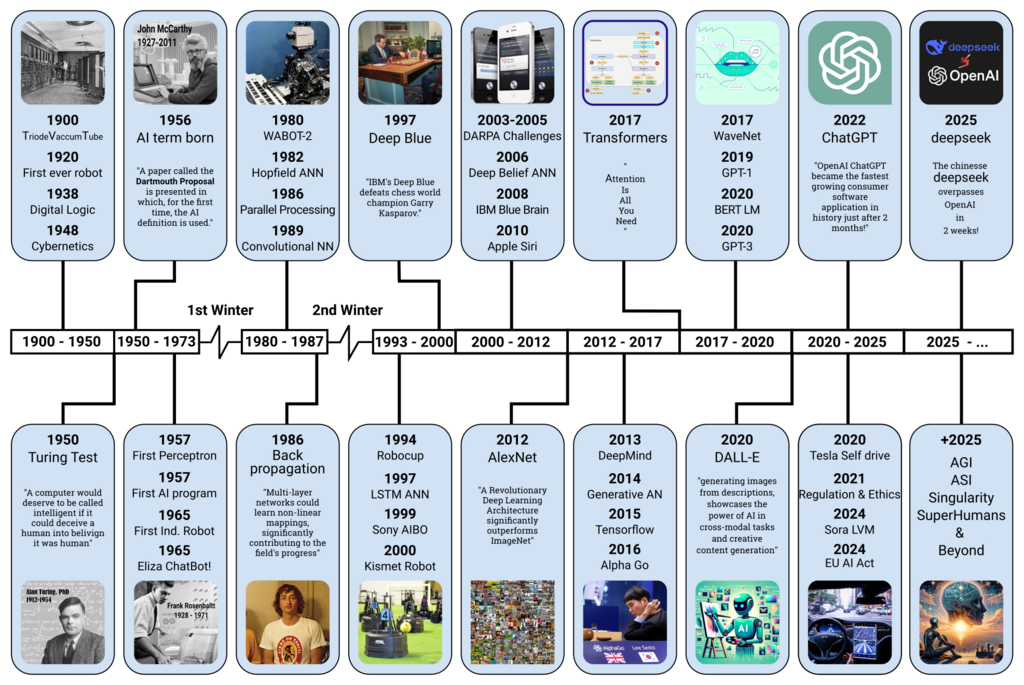
The idea of autonomous agents has been around almost as long as AI itself. In the 1950s, pioneers like John McCarthy envisioned systems that could use logic to achieve goals, a concept that laid the groundwork for agents.
Through the 1970s and 80s, AI focused heavily on "expert systems." These programs could mimic the decision-making ability of a human expert in a narrow field, like diagnosing diseases. While impressive, they were often rigid and lacked true autonomy.
The concept of the software agent as we know it today truly began to take shape in the late 1980s and early 1990s. This was when the key characteristics of autonomy, reactivity, and pro-activeness were formally defined. The rise of the internet created a perfect playground for these agents, which could now roam a vast digital environment to fetch information, compare prices, or manage data.
This evolution brought us from simple, rule-based programs to the sophisticated, learning-based agents that are becoming central to modern AI.
Why Agents Matter
AI agents represent a fundamental shift in how we build intelligent systems. Instead of creating tools that require constant human direction, we can create partners that can handle complex tasks independently.
Agents provide a powerful framework for tackling problems in dynamic and unpredictable environments. Whether it's a robot exploring Mars, an algorithm trading stocks, or a system managing a complex power grid, the agent-based approach allows for flexibility and adaptation. They are the core building blocks for creating more complex AI, including systems where multiple agents work together to solve problems none could handle alone.
Understanding agents is key to understanding where AI is heading. They are the entities that sense, think, and act in the digital and physical worlds, bringing artificial intelligence to life.