Introduction to AI Agents
Introduction to AI Agents
What is an AI Agent?
An AI agent is a program that acts on your behalf to achieve a goal. Think of it like a very smart assistant. It senses its surroundings, makes decisions based on what it perceives, and then takes action in that environment. This could be anything from a self-driving car navigating traffic to a smart thermostat adjusting the temperature in your home.
At its core, an agent follows a simple loop: perceive, decide, and act.
The “environment” can be a physical space, like a room for a robot vacuum, or a digital one, like the internet for a shopping bot. The agent uses sensors to perceive its environment (cameras, microphones, data feeds) and actuators to perform actions (wheels, speakers, placing an online order).
The Four Traits of an Agent
Not every program is an agent. True AI agents have a few key characteristics that make them special.
Autonomy
noun
The ability to perform tasks and make decisions without direct human control. An autonomous agent can operate on its own to pursue its goals.
Agents are also reactive. They can respond to changes in their environment in a timely way. If you walk in front of a self-driving car, it reacts by braking.
On top of reacting, agents are proactive. They don't just wait for things to happen; they take initiative to achieve their goals. A smart calendar agent might proactively reschedule a meeting if it sees a conflict, rather than just flagging the problem.
Finally, many agents have social ability. This means they can communicate with other agents or with humans. For example, two delivery drones might communicate to decide which one will handle a specific package, avoiding duplicated effort.
| Characteristic | Description | Example |
|---|---|---|
| Autonomy | Acts without constant human input | A smart thermostat sets the temperature based on the weather. |
| Reactivity | Responds to environmental changes | A spam filter moves a suspicious new email to the junk folder. |
| Proactivity | Takes initiative to meet goals | A stock-trading bot buys a stock when its price hits a target. |
| Social Ability | Communicates with other entities | Two game characters coordinate their attack on a player. |
Types of Agents
AI agents come in several flavors, from simple to complex. Their design depends on the job they need to do.
Simple Reflex Agents: These are the most basic agents. They work on a simple "if-then" rule. If condition X occurs, perform action Y. They don't have memory of the past; they only react to what they perceive right now. A thermostat that turns on the heat when the temperature drops below 68 degrees is a simple reflex agent.
Model-Based Reflex Agents: These agents are a step up. They maintain an internal "model" or understanding of how the world works. They use this model to handle situations where they can't see everything at once. A self-driving car needs a model of the road to know that a car that just passed behind a truck still exists.
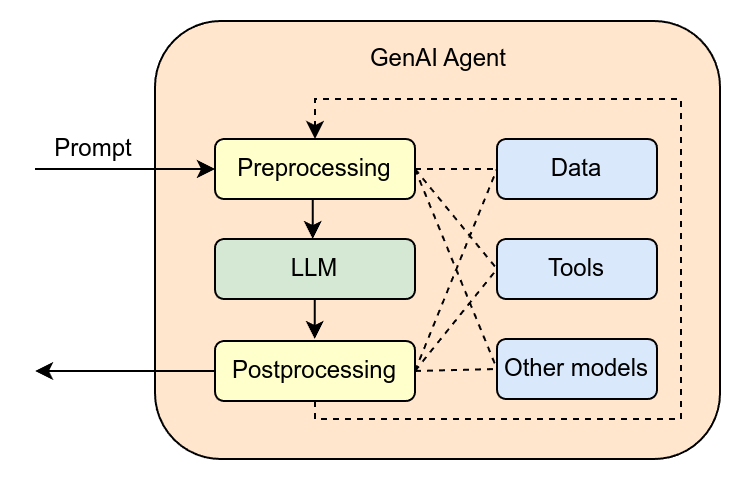
Goal-Based Agents: These agents have a specific goal to achieve. They can think ahead and choose actions that will bring them closer to their objective. If a delivery robot's goal is to get a package to a specific room in a building, it will consider different paths and choose the one that leads to the destination.
Utility-Based Agents: Sometimes, just reaching a goal isn't enough. Utility-based agents aim for the best possible outcome. They have a "utility function" that measures how desirable a particular state is. A ride-sharing app's agent doesn't just find you a ride (the goal); it tries to find the fastest or cheapest ride (the utility).
Learning Agents: The most advanced agents can learn from their experiences to improve their performance over time. They can start with no knowledge and gradually become experts. A chess-playing AI is a learning agent. It plays millions of games, learning which moves lead to a win and which lead to a loss, constantly refining its strategy.
These agent types build on each other, with each adding a new layer of sophistication. Understanding these basic building blocks is the first step to seeing how complex AI systems operate in our world.