Introduction to AI Agents
Introduction to AI Agents
What Is an AI Agent?
Think about a self-driving car. It uses cameras and sensors to “see” the road, other cars, and pedestrians. It processes this information to make decisions, like when to speed up, slow down, or turn. Then, it acts on those decisions by controlling the steering wheel, accelerator, and brakes. This is the essence of an AI agent.
At its core, an AI agent is a system that can perceive its environment and take actions to achieve a specific goal. The “environment” could be anything from a busy street to a chess board or the internet. The agent interacts with this environment using sensors to gather information and actuators to perform actions.
An agent is anything that can be viewed as perceiving its environment through sensors and acting upon that environment through actuators.
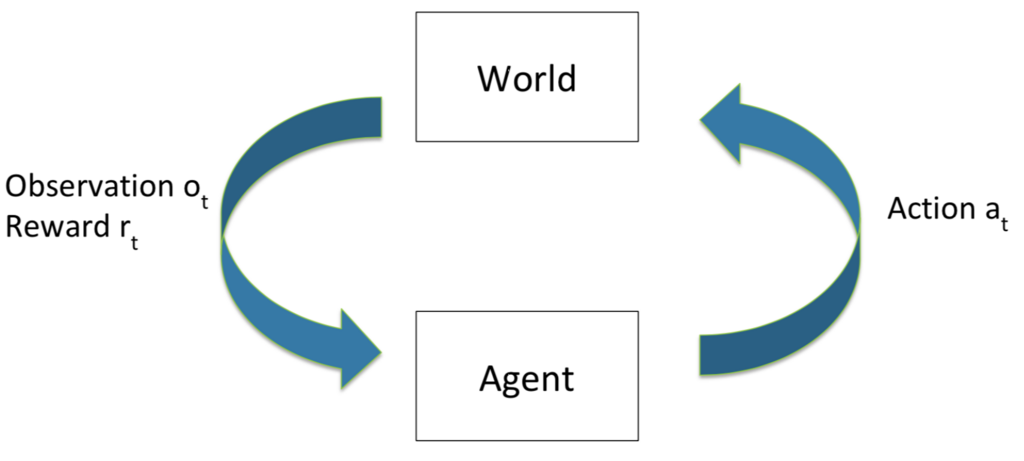
This simple loop of observing, thinking, and acting is what separates an agent from a regular computer program. A standard program follows a fixed set of instructions, but an agent can respond dynamically to changes around it.
Key Characteristics
Not all software that makes decisions is an agent. AI agents have a few distinct traits that make them special.
| Characteristic | Description |
|---|---|
| Autonomy | Agents can operate on their own without direct human control. They make their own choices to pursue their goals. |
| Adaptability | An agent can learn from its experiences and change its behavior over time to improve its performance. |
| Goal-Oriented | Every agent is designed with a purpose. Its actions are not random but are directed toward achieving a specific outcome. |
These characteristics allow agents to handle complex and unpredictable situations. A simple script might fail if something unexpected happens, but an autonomous, adaptive agent can figure out a new course of action.
A Brief History
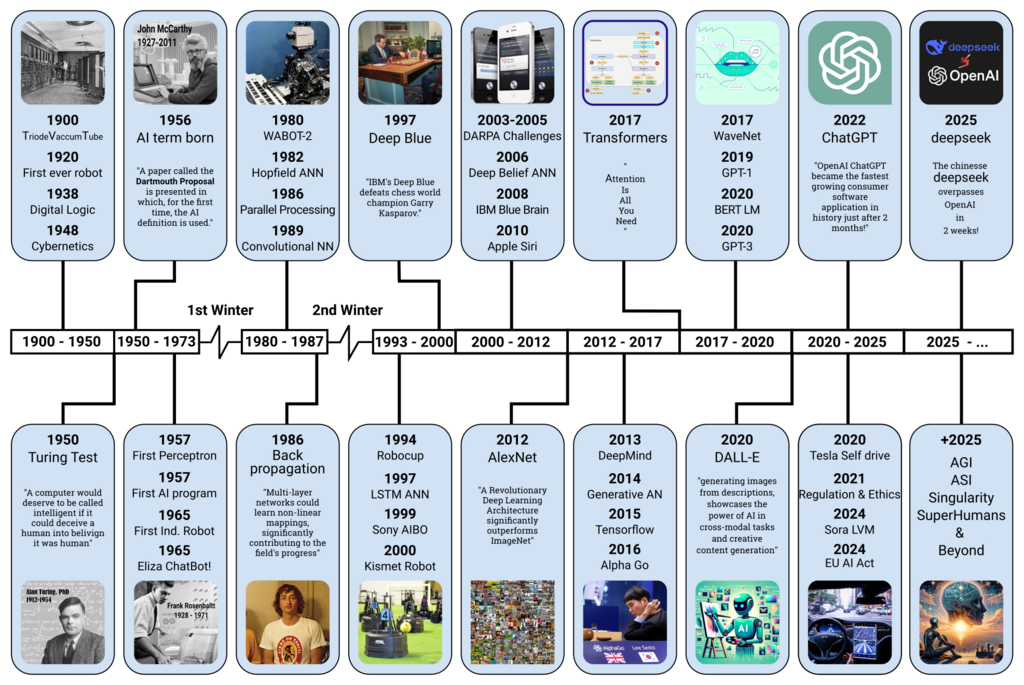
The idea of autonomous agents isn't new. It has its roots in the early days of artificial intelligence, but the first agents were quite simple. Early systems from the 1950s and 60s were rule-based, meaning they followed a strict set of “if-then” instructions programmed by a human. They were good at specific, predictable tasks, like playing a game of checkers, but they couldn't handle anything they hadn't been explicitly programmed for.
As computer science advanced, so did agents. In the 1980s and 90s, researchers developed agents that could learn and reason about their environments. They started to build internal models of their world, allowing them to plan ahead. The rise of machine learning and, more recently, large language models (LLMs) has supercharged agent capabilities, leading to the sophisticated systems we see today.
Where Agents Live
AI agents can operate in a wide range of environments, which can be grouped into three main categories.
Understanding an agent's environment is crucial because it defines the challenges the agent will face and the capabilities it needs to succeed. An agent designed to navigate the web needs a different skill set than one designed to assemble a car.
What is the fundamental cycle that defines an AI agent's operation?
According to the text, what primarily distinguishes an AI agent from a standard computer program?
Now you have a solid grasp of what AI agents are, what makes them unique, and where they operate. This foundation is the first step toward understanding how they're changing our world.