Introduction to AI Agents
Introduction to AI Agents
What Are AI Agents?
At its core, an AI agent is a system that can observe its surroundings, make decisions, and act on those decisions to achieve a specific goal. Think of it as an autonomous entity that does things on your behalf, whether in the digital world or the physical one.
An AI agent is a software program designed to understand its environment, process information, and take actions to achieve specific goals.
A self-driving car is a classic example. Its goal is to get you from point A to point B safely. It uses sensors (like cameras and radar) to perceive its environment, a central computer to make decisions (like when to brake or turn), and actuators (like the steering wheel and brakes) to take action. Other examples include the spam filter in your email, which decides which messages are junk, or a smart thermostat that adjusts the temperature based on your habits.
Different Kinds of Agents
Not all agents are created equal. They vary greatly in complexity, depending on how they make decisions. We can generally group them into three main categories.
Reactive agents are the simplest. They operate on a simple "if this, then that" logic. They perceive the world and react based on a set of predefined rules, without any memory of the past or thought for the future. A roomba vacuum is a good example; if it senses an obstacle, it changes direction.
Deliberative agents are more sophisticated. They maintain an internal model of the world and can plan their actions. They think ahead, considering how their choices will affect their ability to reach their goals. A GPS navigation system that calculates the fastest route by considering traffic, road closures, and speed limits is a deliberative agent.
Hybrid agents combine both reactive and deliberative approaches. They use a layered architecture, where a reactive layer handles immediate, time-sensitive tasks, while a deliberative layer manages long-term planning. Many modern robots are hybrid agents, allowing them to quickly dodge an unexpected obstacle while still working towards a larger goal, like assembling a car part.
Agents in the Wild
AI agents are already integrated into many aspects of our lives. In e-commerce, they power recommendation engines that suggest products you might like. In finance, they execute trades based on market fluctuations. In healthcare, they can analyze medical images to help doctors detect diseases earlier.
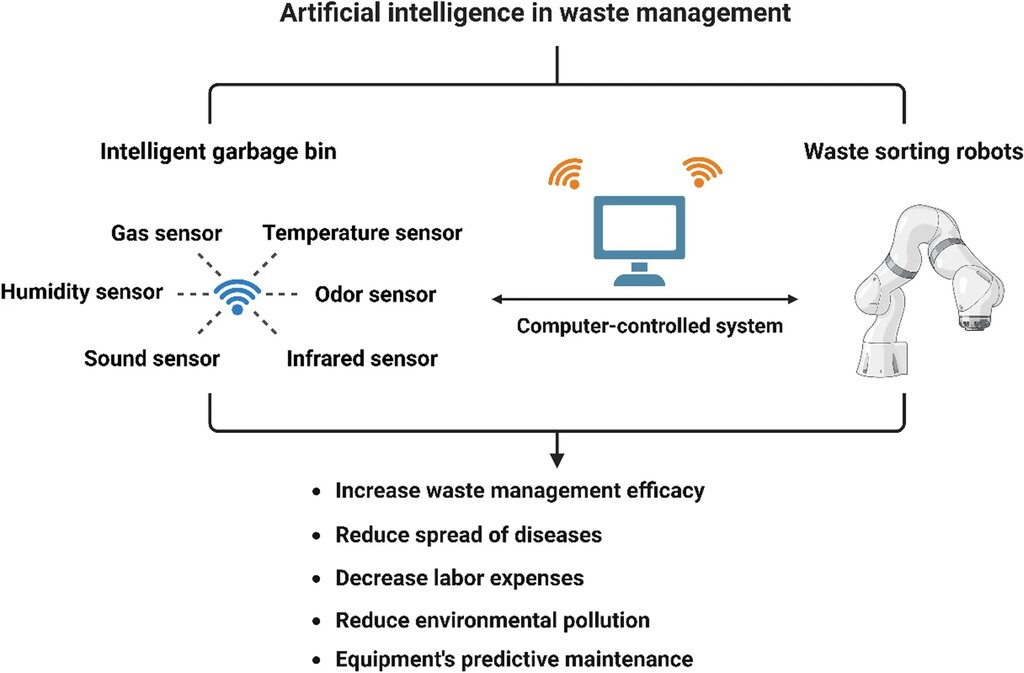
The potential applications are vast. Imagine an agent that manages your calendar, automatically scheduling meetings and booking travel by coordinating with the agents of your colleagues. Or consider an agent that monitors a complex manufacturing process, predicting equipment failures before they happen and ordering replacement parts automatically.
Benefits and Concerns
The rise of AI agents brings significant benefits. They can handle tedious, repetitive tasks, freeing up humans for more creative and strategic work. This leads to increased productivity and efficiency. Agents can also process massive amounts of data far beyond human capability, unlocking new insights and driving innovation in fields from science to business.
However, their growing autonomy also raises important questions. How do we ensure these agents behave safely and reliably, especially in high-stakes environments like medicine or transportation? If an autonomous agent makes a mistake, who is responsible? There are also concerns about job displacement as agents take on more tasks, and the potential for misuse in areas like autonomous weapons or mass surveillance.
These challenges don't have easy answers, but they are critical conversations to have as we continue to develop and deploy more capable AI agents.
Time to test your knowledge.
What are the three fundamental capabilities that define an AI agent?
A robot vacuum cleaner bumps into a wall and immediately changes direction. This is a classic example of what kind of agent?
Understanding what AI agents are and the different ways they operate is the first step in appreciating their power and potential impact.