Introduction to AI Agents
Introduction to AI Agents
What Is an AI Agent?
Think of an AI agent as a smart program that can operate on its own. It's designed to perceive its environment, make decisions, and take actions to achieve a specific goal. Unlike a simple script that just follows a list of commands, an agent can react to new information and change its plan.
Agents in AI are autonomous entities that perceive their environment, process information, and take actions to achieve specific goals.
This core loop of perceiving, thinking, and acting is what makes an agent 'intelligent.' For example, a smart thermostat (the agent) perceives the room's temperature (the environment). It then decides if the room is too hot or cold based on its settings (the goal) and takes action by turning the heat or air conditioning on or off.
Defining Features
Three main characteristics set AI agents apart from other types of software.
| Characteristic | Description |
|---|---|
| Autonomy | Agents can perform tasks without direct human control. They have a degree of independence in their decision-making. |
| Adaptability | They can learn from experience and adjust their behavior based on changes in their environment. |
| Goal-Oriented | An agent's actions are purposeful and directed toward achieving a specific, predefined objective. |
A regular computer program might perform a task, but it will do it the same way every single time. An AI agent, on the other hand, can try different approaches, learn what works best, and adapt to unexpected situations. This ability to operate independently and learn makes them powerful tools.
A Brief History
The idea of autonomous agents has been around almost as long as the field of artificial intelligence itself. In the 1950s, pioneers like John McCarthy envisioned intelligent systems that could reason and solve problems like humans.
Early agents were simple and rule-based. They operated in very controlled environments and followed a strict set of 'if-then' instructions. For example, an early chess program was an agent that could only perceive the board, follow the rules of chess, and make a move.
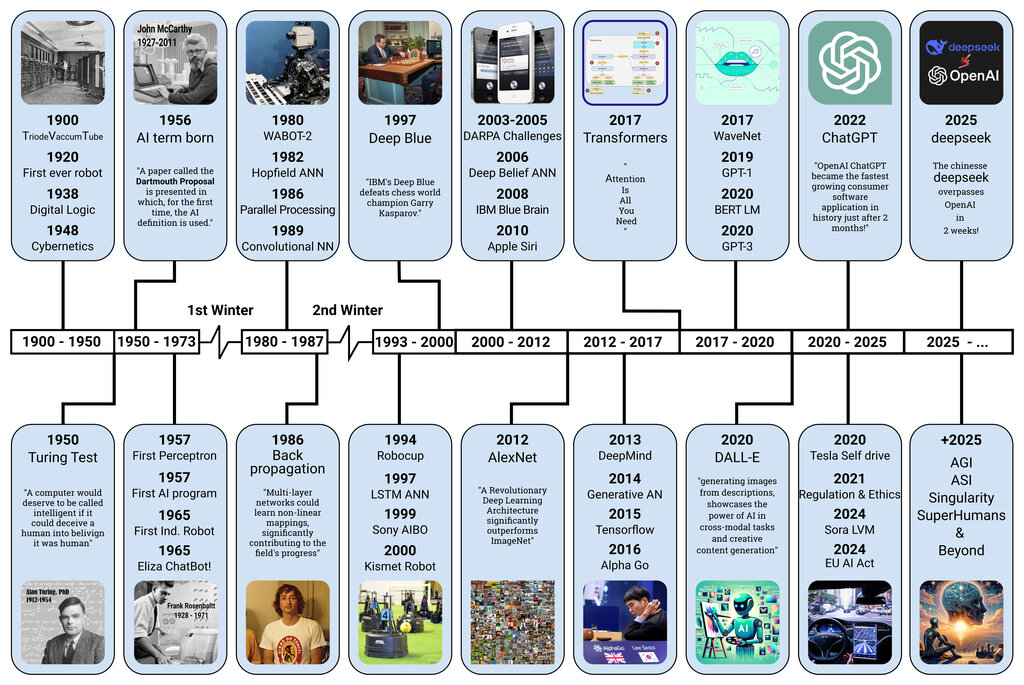
Over the decades, as computing power grew and our understanding of AI deepened, agents became more sophisticated. The development of machine learning allowed them to learn from vast amounts of data instead of being explicitly programmed for every scenario. This shift led from simple, reactive agents to the proactive, learning agents we see emerging today, capable of tackling complex, real-world tasks.