Introduction to Agents
Introduction to Agents
What Is an Agent?
In artificial intelligence, the term "agent" doesn't refer to a secret spy. Instead, think of it as anything that can observe its surroundings and then act on them. A simple thermostat is an agent. It perceives the room's temperature (its environment) and acts by turning the heat or air conditioning on or off to reach a specific goal.
This basic idea is the foundation for much more complex systems. From a self-driving car navigating traffic to a software bot buying stocks, the core principle is the same: perceive and act. Agents are the fundamental actors in the world of AI.
Agent
noun
An entity that perceives its environment through sensors and acts upon that environment through actuators.
The Core Characteristics
Not everything that perceives and acts is a sophisticated AI agent. To be truly considered an agent in the context of AI, an entity usually has a few key traits.
Autonomy: An agent can operate without direct human control. It makes its own decisions based on what it perceives to achieve its goals. A smart thermostat adjusts the temperature on its own, without you needing to constantly monitor it.
Reactivity: An agent can respond to changes in its environment in a timely manner. If you open a window and the room gets cold, the thermostat (our simple agent) reacts to this change and turns on the heat.
Pro-activeness: Agents don't just react; they can also take initiative. They are goal-driven. A more advanced agent, like a personal assistant app, might proactively remind you to leave for a meeting early because it perceived heavy traffic on your route.
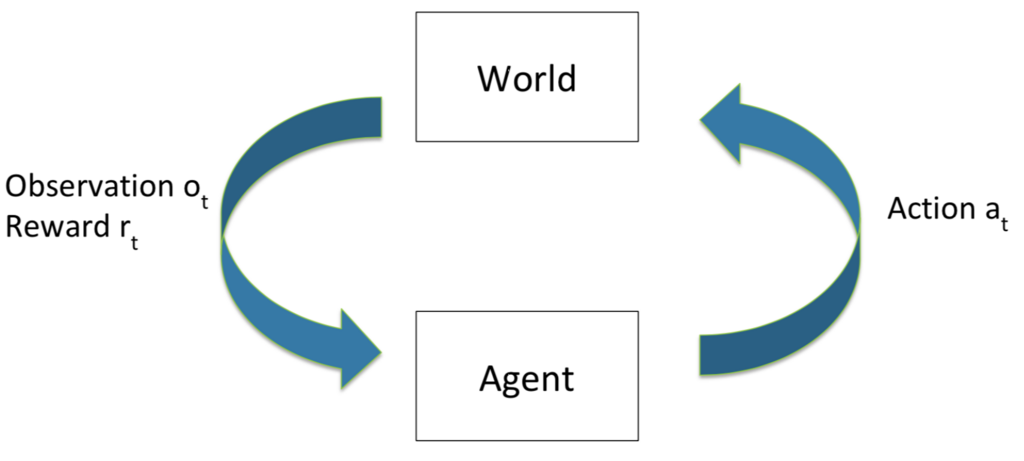
These characteristics combine to create a continuous loop of interaction. The agent senses the world, decides what to do based on its goals, and then performs an action that changes the world, starting the cycle over again.
Why Agents Matter
The concept of an agent is powerful because it gives us a way to design and build complex, intelligent systems. By breaking down a huge problem into smaller tasks for individual agents, we can create systems that achieve things a single program could not.
Agents are the building blocks of everything from video game characters that seem to think for themselves to the complex algorithms that manage power grids or recommend movies. Understanding this fundamental concept of a goal-oriented entity that perceives and acts is the first step toward understanding how modern AI works.
Let's check your understanding of these core ideas.
In the context of artificial intelligence, what is the most accurate definition of an "agent"?
Which of the following is the best example of an agent as described in AI?
Now that you have a grasp of what agents are, you're ready to explore the different types and how they make decisions.