Introduction to Agentic AI
Introduction to Agentic AI
AI That Takes Initiative
For the past few years, AI has mostly been a conversation partner. You give it a prompt, it gives you a response. It’s a powerful tool, but it's fundamentally reactive. It waits for you to tell it what to do next.
A new chapter is beginning, centered on a concept called agentic AI. These are AI systems that don't just respond; they act. They can pursue goals, make decisions, and complete complex tasks on their own, without needing a human to guide every single step.
Agentic AI represents a fundamental paradigm shift in artificial intelligence, moving from passive, prompt-driven systems to autonomous, goal-oriented agents that can plan, learn, and execute complex tasks with minimal human intervention.
The key word here is autonomy. An agentic AI is given an objective, not just a command. Instead of telling it “First, search for flights to Paris, then tell me the prices,” you could say, “Plan a weekend trip to Paris for me next month.” The AI agent then figures out all the necessary steps—finding flights, comparing hotels, checking train schedules, and maybe even suggesting restaurants—all by itself.
Autonomy
noun
The ability of a system to make its own independent decisions and take actions to achieve a goal without direct, constant human control.
The Evolution to Action
This shift from reactive to proactive AI is a major step in the evolution of artificial intelligence. Traditional AI, often called Artificial Narrow Intelligence (ANI), excels at specific, well-defined tasks like classifying images or translating text. You give it an input, and it produces an output.
Generative AI, like the large language models we're now familiar with, built on this by learning to generate new content. But it still operates within a request-response cycle. Agentic AI is the next logical progression, aiming for a more general and capable intelligence that can operate more freely in the world to get things done.
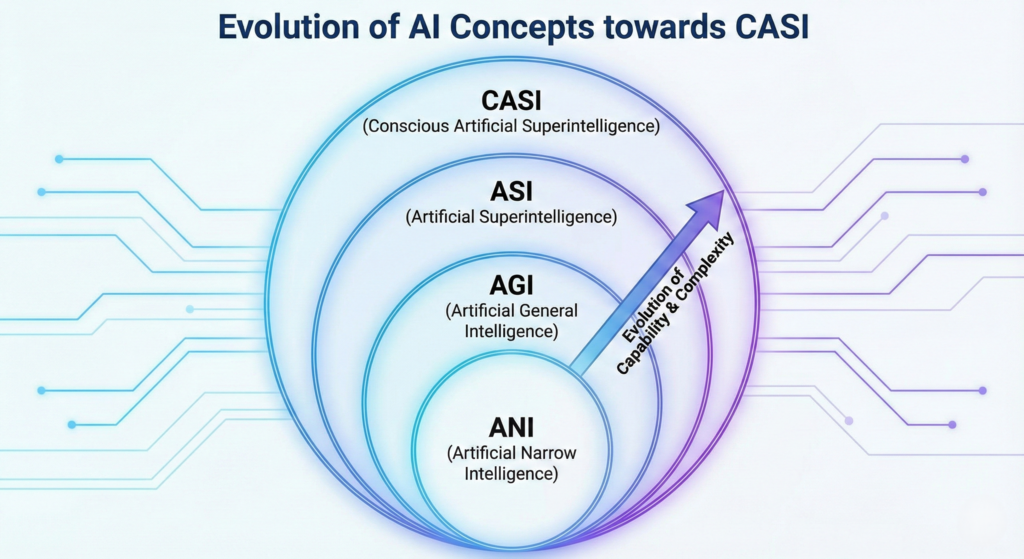
The ability to act autonomously allows AI to tackle problems that are too complex or time-consuming for a simple, one-step prompt. It can handle ambiguity, adapt to unexpected changes, and string together multiple actions to achieve a long-term goal. This is what makes the concept so powerful.
How Agents Work
So what allows an AI to act on its own? It’s not magic. Agentic systems are built on a few core principles that create a loop of perception, planning, and action.
An agentic AI constantly asks itself three questions: Where am I now? What is my goal? And what should I do next to get closer to that goal?
First, the AI needs to perceive its environment. This could be the information on a webpage, the data in a spreadsheet, or feedback from a tool it just used. Next, it must reason and plan. Using a large language model as its “brain,” the agent breaks its main goal down into smaller, manageable steps. It thinks through a strategy, considering different options and potential outcomes.
Finally, it takes action. This often means using tools—like performing a web search, accessing a database, or writing code. After each action, it observes the result, updates its understanding of the situation, and adjusts its plan. This continuous cycle of observing, thinking, and acting is what allows the agent to navigate complex tasks autonomously.
This framework allows agentic AI to move beyond the limits of a single prompt, opening up new possibilities for how we can use technology to solve problems.