Introduction to Agentic AI
Introduction to Agentic AI
Beyond Answering Questions
Most of us think of AI as a tool that responds to our commands. We ask a question, it gives an answer. We give a prompt, it generates text or an image. This is a powerful, but reactive, relationship. The AI waits for us to tell it what to do.
Agentic AI is different. It represents a shift from a reactive tool to a proactive partner. Instead of just responding to single commands, an agentic AI system can pursue a goal on its own, making decisions and taking actions over multiple steps without needing constant human guidance.
Agentic AI refers to AI systems designed with autonomy, capable of reasoning, planning multi-step tasks, adapting to changing contexts, and acting toward defined goals without constant human prompting.
Think of it like the difference between a calculator and a financial advisor. A calculator waits for you to input numbers and an operation. A financial advisor understands your goal, like "save for retirement," and then creates and executes a multi-step plan involving budgeting, investing, and regular check-ins. The advisor has agency—the ability to act independently toward a goal.
From Reactive to Proactive
What makes an AI system "agentic"? It comes down to a few key characteristics that set it apart from more traditional AI models.
Autonomy: It can operate without direct, step-by-step human control. Goal-Oriented: It is driven by objectives, not just immediate commands. Adaptability: It can adjust its plan based on new information or changes in its environment.
Traditional AI excels at specific, well-defined tasks like classifying images or translating text. It’s trained on a dataset and performs that single function. An agentic system, on the other hand, can orchestrate multiple tools and skills to navigate complex, unpredictable situations.
| Feature | Traditional AI | Agentic AI |
|---|---|---|
| Interaction | Reactive (responds to prompts) | Proactive (pursues goals) |
| Scope | Single, well-defined tasks | Complex, multi-step tasks |
| Autonomy | Low (requires human input) | High (operates independently) |
| Environment | Static and predictable | Dynamic and changing |
Agents in the Wild
This might sound like science fiction, but you've likely already seen early forms of agentic AI in action.
Autonomous vehicles are a prime example. Their goal isn't just to "turn left now." It's to "get from Point A to Point B safely." To do this, the car must constantly perceive its environment, plan its next move, and execute actions like steering or braking. It adapts to unexpected events, like a pedestrian crossing the street, without waiting for a human to intervene.
Intelligent virtual assistants are also becoming more agentic. An early assistant could follow a command like, "Set a timer for 10 minutes." A more advanced agent could handle a goal like, "Find a flight to Miami next Tuesday, book it using my saved credit card, and add it to my calendar." This requires planning, using different tools (flight search, payment system, calendar), and executing a sequence of actions.
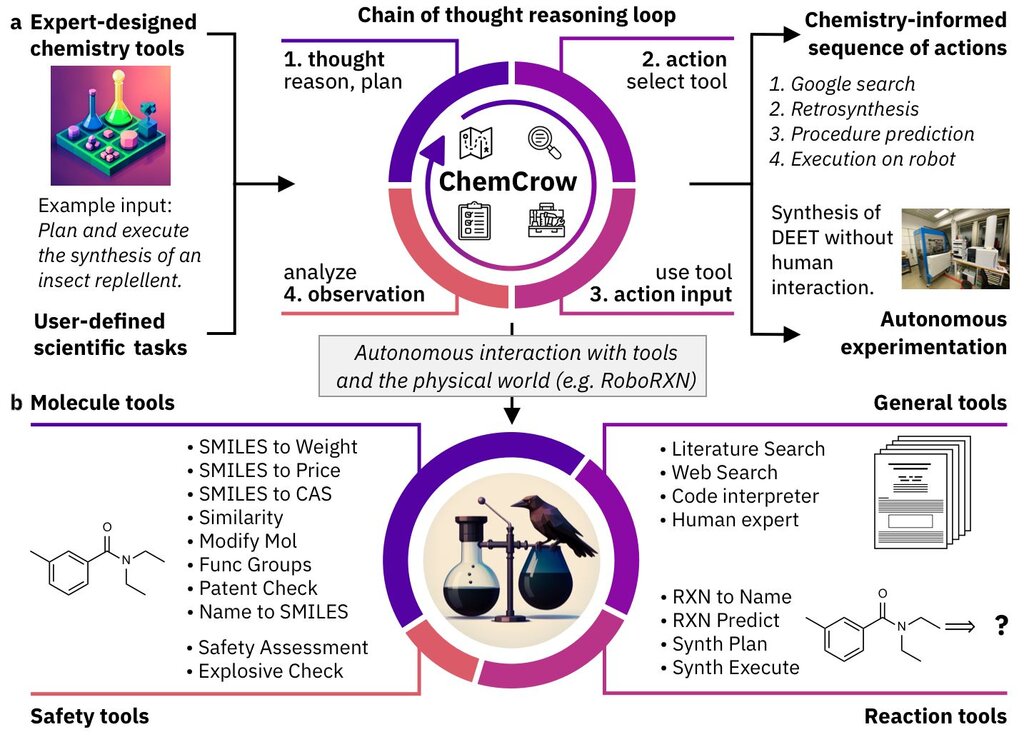
From managing complex logistics in a supply chain to automated scientific discovery, agentic AI is designed to take on broad goals and figure out the best way to achieve them, making it one of the most exciting frontiers in artificial intelligence.
What is the primary difference between an agentic AI and a traditional AI?
According to the text's analogy, a traditional, reactive AI is to a calculator as an agentic AI is to a...
This shift from reactive tools to proactive agents opens up a new world of possibilities for how we interact with technology.