Introduction to Agentic AI
Introduction to Agentic AI
Beyond Prompts
Most of us think of AI as something that responds. We give it a prompt, and it gives us an answer, an image, or a piece of code. This is a reactive relationship. We are the drivers, and the AI is a very sophisticated passenger, providing information when asked. But what if the AI could take the wheel?
This is the core idea behind agentic AI. These are systems designed not just to respond, but to act. You give an agentic AI a complex goal, and it works autonomously to achieve it. It can break down the goal into smaller tasks, make a plan, use tools, and even correct its own mistakes along the way, all with limited human supervision.
Instead of executing a single command, an agentic AI can orchestrate a whole series of actions to reach a final objective.
Think of it like the difference between hiring a freelance writer for a single article versus hiring a project manager. You tell the writer exactly what to write. You tell the project manager you want to launch a marketing campaign, and they handle everything else: strategy, writing, design, and publishing. The project manager has agency.
Agency
noun
The capacity of an actor to act independently and to make their own free choices.
The Path to Autonomy
Agentic AI isn't a sudden leap forward; it's the next logical step in a long evolution. Early AI systems were mostly rule-based. Think of a simple chess program from the 1980s. It couldn't learn or adapt; it just followed a rigid set of "if this, then that" instructions programmed by a human.
Then came machine learning and, more recently, large language models (LLMs). These systems are far more powerful because they learn patterns from vast amounts of data. This allows them to write essays, generate images, and translate languages. However, they are still fundamentally reactive. They wait for a user's prompt before doing anything.
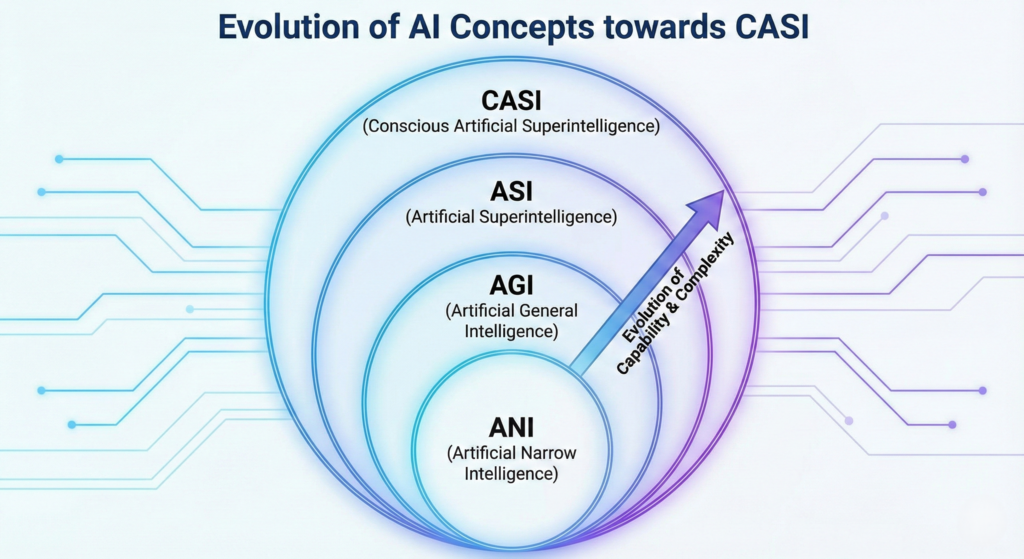
Agentic AI builds on the power of LLMs but adds a crucial new layer: the ability to act proactively and persistently toward a goal. It represents a shift from narrow intelligence (doing one task well) toward a more general and adaptable form of problem-solving.
Why Autonomy Matters
Autonomy is the defining characteristic of agentic AI. It's the difference between a powerful calculator and a helpful assistant. A calculator is a tool that requires your constant input for every single step. An autonomous agent can take a high-level goal and figure out the steps for itself. This ability to operate independently is what makes agentic AI so significant.
The most integral feature of agentic AI is autonomy: the ability to operate independently and without human approval or oversight.
This unlocks the potential to tackle complex, multi-step problems that would be too cumbersome to manage with a simple prompt-and-response model. A task like "research the top three competitors for my new business, summarize their strengths and weaknesses, and draft an email to a potential investor" involves many stages. An agentic AI could handle this entire workflow on its own.
Foundational Principles
So, what allows an AI to act autonomously? It's not magic, but a combination of several key capabilities working together. These are the foundational principles that give an AI agency:
-
Goal Decomposition: The ability to take a large, complex goal and break it down into smaller, more manageable sub-tasks.
-
Planning: Creating a logical sequence of steps to execute those sub-tasks. The system must decide what to do first, second, and so on.
-
Tool Use: The ability to access and use external tools to get things done. This could mean browsing the web, accessing a database, or using another application's API.
-
Self-Correction: The capacity to evaluate its own progress, recognize when a task has failed or an obstacle has appeared, and adjust the plan accordingly. If one approach doesn't work, it can try another.
These principles transform a powerful language model into an active agent that can navigate complex tasks in the digital world.