Introduction to Agentic AI
Introduction to Agentic AI
What is Agentic AI?
Artificial intelligence is often seen as a tool that responds to our commands. You ask a question, it gives an answer. You give a prompt, it generates an image. This is a reactive relationship. But what if an AI could act on its own to achieve a goal you set for it, without needing step-by-step instructions? That's the core idea behind agentic AI.
Agentic AI is a branch of artificial intelligence focused on building autonomous, intelligent agents capable of making decisions, interacting with other agents and completing complex tasks with minimal human intervention.
Think of it like hiring a project manager versus using a simple tool. A calculator (a traditional AI tool) waits for you to input numbers and an operation. A human project manager (an agent), on the other hand, understands the final goal—say, organizing an event. They then independently book a venue, contact vendors, and manage the guest list. Agentic AI systems operate like that project manager. They have agency, meaning they can act independently to make decisions and take actions in their environment to reach an objective.
From Following Rules to Making Plans
To truly grasp what makes agentic AI different, it helps to compare it with the traditional AI systems most people are familiar with. Traditional AI excels at specific, well-defined tasks. It recognizes faces, translates languages, or predicts stock prices based on the data it was trained on. It follows a set of rules or patterns, even if those rules are incredibly complex.
Agentic AI takes a leap forward. Instead of just executing a single task, it can break down a larger goal into a series of smaller, manageable steps. It can then execute those steps, learn from the results, and adjust its plan as it goes. This introduces a level of autonomy and adaptability that sets it apart.
| Feature | Traditional AI | Agentic AI |
|---|---|---|
| Operation | Reactive; responds to specific inputs. | Proactive; initiates actions to achieve a goal. |
| Autonomy | Low; requires human direction for each step. | High; operates independently with minimal supervision. |
| Task Scope | Narrow; performs a single, well-defined task. | Broad; manages complex, multi-step workflows. |
| Decision Making | Follows pre-programmed rules or patterns. | Makes dynamic decisions and adapts its strategy. |
This shift from a reactive tool to a proactive partner is a significant step in the evolution of artificial intelligence.
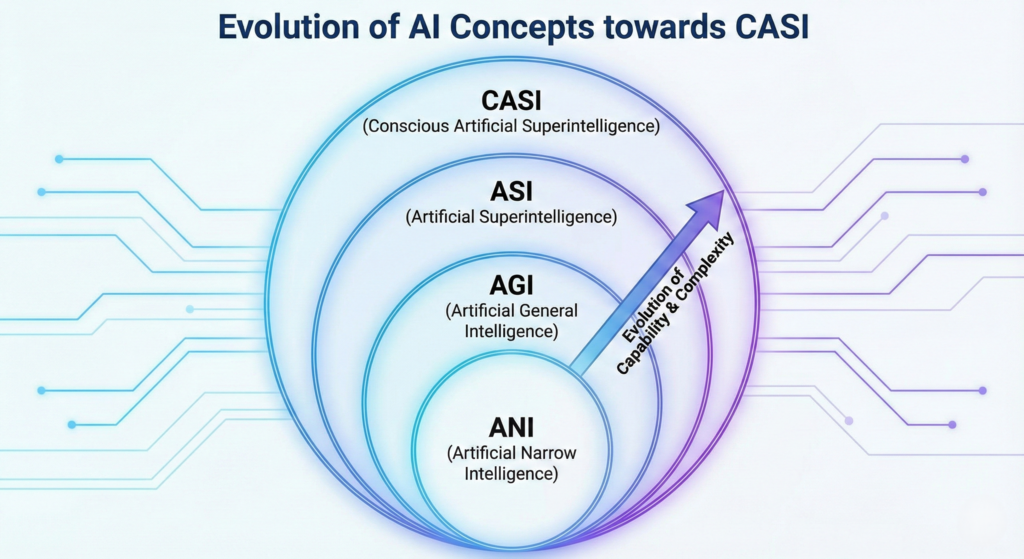
A Brief History
The idea of autonomous agents isn't new. It has roots in the early days of AI research in the 1950s, when pioneers imagined creating machines that could think and act like humans. Early versions were called "intelligent agents" and were often simple, rule-based programs designed for specific environments, like navigating a maze or playing a game of chess.
For decades, progress was limited by computing power and the complexity of programming true autonomy. Most AI development focused on creating specialized systems that were very good at one thing. With the recent explosion in large language models (LLMs), however, the game has changed. These powerful models provide a reasoning engine that can understand complex goals, plan sequences of actions, and interact with different software tools. This breakthrough has made the dream of capable, autonomous agents a practical reality.
Why It Matters
The significance of agentic AI lies in its potential to dramatically boost productivity and automate complex workflows far beyond what current technology can achieve. Instead of a person needing to manually operate several different software programs to accomplish a task, they could simply state their goal to an AI agent, which would then handle all the intermediate steps.
Imagine an agent that can plan your entire vacation. You tell it your budget, desired dates, and interests, and it researches flights, compares hotels, books reservations, and builds a full itinerary. Or consider a business agent that monitors sales data, identifies trends, and automatically launches a marketing campaign to capitalize on a new opportunity.
By handing off complex, multi-step processes to autonomous agents, people can focus on higher-level strategy and creativity.
Of course, this potential comes with challenges. Ensuring that autonomous systems operate safely, reliably, and ethically is a major concern. Giving an AI the ability to act on its own requires robust guardrails to prevent unintended consequences. Issues of security, accountability, and control must be carefully addressed as these systems become more powerful and integrated into our daily lives.
Now, let's test your understanding of these core concepts.
Which of the following analogies best captures the core difference between traditional AI and agentic AI?
What recent technological breakthrough has been the primary catalyst for making capable, autonomous agents a practical reality?