Introduction to Agentic AI
Introduction to Agentic AI
What is Agentic AI?
Think of a traditional AI like a very good calculator. You give it a specific problem, and it gives you a specific answer. It's reactive. It waits for your command.
Agentic AI is different. It's more like a project manager you hire to achieve a goal. You don't tell it every single step to take. You give it an objective, like "plan a team offsite for next month," and it figures out the rest. It can break down the goal into smaller tasks, research venues, compare prices, and even book flights, all on its own.
Agentic AI systems are autonomous agents that can pursue goals with minimal human intervention. They can plan, reason, and adapt to new information.
This ability to act independently is what makes them "agentic." They have agency. These systems operate in a continuous loop: they perceive their environment, reason about what to do next, and then take action. This cycle allows them to handle complex, multi-step tasks that traditional AI can't.
Beyond Simple Responses
The key difference between agentic and traditional AI lies in autonomy and initiative. A traditional AI, like a spam filter or a language translation tool, is designed to perform a specific, narrow task. It reacts to the data it's given. You ask it to translate a sentence, and it does. It doesn't then ask if you'd like a full document translated or suggest corrections to the original text.
An agentic AI, on the other hand, is proactive. It doesn't just complete a single task; it manages a workflow. It can set its own sub-goals to achieve a larger objective. This distinction is crucial for understanding its potential.
| Feature | Traditional AI | Agentic AI |
|---|---|---|
| Behavior | Reactive | Proactive & Autonomous |
| Task Scope | Single, well-defined task | Complex, multi-step goals |
| Planning | Follows predefined rules | Creates and executes its own plans |
| Human Input | Requires constant direction | Needs a high-level goal |
| Example | A chatbot answering a question | A system managing your calendar |
The Building Blocks
Agentic AI isn't one single technology. It's a system built from several core components of modern artificial intelligence. Understanding these pieces helps clarify how an agent can perceive, reason, and act.
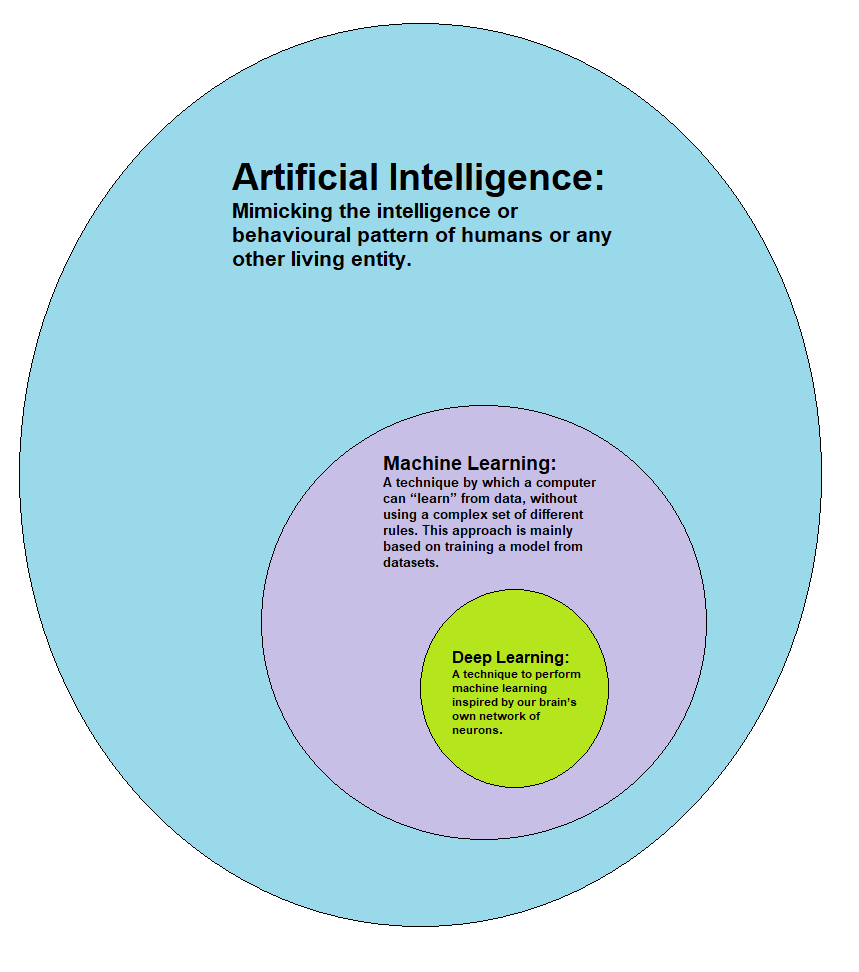
Machine Learning (ML): This is the foundation. It's how computers learn from data without being explicitly programmed for every scenario. Instead of writing rules, developers feed the system vast amounts of data, and the ML model learns to recognize patterns.
Neural Networks: Inspired by the human brain, these are a key part of ML, especially deep learning. They are networks of interconnected nodes, or "neurons," that process information. They are particularly good at finding subtle patterns in complex data, like identifying a cat in a photo.
Reinforcement Learning: This is a type of machine learning where the AI learns through trial and error. The agent receives rewards for good actions and penalties for bad ones. Over time, it learns the best strategy to maximize its reward, much like teaching a dog a new trick with treats.
Natural Language Processing (NLP): This gives the AI the ability to understand and generate human language. It's how an agent can understand your text-based goal, read documents on the internet, and communicate its results back to you.
Computer Vision: This is how an AI system sees and interprets the visual world. For agents operating in the real world, like a self-driving car or a warehouse robot, computer vision is essential for navigating and interacting with physical objects.
By combining these technologies, an agentic AI can take a high-level goal, understand its context, create a plan, and execute it by interacting with digital tools or even the physical world.
Time to check what you've learned.
What is the primary characteristic that distinguishes agentic AI from traditional AI?
According to the text, which analogy best describes the roles of traditional AI and agentic AI?
These foundational concepts are the starting point for a new way of interacting with artificial intelligence, moving from simple commands to collaborative goal-setting.