Introduction to 3D Technology
Introduction to 3D Technology
From Flat to Full
For centuries, we saw the world on flat surfaces like paper and canvas. Artists learned tricks of perspective to create an illusion of depth, but the images themselves were always two-dimensional. They only had height and width. 3D technology changed everything by adding a third dimension: depth.
Think of a simple square. It has a width (the X-axis) and a height (the Y-axis). Now, imagine pulling that square out from the page, giving it thickness. It becomes a cube. That new dimension, the one that gives it substance, is the Z-axis. This is the fundamental leap from 2D to 3D.
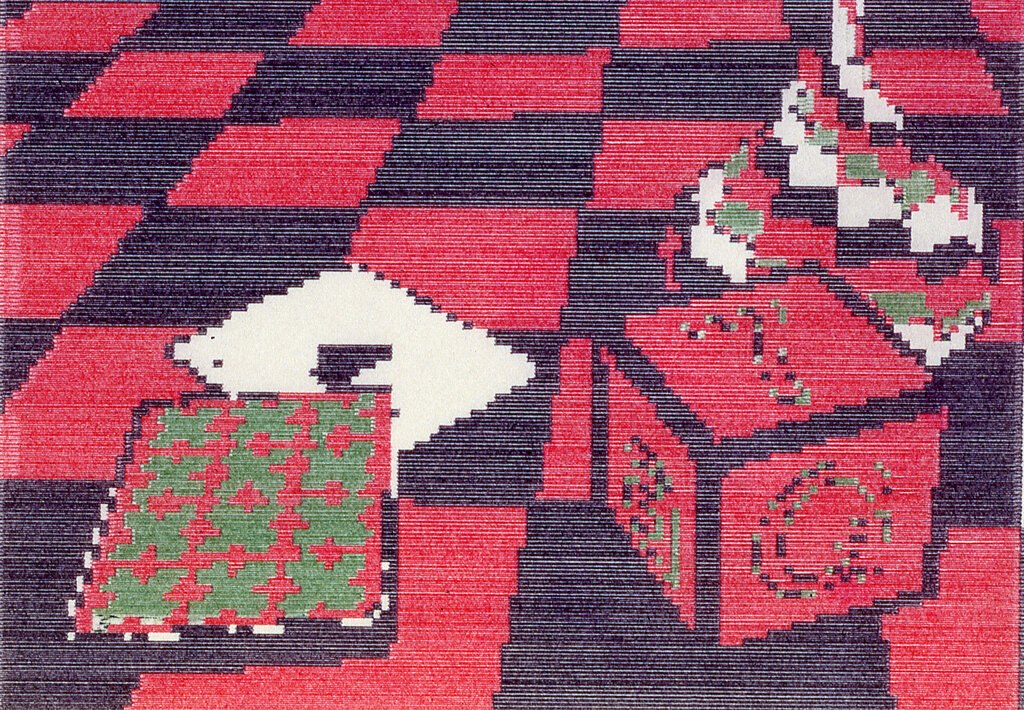
The journey of 3D graphics began with simple wireframe models in the 1960s and 70s. Early video games and scientific visualizations used these basic, skeletal shapes to represent objects. Over the decades, thanks to exponential growth in computing power, these simple lines have been filled in, textured, shaded, and lit to create the stunningly realistic worlds we see in movies and video games today.
The Building Blocks of 3D
Every 3D object, whether it’s a character in a game or a detailed architectural model, exists within a virtual space defined by a coordinate system. Just like a 2D graph uses X and Y coordinates to place a point on a grid, 3D space uses three axes: X, Y, and Z.
- X-axis: Represents width (side-to-side).
- Y-axis: Represents height (up-and-down).
- Z-axis: Represents depth (forward-and-backward).
By assigning an (X, Y, Z) coordinate to every point, we can define the precise position and shape of an object in three-dimensional space. This system is the foundation for creating, placing, and moving objects in a virtual environment.
This coordinate system acts as the universal map for all 3D work. When an artist creates a 3D model, they are essentially plotting out millions of points (called vertices) in this space. These vertices connect to form polygons, which make up the surface of the object. The more polygons an object has, the more detailed it can be.
Tools of the Trade
Creating 3D content requires a combination of specialized hardware and software. On the hardware side, powerful computers are a must. The key component is the Graphics Processing Unit (GPU), a specialized processor designed to handle the complex mathematical calculations needed to create and display 3D images.
Software tools can be broken down into a few main categories:
- Modeling Software: This is where artists sculpt and construct 3D objects, like a digital clay. Examples include Blender, Maya, and 3ds Max.
- Rendering Software: This software takes the 3D model and generates a 2D image from it. It calculates light, shadows, textures, and reflections to create a final, often photorealistic, picture.
- Animation Software: Used to make 3D objects move over time. Animators set key poses for an object, and the software fills in the motion between those poses.
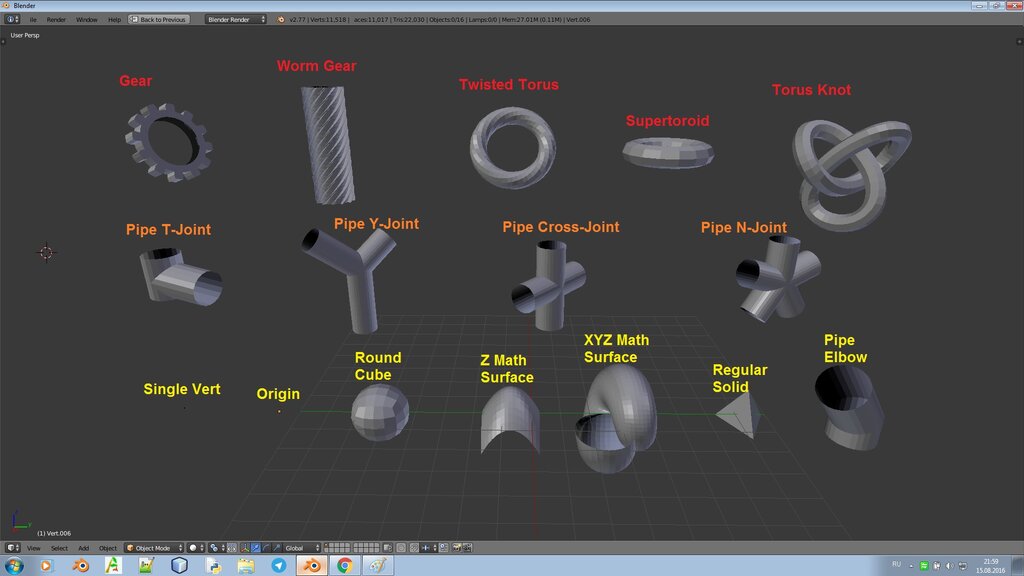
Many software suites combine modeling, rendering, and animation into a single powerful package, providing a complete workflow for 3D artists.
3D in the Real World
3D technology is no longer confined to entertainment. It has become a vital tool across a huge range of industries, transforming how we design, create, and even heal.
| Industry | Application |
|---|---|
| Entertainment | Creating visual effects for movies and realistic environments and characters for video games. |
| Healthcare | Generating 3D models from CT and MRI scans for surgical planning and medical training. |
| Manufacturing | Designing and prototyping new products with 3D models before physical production begins (e.g., 3D printing). |
| Architecture | Creating interactive, photorealistic walkthroughs of buildings before they are constructed. |
| Science | Visualizing complex data, from molecular structures to astronomical phenomena. |
This wide adoption shows that 3D is more than just pretty pictures; it’s a powerful way to understand and interact with complex information. By representing data and objects in a way that mirrors the real world, we can solve problems more intuitively and creatively.
What fundamental dimension does 3D technology add to the height (Y-axis) and width (X-axis) of a 2D image?
In a standard 3D coordinate system, the Y-axis typically represents an object's _______.
From simple wireframes to entire virtual worlds, 3D technology has reshaped our digital landscape by adding the crucial dimension of depth.