Introduction to 3D Graphics
Introduction to 3D Graphics
From Lab to Hollywood
Computer-generated imagery, or CGI, didn't start in movie studios. It began in the 1960s in university and corporate research labs. Scientists and engineers were exploring how to use computers to create images. These early creations were incredibly simple, often just lines on a screen forming basic shapes. The processing power required was immense, and creating a single, simple image could take hours.
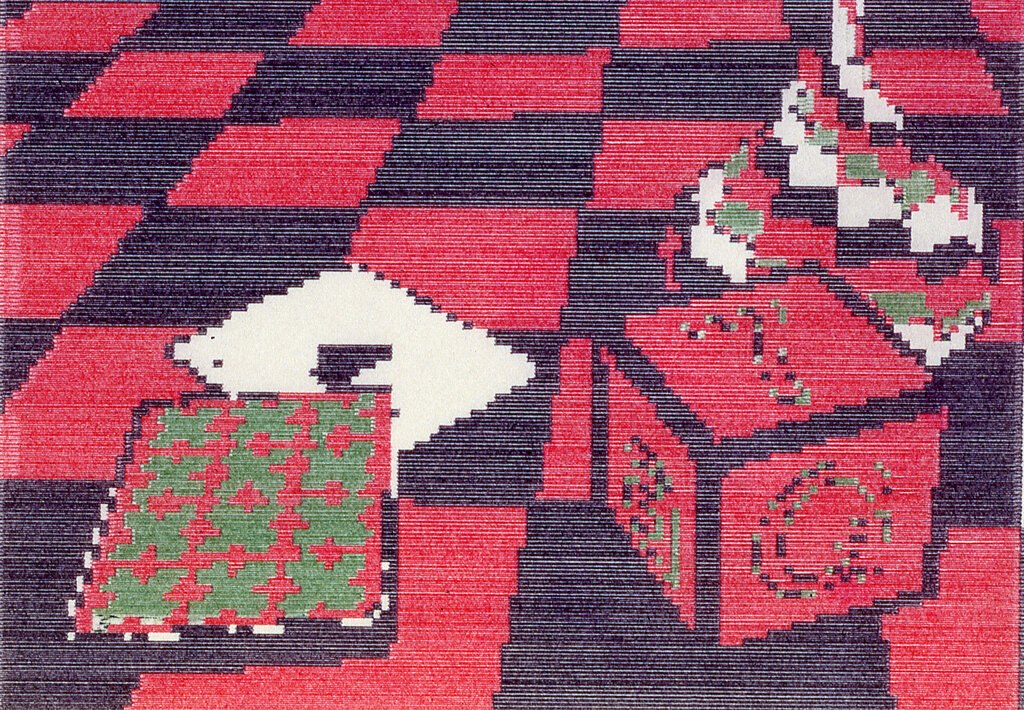
One of the first major breakthroughs was the ability to represent 3D objects as wireframe models. Imagine drawing the edges of a cube with a pen, but on a computer screen. You could rotate this digital cube and see it from different angles, but it was hollow, like a cage.
The next big step was figuring out how to fill in the surfaces of these wireframes to make them look solid. Early pioneers like Ed Catmull (who would later co-found Pixar) developed algorithms to render shaded surfaces. This evolution from wireframes to solid, shaded objects was a game-changer. It paved the way for the realistic CGI we see today in films, video games, and beyond.
Building in Three Dimensions
So how are these 3D objects actually made? The process starts with 3D modeling. At its core, a 3D model is a mathematical description of an object in three-dimensional space. Think of it as a detailed digital blueprint.
Every 3D model, no matter how complex, is built from a few fundamental components. The most basic is the vertex, which is just a single point in space. Connect two vertices, and you get an edge. Connect three or more edges to form a closed loop, and you create a face, also known as a polygon. These flat polygons are pieced together to form the surface, or "skin," of the 3D object.
This collection of vertices, edges, and faces is called a mesh. A simple object like a crate might have only a dozen polygons. A highly detailed character for a feature film could have millions.
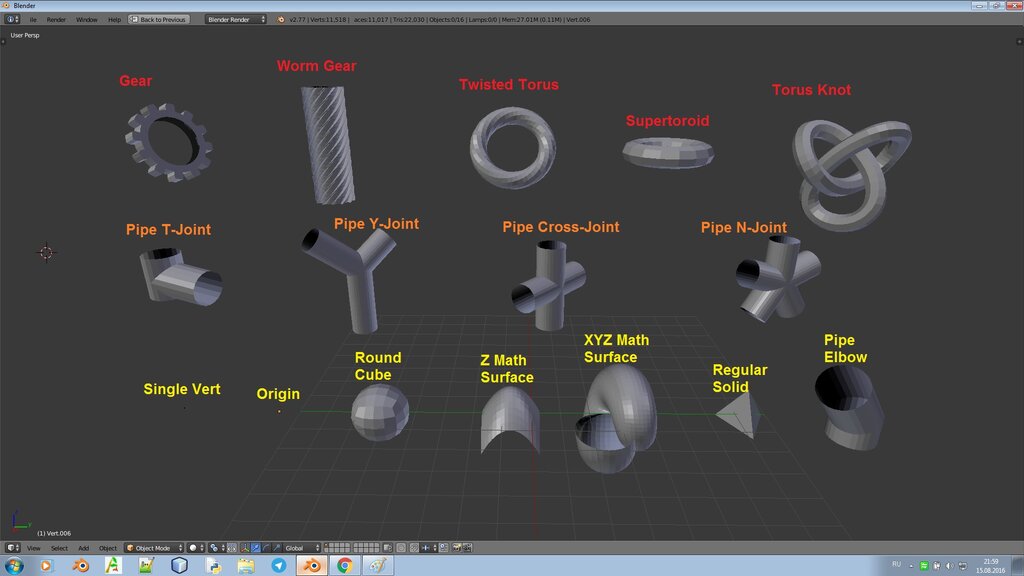
To make modeling easier, artists often start with basic geometric shapes called primitives. These are the fundamental building blocks of 3D.
Primitives are the most basic elements in the world of 3D modeling and design.
Common primitives include cubes, spheres, cylinders, and planes. An artist might start with a sphere to model a head, a cylinder for an arm, or a cube for a building, gradually sculpting and refining them into the desired shape.
More Than Just Movies
While Hollywood and the gaming industry are the most visible users of 3D graphics, the technology is crucial in many other fields. Its ability to simulate reality and visualize complex data has revolutionized how we work and innovate.
In architecture and engineering, 3D models allow designers to construct and test buildings, bridges, and machines in a virtual environment before a single physical part is made. This helps identify design flaws, optimize materials, and create safer, more efficient products.
Medicine relies heavily on 3D graphics. Medical imaging techniques like CT and MRI scans are used to create detailed 3D models of a patient's anatomy. Surgeons can use these models to plan complex operations, and researchers use them to visualize molecular structures to develop new drugs.

In education, 3D visualizations make abstract concepts easier to understand. Students can explore the solar system, dissect a virtual frog, or walk through historical reconstructions, creating more engaging and memorable learning experiences.
From scientific research and product design to marketing and virtual reality, 3D graphics have become an indispensable tool. They provide a powerful way to bring ideas to life, solve complex problems, and explore worlds both real and imagined.
Time to check your understanding of these core concepts.
True or False: CGI was originally developed in Hollywood movie studios in the 1960s.
What are the three fundamental components that make up the 'mesh' of a 3D model?
With these fundamentals in place, you're ready to explore the next steps in bringing 3D models to life.