Introducing Yourself in Greek
Greek Alphabet and Pronunciation
The Greek Alphabet
Your journey into the Greek language starts here, with its 24 letters. You'll probably recognize some of them from math or science classes. The good news is that Greek is largely phonetic, meaning words are pronounced just as they are spelled. Once you know the sounds of the letters, you can read almost any Greek word.
Learning the Greek alphabet is the first step in mastering the language.
Let's go through the alphabet. We'll look at the uppercase letter, the lowercase letter, its name, and the sound it makes.
| Uppercase | Lowercase | Name | Pronunciation |
|---|---|---|---|
| Α | α | Alpha | 'a' as in father |
| Β | β | Beta | 'v' as in vase |
| Γ | γ | Gamma | 'gh' like a soft, throaty 'g' |
| Δ | δ | Delta | 'th' as in then |
| Ε | ε | Epsilon | 'e' as in met |
| Ζ | ζ | Zeta | 'z' as in zoo |
| Η | η | Eta | 'ee' as in see |
| Θ | θ | Theta | 'th' as in thin |
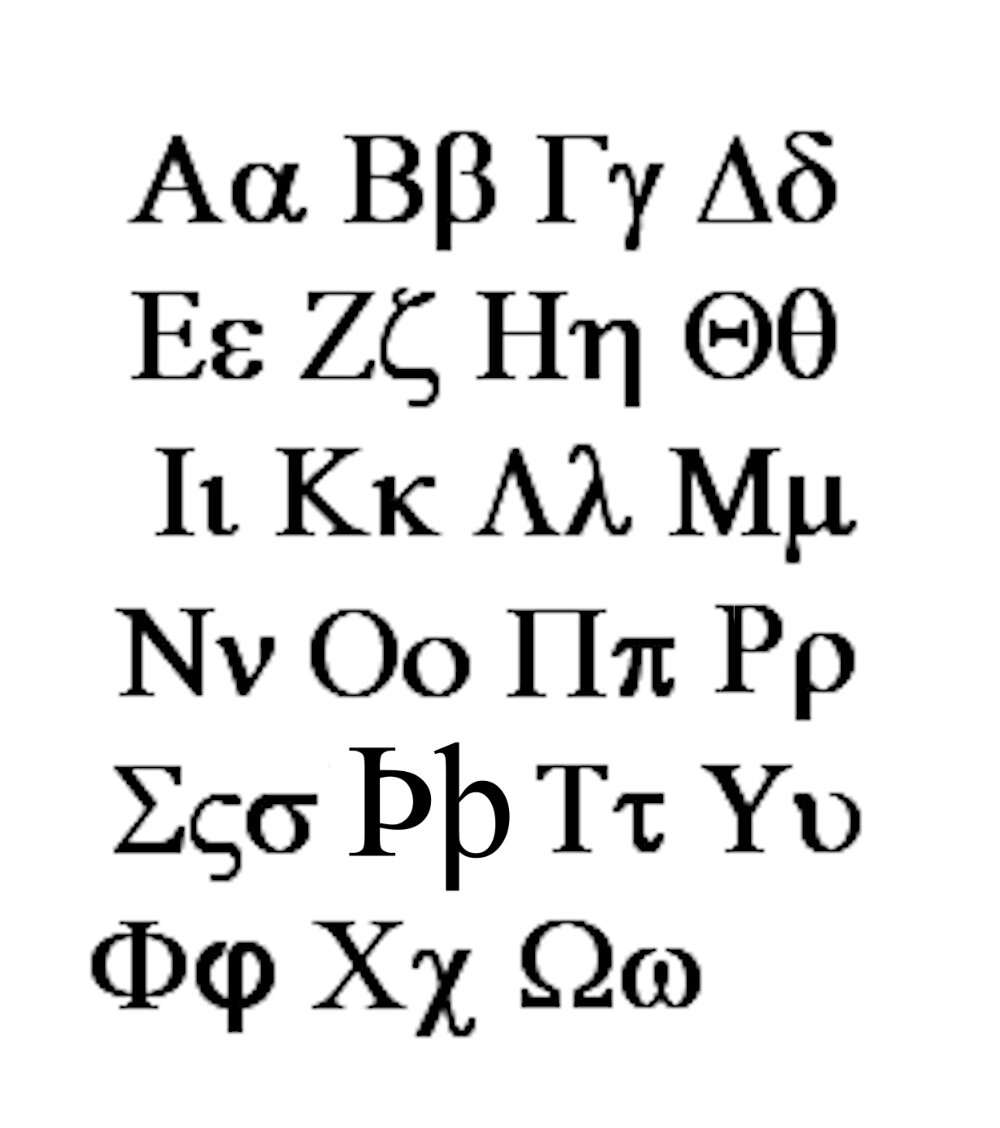
Here is the next set of letters.
| Uppercase | Lowercase | Name | Pronunciation |
|---|---|---|---|
| Ι | ι | Iota | 'ee' as in see |
| Κ | κ | Kappa | 'k' as in kite |
| Λ | λ | Lambda | 'l' as in lamp |
| Μ | μ | Mu | 'm' as in man |
| Ν | ν | Nu | 'n' as in no |
| Ξ | ξ | Xi | 'ks' as in fox |
| Ο | ο | Omicron | 'o' as in hot |
| Π | π | Pi | 'p' as in pet |
And finally, the last group.
| Uppercase | Lowercase | Name | Pronunciation |
|---|---|---|---|
| Ρ | ρ | Rho | 'r' as in car (often rolled) |
| Σ | σ / ς | Sigma | 's' as in sun |
| Τ | τ | Tau | 't' as in tap |
| Υ | υ | Upsilon | 'ee' as in see |
| Φ | φ | Phi | 'f' as in fun |
| Χ | χ | Chi | 'h' as in hanukkah (throaty sound) |
| Ψ | ψ | Psi | 'ps' as in tips |
| Ω | ω | Omega | 'o' as in hot |
Letter Combinations
In Greek, some pairs of letters consistently make a single sound. These are called diphthongs. Learning them is key to pronouncing words correctly. You'll notice that many different combinations make the 'ee' sound.
| Combination | Sound |
|---|---|
| αι | 'e' as in met |
| ει | 'ee' as in see |
| οι | 'ee' as in see |
| ου | 'oo' as in moo |
| υι | 'ee' as in see |
There are also combinations of a vowel with the letters upsilon (υ) or iota (ι) that have specific pronunciations.
| Combination | Sound |
|---|---|
| αυ | 'av' or 'af' |
| ευ | 'ev' or 'ef' |
| γγ | 'ng' as in sing |
| γκ | 'g' at the start of a word, 'ng' in the middle |
| μπ | 'b' at the start of a word, 'mb' in the middle |
| ντ | 'd' at the start of a word, 'nd' in the middle |
A Few Details
There are a couple of quirks to keep in mind. The letter sigma has two lowercase forms. You use σ at the beginning or in the middle of a word, and ς only at the very end.
For example, the word for 'seas' is θάλασσες (thalasses). The first two 's' sounds use σ, but the final one uses ς.
σ is for the start/middle of a word. ς is only for the end of a word.
You will also see accent marks over vowels in most Greek words, like in γεια (geia). This mark, called the tonos, tells you which syllable to stress when you say the word. For now, just be aware that it's there to guide your pronunciation.
Let's try a few words.
Hi
Yes
No
Now, let's test what you've learned about the Greek alphabet.
What is the primary sound of the Greek letter Γ (gamma)?
True or False: Greek is largely a phonetic language, meaning words are generally pronounced as they are spelled.
Getting comfortable with the alphabet is the biggest first step. With these letters as your foundation, you're ready to start building your Greek vocabulary.