Introducing Yourself in Greek
Greek Alphabet
The Greek Alphabet
To read or write in Greek, the first step is learning its unique alphabet. It might look intimidating, but it’s more familiar than you think. Many Greek letters are used in math and science, so you've likely seen them before. The Greek alphabet has 24 letters, each with an uppercase and lowercase form, just like the Latin alphabet used for English.
Learning the Greek alphabet (α, β, γ, etc.) is essential as it’s different from the Latin script used in English.
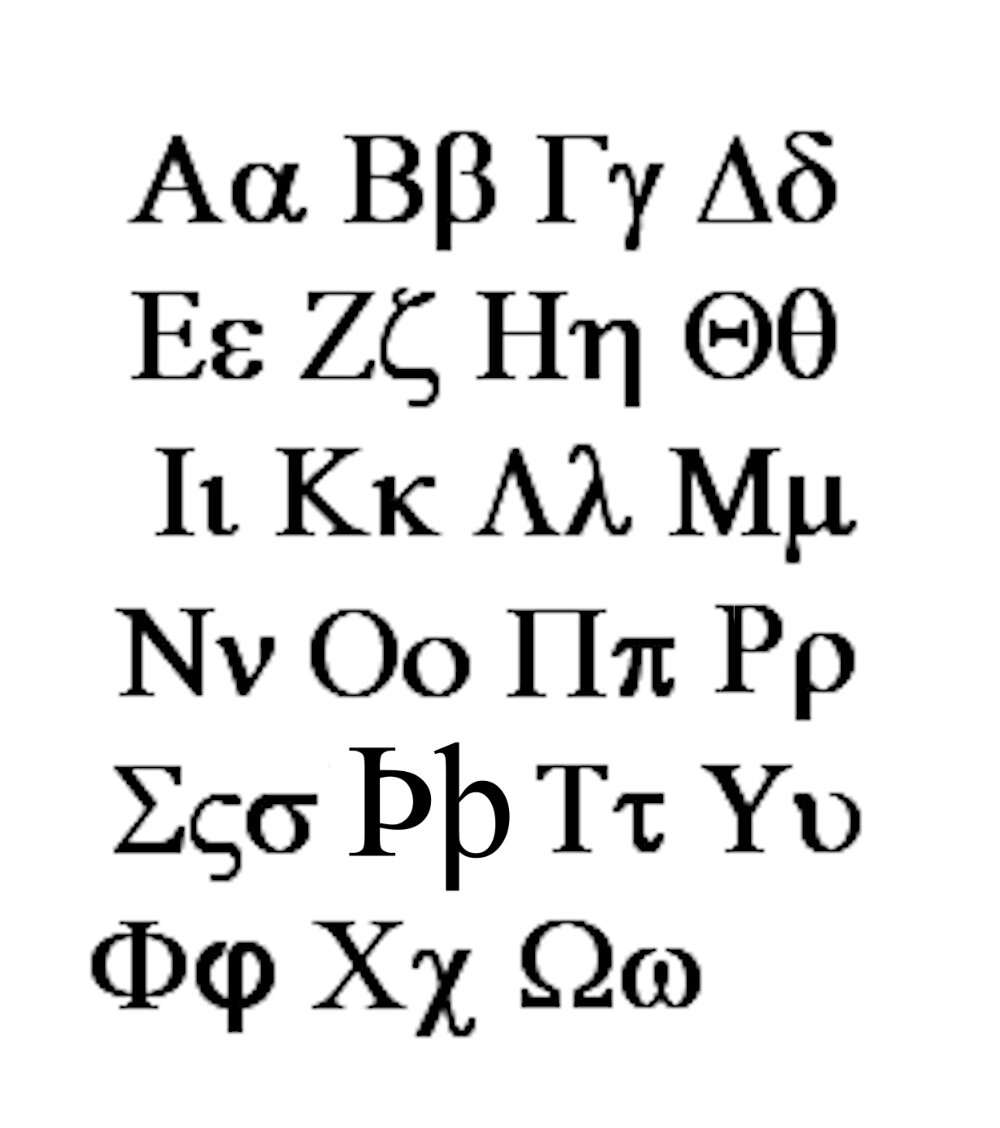
Let's go through each letter, its name, and the sound it makes. Notice how many look and sound similar to letters you already know.
| Uppercase | Lowercase | Name | Sound (like the English) |
|---|---|---|---|
| Α | α | Alpha | a in father |
| Β | β | Beta | v in vine |
| Γ | γ | Gamma | y in yes |
| Δ | δ | Delta | th in the |
| Ε | ε | Epsilon | e in pet |
| Ζ | ζ | Zeta | z in zoo |
| Η | η | Eta | ee in see |
| Θ | θ | Theta | th in thin |
| Ι | ι | Iota | ee in see |
| Κ | κ | Kappa | k in kite |
| Λ | λ | Lambda | l in lamp |
| Μ | μ | Mu | m in map |
| Ν | ν | Nu | n in net |
| Ξ | ξ | Xi | x in box |
| Ο | ο | Omicron | o in got |
| Π | π | Pi | p in pen |
| Ρ | ρ | Rho | r in run |
| Σ | σ/ς | Sigma | s in sit |
| Τ | τ | Tau | t in top |
| Υ | υ | Upsilon | ee in see |
| Φ | φ | Phi | f in fun |
| Χ | χ | Chi | ch in Scottish loch |
| Ψ | ψ | Psi | ps in lips |
| Ω | ω | Omega | o in go |
Familiar Faces, New Sounds
Some Greek letters look like Latin letters but have completely different sounds. These "false friends" are common trip-ups for beginners.
For example, the Greek letter Ρ (rho) looks just like a P, but it's pronounced like an R. The letter Β (beta) looks like a B, but it makes a V sound. And Η (eta) looks like an H, but it's a vowel that sounds like "ee".
Getting these differences down early will make reading much easier. It's all about building new habits and associations.
You may have also noticed the letter Sigma has two lowercase forms: σ and ς. The first one, σ, is used at the beginning or in the middle of a word. The second one, ς, is only ever used at the very end of a word. They both make the exact same 's' sound.
Vowel Power
Greek has fewer vowel sounds than English, which can make things simpler. You'll see that three different letters—Η (eta), Ι (iota), and Υ (upsilon)—all make the same "ee" sound, like in the word "see."
Similarly, Ο (omicron) and Ω (omega) both produce an "o" sound. Omicron (Ο/ο) is a short "o" like in "got," while Omega (Ω/ω) is a longer "o" sound, like in "go." The names themselves give a hint: o micron means "little o," and o mega means "great o."
Now let's check your understanding of the Greek alphabet.
How many letters are in the Greek alphabet?
The Greek letter Β (beta) looks like the English letter B. What sound does it make in Modern Greek?
Familiarizing yourself with these letters is the first and most important step to learning Greek. Practice recognizing them and saying their sounds out loud. Soon, they'll be second nature.