Intro to Piano for Young Musicians
Piano Basics
Meet the Keyboard
Welcome to the piano! Let's get to know the keyboard in front of you. It might look like a lot of keys, but there's a simple pattern that makes it easy to understand. Look closely at the black keys. You'll see they come in groups of two and three, all the way up and down the piano.
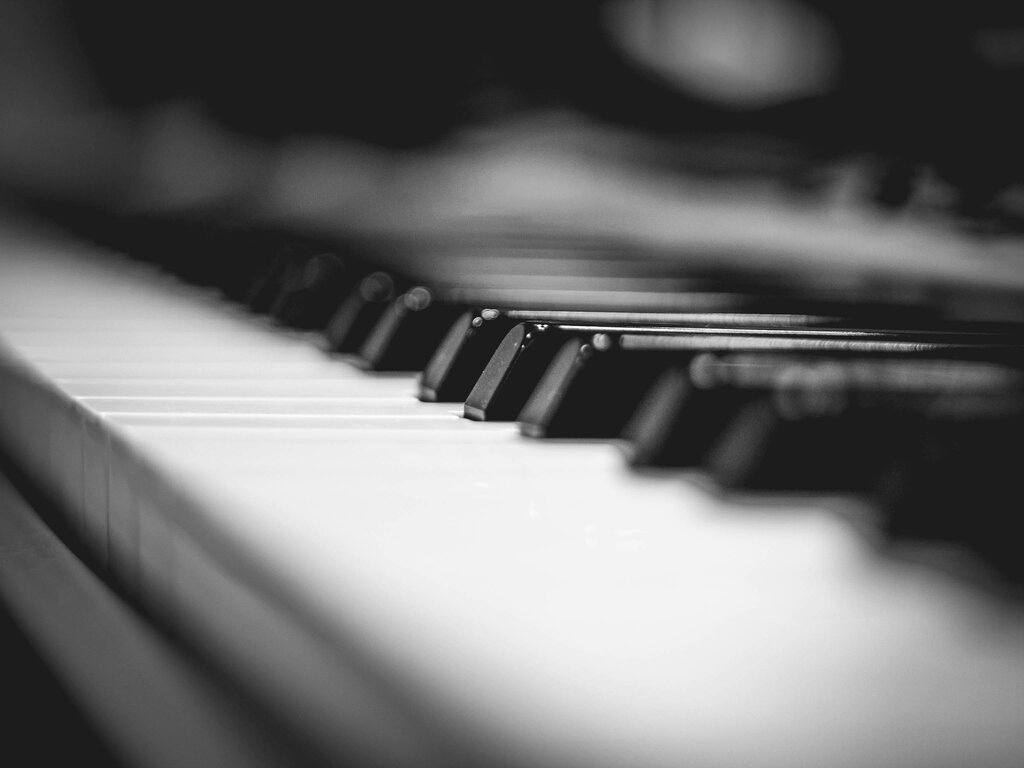
This pattern is your map to the whole keyboard. Once you see it, you can't unsee it! We'll use these groups of black keys to find all the white keys.
The white key just to the left of each group of two black keys is named C. Go ahead and find all the Cs on your piano. They're all the same note, just higher or lower in pitch.
The white key just to the left of each group of three black keys is called F. Can you find all the Fs?
Once you know C, you can find the other white keys by following the musical alphabet: C, D, E, F, G, A, B. After B, the pattern starts over again with the next C. The distance from one C to the next C is called an octave.
Sitting at the Piano
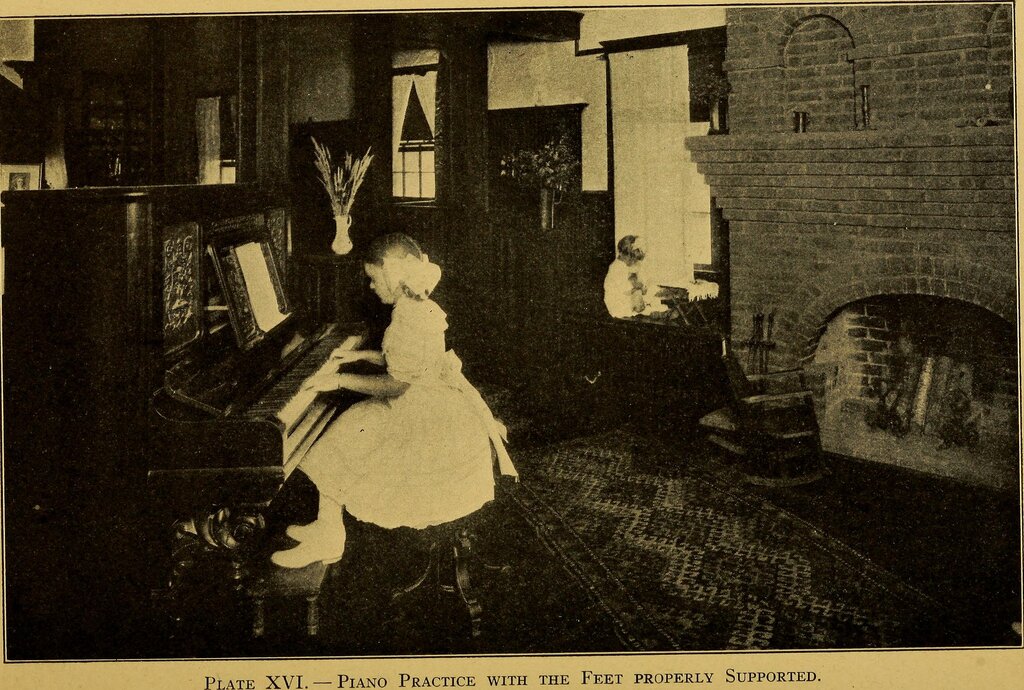
How you sit is super important. Sitting correctly helps you play comfortably and stops you from getting tired. It also makes it easier to reach all the keys.
When seated, piano students should be able to reach the keys while keeping their forearms parallel to the ground.
Here’s how to get your posture just right:
- Sit in the middle. Line yourself up with the middle of the piano.
- Adjust your distance. Sit far enough back so your elbows are slightly in front of your body when your hands are on the keys. You shouldn't feel squished or like you're stretching.
- Feet on the floor. Keep both feet flat on the floor. If they don't reach, use a footstool. This gives you balance and support.
- Sit up straight. Imagine a string pulling the top of your head up to the ceiling. Keep your back straight but your shoulders relaxed and down.
Hand Shape and Finger Numbers
Now for your hands. You want them to be relaxed and curved, like you're holding a ball. Let your arm hang loose by your side, and see the natural curve your fingers make. That's the shape you want when you place your hands on the keys.
Try this: Make a loose fist, then gently open it and place your hand on a flat surface. Your fingers should be curved, with your wrist level with your hand. That's the perfect piano hand shape!
To make talking about fingers easier, musicians give them numbers. It’s the same for both hands.
| Finger | Number |
|---|---|
| Thumb | 1 |
| Index Finger | 2 |
| Middle Finger | 3 |
| Ring Finger | 4 |
| Pinky | 5 |
Try wiggling each finger as you say its number. This will help you remember them when it's time to start playing.
Ready to check what you've learned?
How do you find the note 'C' on a piano keyboard?
When sitting at the piano, you are the correct distance when your elbows are slightly in front of your body.
Great job getting to know the piano! You've learned about the keyboard, how to sit, and how to place your hands. This is the perfect foundation for everything that comes next.