Intersections of Sociology and Education
Institutional Divergence and Intersection
Two Ways of Seeing
Sociology and education are both concerned with people, but they approach the topic from fundamentally different angles. Sociology is a descriptive science. Its goal is to understand and explain human society as it is. A sociologist might ask, "What are the social structures at play in a school?" or "How does social class impact student outcomes?" The aim is to map the territory of social life.
Education, on the other hand, is a normative and teleological discipline. It is driven by a purpose, or telos: the intentional cultivation of knowledge, skills, and values. An educator asks, "What is the most effective way to teach algebra?" or "What character traits should our curriculum foster?" The goal isn't just to describe the world, but to purposefully shape individuals to thrive within it.
Think of it this way: a sociologist is like a cartographer who meticulously maps a city's existing roads, neighborhoods, and traffic patterns. An educator is the city planner who designs new subway lines and parks to improve the lives of its citizens.
Where the Fields Meet
When these two perspectives converge, we get a powerful hybrid field: the sociology of education. This sub-discipline doesn't focus on pedagogical techniques or curriculum design. Instead, it uses the analytical tools of sociology to examine the educational system as a social institution.
It investigates questions like: How do schools reproduce social inequalities? How does the structure of the classroom mirror the structure of the workplace? What are the political and economic forces that dictate what gets taught?
The founding French sociologist provided a key insight. He viewed education as a social fact—a mechanism created by society to socialize the younger generation. For Durkheim, the primary function of school wasn't to fill children's heads with information, but to mold them into the kind of citizens their specific society required, imbuing them with shared norms, values, and a sense of collective identity.
Education as a Social Subsystem
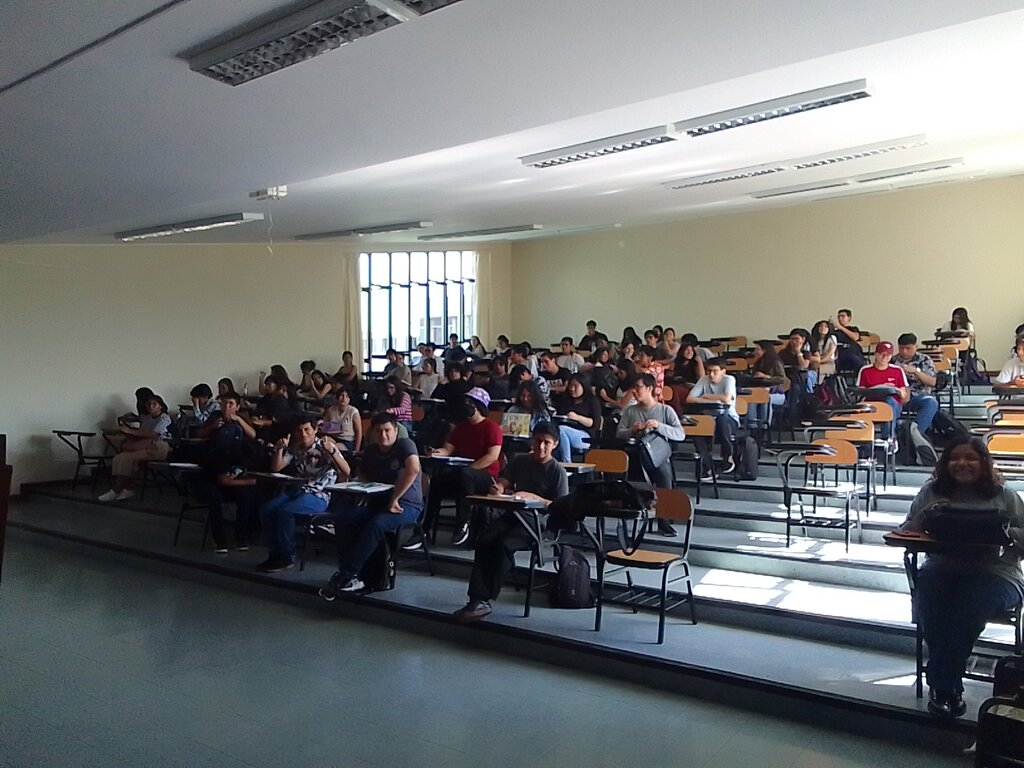
The sociology of education treats the school system as one piece of a much larger puzzle. Education doesn't exist in a vacuum; it's a subsystem deeply interconnected with other major social institutions.
Politics exerts influence through funding decisions, curriculum mandates, and laws governing school operations. The economy shapes what schools teach by creating demand for certain skills and credentials. A shift toward a tech-based economy, for example, leads to a greater emphasis on STEM education. Historically, religious institutions were the primary providers of education and continue to influence the values embedded in many school systems.
By seeing education this way, we can analyze how it functions not just to teach reading and writing, but to support the stability and continuity of the entire social structure. It prepares individuals for their future roles in the economy, reinforces political ideologies, and transmits cultural norms from one generation to the next. This includes the unofficial lessons learned through the — the unspoken rules and values that shape students' experiences.
Ultimately, a sociologist studying education is less concerned with the grade on a student's test and more concerned with what that test, the school that administers it, and the system it belongs to, reveals about the society itself.