Interpreting Clinical Bloodwork Results
Clinical CBC Interpretation
Interpreting Your Blood Count
A Complete Blood Count, or CBC, is a powerful diagnostic tool. When it includes a 'differential,' it breaks down the different types of white blood cells, giving an even clearer picture of your health. But the numbers themselves are just the start. The real skill lies in interpreting the relationships between them, particularly the Red Blood Cell (RBC) and White Blood Cell (WBC) indices.
Decoding Anemia with RBC Indices
When a CBC indicates anemia (a low red blood cell count or hemoglobin), the next step isn't just to note the deficiency. It's to figure out why. RBC indices provide the crucial first clues. The most important of these is the (MCV), which measures the average size of your red blood cells. Think of RBCs as delivery trucks for oxygen; MCV tells you their average size. This immediately helps classify the anemia:
- Microcytic (Low MCV): The red blood cells are smaller than normal. This is a classic sign of iron deficiency anemia.
- Normocytic (Normal MCV): The cells are normal-sized. This can point to anemia from chronic disease, kidney issues, or acute blood loss.
- Macrocytic (High MCV): The cells are larger than normal. This often suggests a deficiency in vitamin B12 or folate.
Next, we look at the Red Cell Distribution Width (RDW). If MCV is the average truck size, RDW tells you the variety in truck sizes. A high RDW means your red blood cells vary greatly in size, a condition called anisocytosis. This suggests your bone marrow is churning out cells of different sizes, which can happen when your body is trying to compensate for a deficiency. A low MCV combined with a high RDW, for example, is highly indicative of iron deficiency anemia.
| MCV | RDW | Common Interpretation |
|---|---|---|
| Low | Normal | Anemia of chronic disease, Thalassemia trait |
| Low | High | Iron deficiency anemia |
| Normal | Normal | Anemia of chronic disease, acute blood loss |
| Normal | High | Early nutritional deficiency, mixed anemias |
| High | Normal | Aplastic anemia, chronic liver disease |
| High | High | Vitamin B12 or Folate deficiency |
Finally, there's the Mean Corpuscular Hemoglobin Concentration (MCHC). This index measures the concentration of hemoglobin inside the average red blood cell. It essentially tells you how 'packed' the cell is with hemoglobin. A low MCHC is called 'hypochromic' and means the cells are pale, another common finding in iron deficiency anemia where there isn't enough hemoglobin to go around.
Clues from White Blood Cells
The WBC differential provides a breakdown of your immune cells. While percentages are listed, clinicians focus on the absolute counts, like the Absolute Neutrophil Count (ANC). Percentages can be misleading. For example, if your total WBC count is very low, the percentage of neutrophils might look normal, but the absolute number could be dangerously low, putting you at high risk for infection.
The absolute counts trump the percentages when reviewing a CBC with diff.
One of the most important concepts in interpreting the WBC differential is the "shift to the left." This term refers to the presence of immature granulocytes, like band cells or metamyelocytes, in the blood. When your body is fighting a severe bacterial infection, the bone marrow gets an urgent signal to release more neutrophils. It works so fast that it pushes out some that aren't fully mature yet. Seeing these immature cells in the bloodstream is a strong indicator of an ongoing, robust immune response to infection.
Different immune responses also leave distinct signatures:
- High Neutrophils (Neutrophilia): Often points to a bacterial infection.
- High Lymphocytes (Lymphocytosis): More commonly associated with viral infections.
- High Eosinophils (Eosinophilia): A classic sign of an allergic reaction or a parasitic infection.
Platelets and Beyond
The platelet count is straightforward: it's the number of platelets available for clotting. But the Mean Platelet Volume (), which measures the average size of your platelets, adds another layer of information. When the body needs more platelets quickly, the bone marrow releases large, young platelets. Therefore, a high MPV alongside a low platelet count (thrombocytopenia) can suggest the bone marrow is healthy and actively trying to produce more platelets to compensate for loss or destruction elsewhere in the body. A low MPV with a low platelet count is more concerning, as it might indicate the bone marrow itself is failing to produce enough platelets.
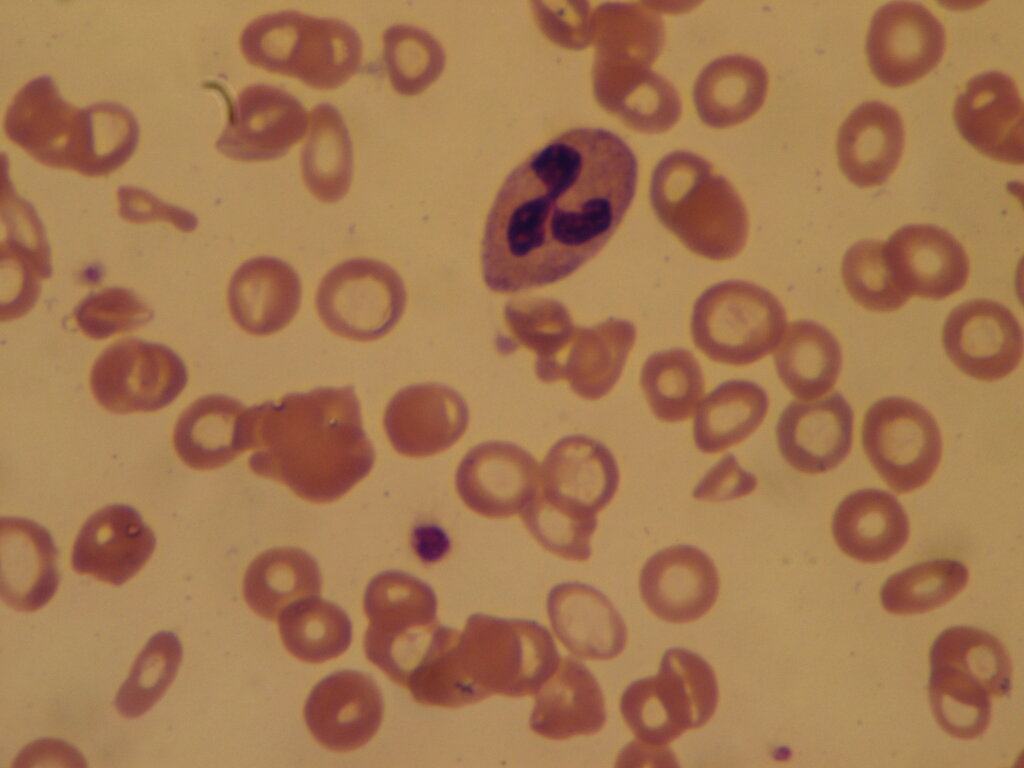
Sometimes, an automated analyzer flags a result as abnormal. When this happens, the lab may perform 'reflex' testing. This often involves a trained technician making a peripheral blood smear—a drop of blood smeared on a glass slide, stained, and examined under a microscope. This manual review can confirm abnormalities, identify oddly shaped cells, or spot things the machine might have missed, ensuring the most accurate diagnosis.

Understanding these nuances is how a simple blood test transforms into a detailed story about your body's current state. It allows clinicians to move from identifying a problem to understanding its cause.
A patient's CBC report indicates macrocytic anemia. What is the most likely underlying cause for this finding?
A CBC with differential reveals a low Mean Corpuscular Volume (MCV) and a high Red Cell Distribution Width (RDW). What condition is this combination most indicative of?