Interpreting Blood Test Results
Complete Blood Count
Reading the Red Cell Story
A Complete Blood Count, or CBC, tells a detailed story about a patient's health. We'll start with the red blood cells (RBCs), the body's oxygen couriers. Three key values—RBC count, hemoglobin (Hgb), and hematocrit (Hct)—are deeply interconnected. Think of Hgb as the total amount of oxygen-carrying protein, and Hct as the percentage of blood volume occupied by red cells. Normally, these three rise and fall together. An Hct of 45% means that 45 mL of every 100 mL of blood is red cells.
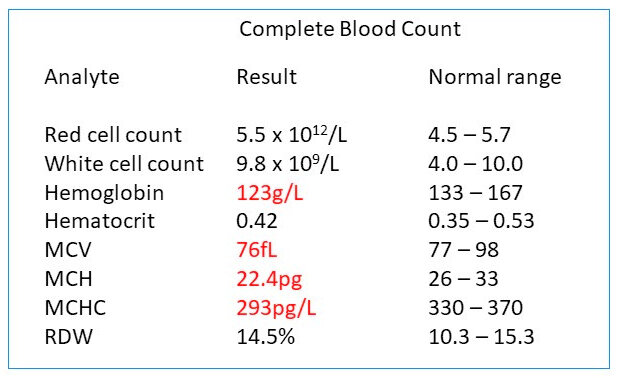
However, these numbers can be misleading. A dehydrated patient's blood is more concentrated, which can falsely elevate their Hgb and Hct. This condition is known as hemoconcentration and can mask underlying anemia. Conversely, a patient with fluid overload will have diluted blood, artificially depressing these values. Always interpret RBC indices in the context of the patient's hydration status. It's the difference between counting cars on a highway during rush hour versus a holiday weekend—the traffic density changes even if the number of cars in the city is the same.
Sizing Up Anemia
When anemia is present, the next clue comes from the size of the red blood cells, measured by the Mean Corpuscular Volume (MCV). This single value is critical for classifying different types of anemia, pointing you toward the root cause.
| Anemia Type | MCV Value | Common Causes |
|---|---|---|
| Microcytic | < 80 fL | Iron deficiency, Thalassemia, Lead poisoning |
| Normocytic | 80-100 fL | Acute blood loss, Chronic disease, Kidney failure |
| Macrocytic | > 100 fL | Vitamin B12 or Folate deficiency, Liver disease, Alcoholism |
Two other indices, Mean Corpuscular Hemoglobin (MCH) and Mean Corpuscular Hemoglobin Concentration (MCHC), provide more detail. MCH tells you the average weight of hemoglobin per red blood cell, while MCHC measures the average concentration of hemoglobin within each cell. Low values (hypochromia) often accompany microcytic anemia, indicating pale, smaller cells with less hemoglobin.
Finally, don't overlook the Red Cell Distribution Width (RDW). This value measures the variation in RBC size. A high RDW means there's a mix of small and large red cells, a condition called anisocytosis. This is often one of the earliest signs of iron or B12 deficiency, appearing even before hemoglobin levels drop or MCV changes significantly. It's like noticing that a factory is producing parts of inconsistent sizes—it’s an early signal that something is wrong with the production line.
The White Blood Cell Differential
The white blood cell (WBC) count reveals the state of the immune system. The differential breaks this count down into specific cell types, each with a unique role in fighting infection and inflammation.
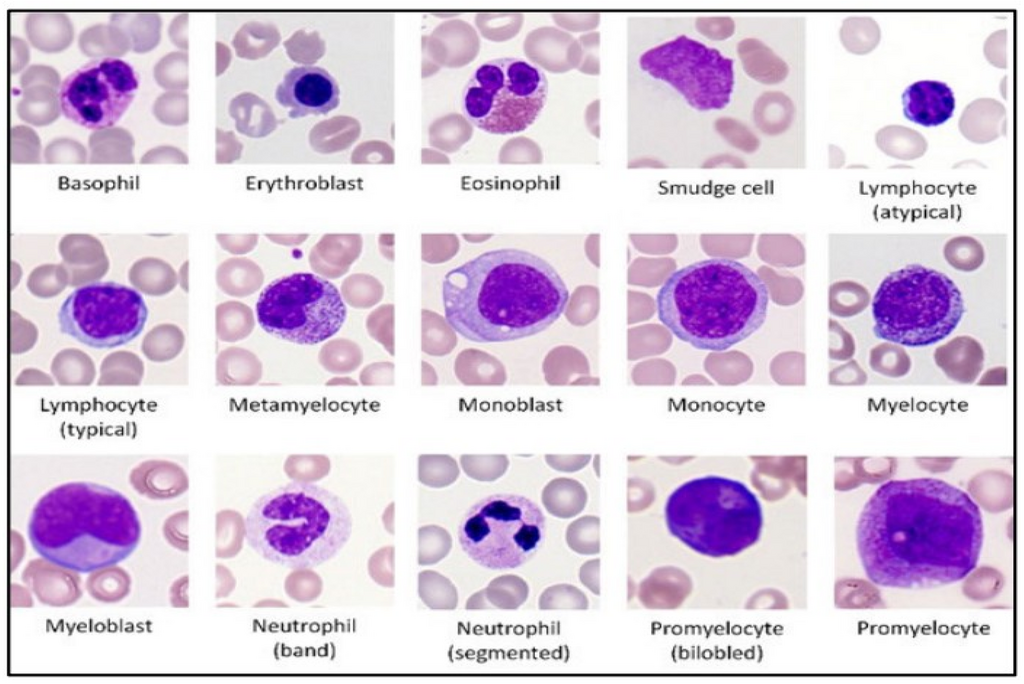
A key pattern to recognize is the "left shift." This term describes an increase in immature neutrophils, called bands, in the bloodstream. It's a classic sign of an acute bacterial infection. The bone marrow is working overtime to fight the infection, pushing out young soldiers before they are fully mature.
In contrast, an elevated lymphocyte count (lymphocytosis) typically points to a viral infection, like mononucleosis or influenza. The immune system is ramping up its production of cells specialized in fighting viruses. Eosinophils are associated with allergic reactions and parasitic infections, while basophils are involved in inflammatory responses.
In the WBC differential, remember that absolute counts are more clinically significant than percentages. A high percentage of neutrophils might not be concerning if the total WBC count is low, but a high absolute neutrophil count always warrants attention.
Platelets and Clotting Potential
Platelets are the tiny cell fragments responsible for forming blood clots. A low platelet count is called and increases the risk of bleeding. It can be caused by decreased production in the bone marrow (due to certain medications or leukemia) or increased destruction in the bloodstream (due to autoimmune disorders).
A high platelet count, or thrombocytosis, can increase the risk of forming unwanted blood clots. This may be a reactive process due to inflammation or infection, or it could signal an underlying bone marrow disorder.
Time to test your knowledge on interpreting a CBC.
A patient presents with severe dehydration. How would this condition most likely affect their hemoglobin (Hgb) and hematocrit (Hct) values on a CBC?
When initially classifying different types of anemia, which red blood cell index is the most important because it measures the average size of the red blood cells?
A systematic review of the CBC provides a powerful, non-invasive snapshot of a patient's physiological state. By understanding how these values relate to one another and to clinical context, you can uncover early signs of disease and monitor treatment effectiveness.