Interpersonal Relationships and Strict Dynamics
Advanced Cue Recognition
Beyond the Obvious Glance
In social settings where interactions are closely monitored, communication doesn't stop. It simply goes underground. Forget the obvious signs of flirtation you see in movies. Here, the language of attraction is spoken in whispers, through fleeting signals that are easy to miss if you don't know what to look for. This is about decoding messages sent under pressure, where every glance and gesture is weighed against the risk of being noticed.
The Art of the Stolen Glance
The most powerful signals are often the quickest. We're not talking about sustained eye contact, but rather the glances that happen in the periphery. A key signal is the 'stolen glance' — a quick look in your direction when they think no one, especially a watchful family member, is paying attention. It’s the timing that matters.
Pay attention to as well. These are involuntary facial expressions that flash across a person's face for just a fraction of a second. An authentic, split-second smile that appears the moment your eyes meet, only to vanish as they turn away, speaks volumes. It’s an unconscious leak of genuine feeling that escapes before the conscious mind can suppress it.
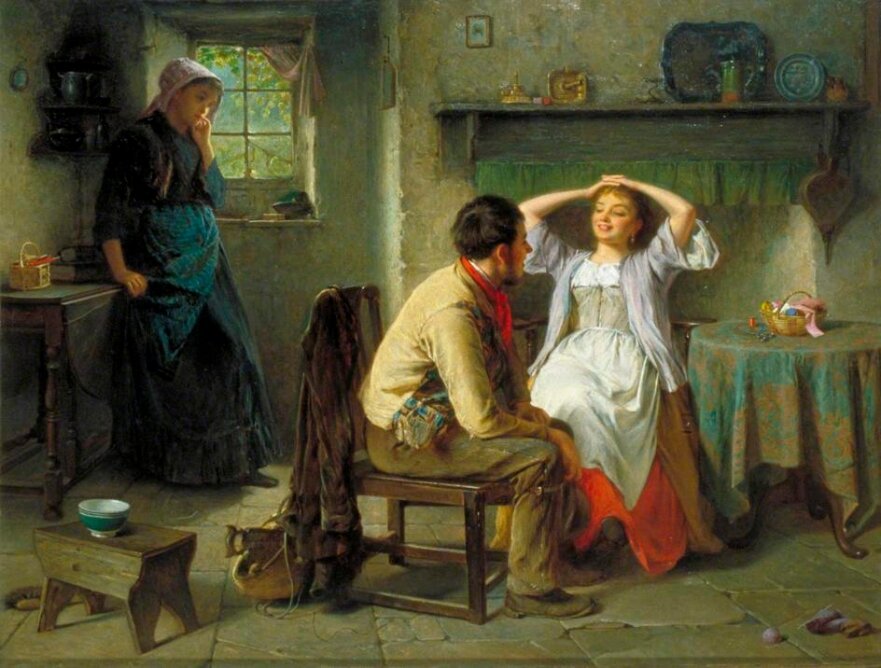
Context is everything. Watching who someone looks at and when they do it is 'contextual gaze monitoring.' Do they look at you right after a joke is told, to see your reaction? Do their eyes find yours in a crowded room for a moment longer than socially necessary? These are not accidents; they are targeted bids for connection.
Subtle Synchrony
When people feel a connection, they often unconsciously mirror each other's body language. In a restrictive setting, this mirroring becomes much more subtle. It's not about bold, obvious imitation. Instead, look for small, synchronous movements.
If you subtly shift your posture, do they adjust theirs moments later? If you pick up your glass, does their hand move toward their own? This unconscious dance is a product of in the brain, which fire when we perform an action and when we see someone else perform that same action. It’s the brain’s way of saying, "I'm with you."
Digital Breadcrumbs
In an age where physical interaction is limited, the digital realm becomes a key channel for communication. Here, the cues are like digital breadcrumbs, small tokens of attention that lead back to interest. It’s rarely about direct messages, which can be risky and easily monitored.
Instead, focus on the pattern of subtle interactions. A 'like' on a photo you posted weeks or months ago suggests they’ve spent time looking through your profile. Consistently being one of the first people to view your stories on platforms like Instagram or Snapchat is another strong indicator. This isn't accidental; it shows they are prioritizing your content. This pattern of reveals attention and intent without a single word being typed.
Finally, it's crucial to differentiate genuine interest from general friendliness. A friendly person might smile at everyone; someone who is interested will reserve a special, more subtle smile just for you. A friendly person might like your recent post; someone interested might dig deeper into your digital history. The key is specificity. Are their actions tailored specifically to you, or is this just how they treat everyone? The answer to that question often separates friendship from the first signs of attraction.
Ready to check your understanding? This quiz covers the subtle signals we've discussed.
What is the key factor that makes a 'stolen glance' a significant signal of interest in a monitored social setting?
In a restrictive environment, unconsciously shifting your posture moments after the person you're with does the same is an example of what?
Recognizing these advanced cues is a skill. It requires patience and keen observation, but by learning to read the subtle messages, you can better navigate the complexities of romance in any environment.