Internet Networking Essentials
Networking Basics
What Is a Network?
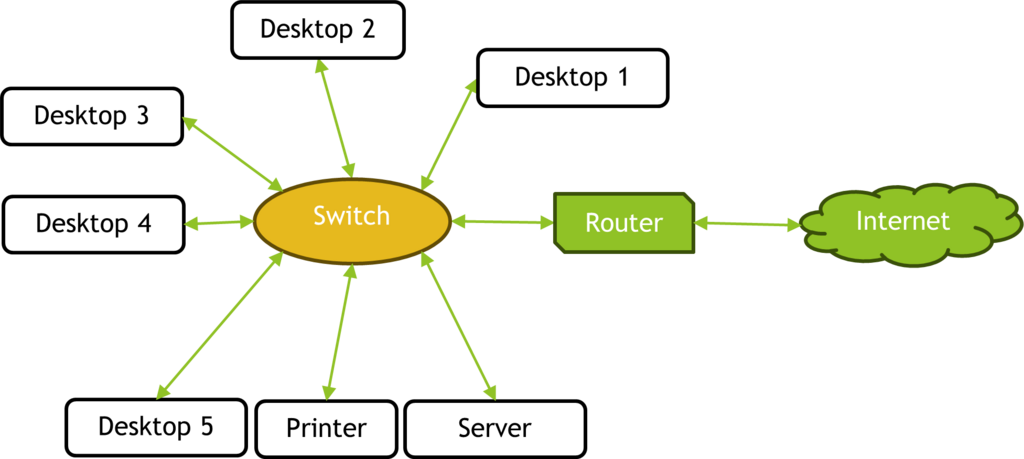
At its core, a computer network is just a group of two or more computers linked together. The purpose of this connection is simple: to share things. This could be information, like a file or an email, or resources, like a printer or an internet connection.
Think of it like a conversation. For two people to talk, they need a connection, a shared language, and something to say. A network provides the connection, and standardized rules provide the shared language, allowing devices to exchange data efficiently and reliably.
In short, networking lets computers and other devices communicate with each other.
Types of Networks
Networks come in different sizes, depending on the area they cover. The three main types are LAN, WAN, and MAN.
A Local Area Network (LAN) is the smallest and most common type. It connects devices within a limited area, like a single home, office building, or school. Your home Wi-Fi is a perfect example of a LAN. It connects your phone, laptop, and smart TV so they can all share the same internet connection.
A Wide Area Network (WAN) covers a large geographical area, like a city, country, or even the entire globe. WANs connect multiple LANs together. The internet is the ultimate WAN, linking billions of devices worldwide.
Between these two is the Metropolitan Area Network (MAN). As the name suggests, a MAN spans a geographic area the size of a city or a large campus. It's bigger than a LAN but smaller than a WAN and is often used by governments or universities to connect different facilities.
| Network Type | Geographic Scope | Example |
|---|---|---|
| LAN | Small (room, building) | Home Wi-Fi network |
| MAN | Medium (city, campus) | A city's public network |
| WAN | Large (global) | The Internet |
The Rulebooks of Networking
For devices made by different companies to communicate seamlessly, they all need to follow a common set of rules, known as a model or protocol suite. These models break down the complex process of network communication into smaller, manageable steps or layers.
Imagine sending a package. You have layers of tasks: writing the letter, putting it in an envelope, addressing it, taking it to the post office, which then sorts it and sends it via truck or plane. Networking models work similarly, with each layer handling a specific part of the data transmission process.
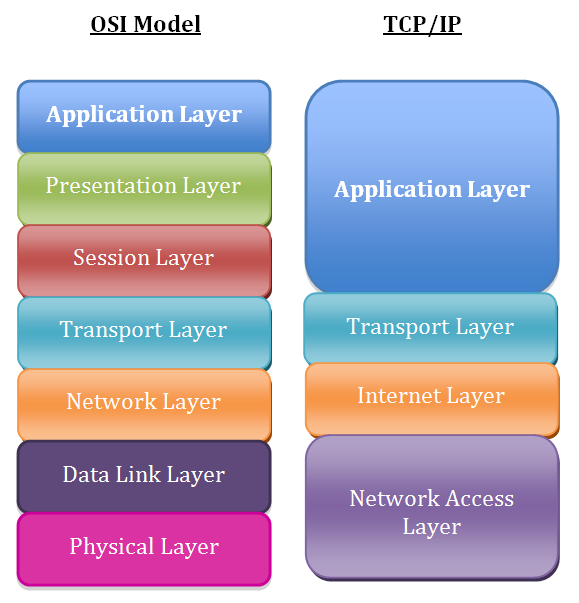
The OSI (Open Systems Interconnection) model is a conceptual framework that standardizes the functions of a network into seven distinct layers. It's a theoretical guide that helps engineers and developers design network systems that can work together. While not strictly implemented in the real world, its layered approach is a fundamental concept in networking.
The TCP/IP model is the practical rulebook that governs the modern internet. It's a more streamlined, four-layer model that combines some of the OSI model's layers. When you browse a website or send an email, your data is packaged and sent across the internet according to the rules of the TCP/IP model. It's the foundation upon which all online communication is built.
While the OSI model is a universal blueprint for how networking should work, the TCP/IP model is how it actually works on the internet.
Time to check your understanding of these core concepts.
What is the primary purpose of a computer network?
A university connects its main campus with a satellite campus located across the city. This network is larger than a LAN but smaller than a WAN. What type of network is this?
Understanding these building blocks is the first step to mastering how the internet works. You now know what a network is, the different scales they operate on, and the models that provide the rules for communication.