Internet History
Architectural Design Philosophy
Decoding the Internet's Blueprint
To truly understand the digital world, we must look at the radical engineering decisions that built it. This chapter dives into the original vision of the internet's architects, exploring how the need for resilience against catastrophe led to the genius of the end-to-end principle. By the end of this journey, you will grasp why we rely on smart endpoints and a simple core, revealing the fundamental logic that continues to power the global network today.
Born of Nuclear Anxiety
In the 1960s, the world was gripped by the Cold War. For military strategists, the greatest fear was not just a conflict, but a total breakdown in communication. At the time, the US relied on a centralised command-and-control network. If a single hit the heart of this system, the entire nation would go silent. It was a classic catastrophic failure scenario: a centralised brain that, if destroyed, would render the limbs of the military useless.
To solve this, researchers funded by began searching for a way to build a network that had no centre. They needed a system where information could find its own way from A to B, even if large parts of the infrastructure were suddenly vaporised. This wasn't just a technical challenge; it was a fundamental rethink of how information moves through space.
An earlier enabling technology for Arpanet was developed out of Cold War paranoia.
The Shift to Packet Switching
The traditional telephone system used a model called circuit-switching. When you made a call, the network established a dedicated, continuous 'circuit' between you and the receiver. If that physical line was cut, the communication died. The internet's architects replaced this with something far more audacious: .
Imagine sending a book to a friend by tearing out every page, putting each in its own envelope, and mailing them separately. Some envelopes might go by plane, others by truck. They might arrive out of order, but as long as your friend has the instructions to reassemble them, they get the book. This is exactly how the internet works. Data is broken into small, independent packets that navigate the network individually.
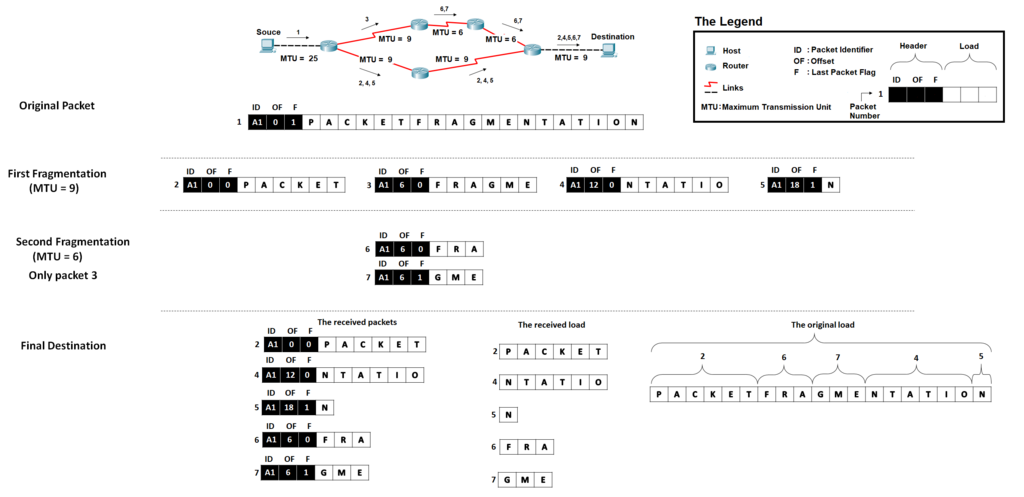
This design choice led to a philosophy known as the 'dumb' network. In this model, the core of the network—the routers and cables—is kept as simple as possible. Its only job is to move packets. The 'intelligence' is pushed to the edges: the computers (or endpoints) that send and receive the data. These endpoints are responsible for checking if a packet is missing and putting them back in the right order.
This is known as the End-to-End Principle. By keeping the core simple, the internet became a universal platform. Because the network doesn't care what is inside the packets, it can carry anything—email, video, or technologies that haven't even been invented yet. It created an open, decentralised system that no single entity could easily control or shut down.
Ultimately, the internet was built to survive. By choosing packet-switching over circuits and smart endpoints over a smart core, the pioneers of the 1960s created a blueprint that was resilient enough to withstand a war and flexible enough to host a global revolution. We continue to live in the world they designed, one packet at a time.