International Finance for Real Estate
International Finance Fundamentals
What Are Exchange Rates?
An exchange rate is simply the price of one country's currency in terms of another. If you're in Paris and want to buy a coffee for €3, you need to know how many U.S. dollars that is. The exchange rate tells you. If the rate is $1.10 per euro, that coffee costs you $3.30.
These rates aren't static. They fluctuate constantly based on supply and demand in the global foreign exchange market, also known as the forex or FX market. Think of currencies like any other good. If lots of people want to buy U.S. dollars, its price (exchange rate) goes up. If people are selling dollars to buy euros, the dollar's price falls relative to the euro.
Factors like a country's interest rates, inflation levels, and political stability all influence how much demand there is for its currency.
Tracking Global Trade
How do we keep track of all the money flowing between countries? Economists use a tool called the Balance of Payments, or BOP. It's a comprehensive record of every economic transaction between one country and the rest of the world over a specific period, like a quarter or a year.
The BOP has three main parts.
| Component | What It Includes |
|---|---|
| Current Account | Trade in goods and services, income from foreign investments, and direct transfers like foreign aid. |
| Capital Account | Smaller transactions, such as debt forgiveness or the transfer of assets by migrants. |
| Financial Account | Investment flows, like a company buying a factory overseas (foreign direct investment) or an investor buying foreign stocks (portfolio investment). |
In theory, these three accounts must balance to zero. A deficit in one account must be offset by a surplus in another. For example, if the U.S. imports more goods than it exports (a current account deficit), it must be financed by foreign investment flowing into the country (a financial account surplus). It's like a household budget: if you spend more than you earn, you have to cover the difference by borrowing or selling an asset.
The Global Financial System
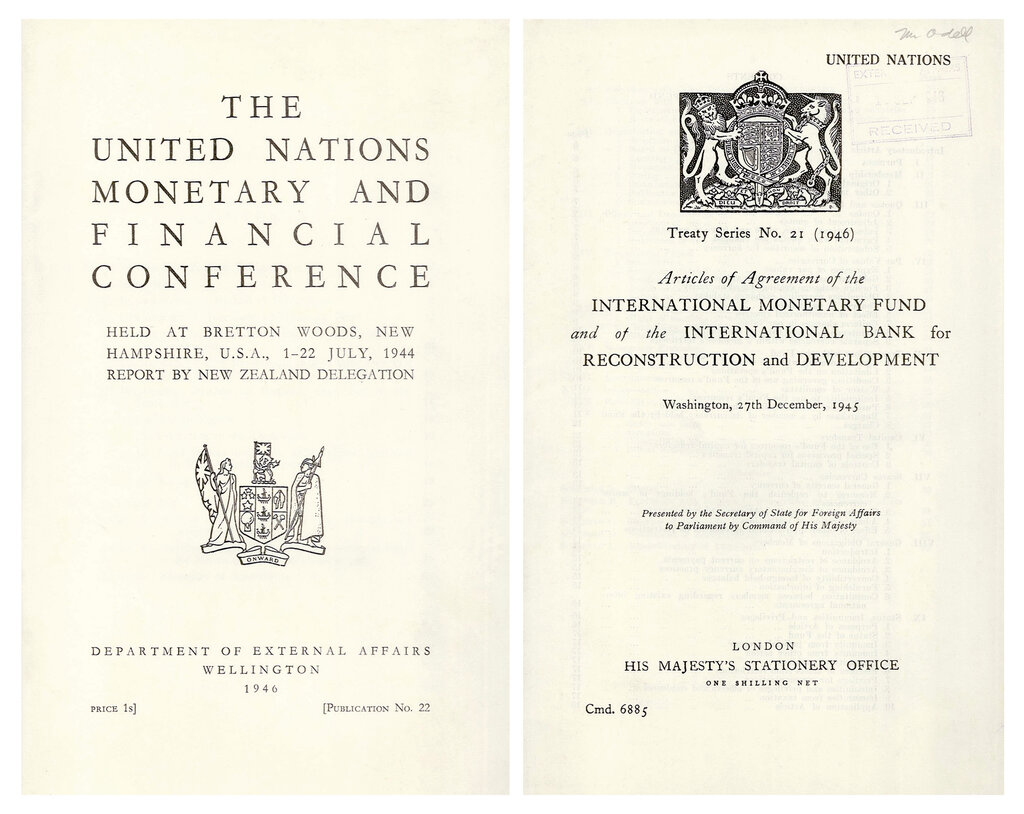
The rules and institutions governing all this activity make up the international monetary system. Historically, many currencies were tied to gold—the gold standard. A U.S. dollar was worth a specific amount of gold, as was the British pound, which fixed the exchange rate between them.
Today, we mostly have a system of floating exchange rates, where market forces determine currency values. This system is overseen by a couple of major players.
IMF
other
The International Monetary Fund works to stabilize the global economy. It monitors financial systems, provides policy advice, and offers loans to countries facing economic crises.
World Bank
other
The World Bank focuses on long-term development and poverty reduction. It provides financing and technical assistance to developing countries for projects in areas like infrastructure, education, and health.
The Foreign Exchange Market
The foreign exchange (forex) market is where currencies are traded. It’s the largest financial market in the world, with trillions of dollars changing hands every day. It isn't a physical place; it's a decentralized network of banks, corporations, and individuals.
Participants in the forex market use various financial instruments to manage their currency exposure.
Spot Transactions: An immediate exchange of one currency for another at the current market rate.
Forward Contracts: An agreement to buy or sell a currency at a predetermined price on a specific future date. This helps businesses lock in an exchange rate and avoid uncertainty.
Currency Swaps: An agreement where two parties exchange principal and/or interest payments on a loan in one currency for equivalent payments in another currency.
These tools allow international investors and businesses to manage the risks associated with fluctuating exchange rates, making global commerce possible.
A laptop costs ¥150,000 in Japan. If the exchange rate is $1 for every ¥150, what is the price in U.S. dollars?
What is the primary driver of currency value in a system of floating exchange rates?