Intermolecular Forces Explained
Introduction to Intermolecular Forces
Forces Between Molecules
Molecules aren't lonely islands. They are constantly interacting with their neighbors, attracting or repelling them. These interactions are called intermolecular forces. They're the invisible glue that holds substances together in liquid and solid states.
It's important not to confuse these with intramolecular forces. Let's break down the names:
- Intra- means within. Intramolecular forces are the strong chemical bonds that hold atoms together within a single molecule. Think of the strong covalent bonds holding two hydrogen atoms and one oxygen atom together to form a water molecule ().
- Inter- means between or among. Intermolecular forces are the weaker forces of attraction between separate, neighboring molecules. They're the reason water molecules stick to each other to form a puddle, rather than flying off as individual particles.
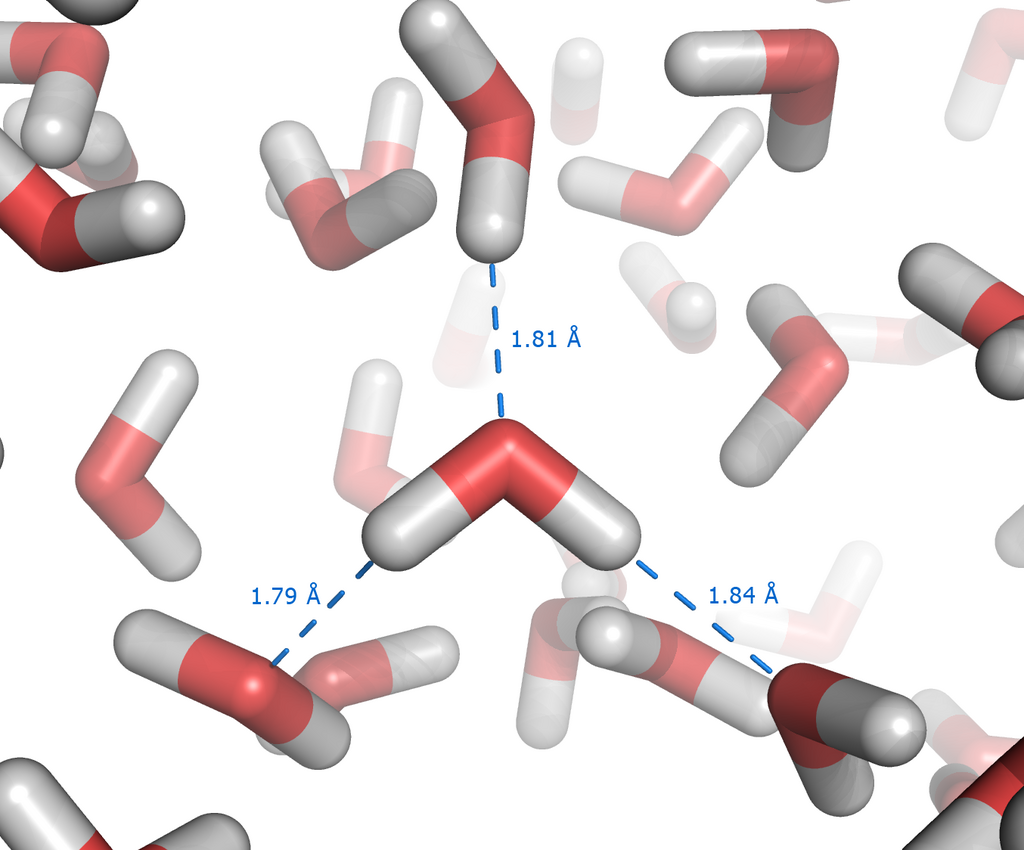
Think of it like a crowd of people. The bonds holding each person's body together are like strong intramolecular forces. The way people in the crowd interact—shaking hands or standing close together—is like the weaker intermolecular forces.
Intramolecular forces determine a substance's chemical properties, while intermolecular forces determine its physical properties, like its boiling point and melting point.
| Feature | Intramolecular Forces | Intermolecular Forces |
|---|---|---|
| What it does | Holds atoms together in a molecule | Attracts molecules to each other |
| Relative Strength | Very Strong | Relatively Weak |
| Example | Covalent bond in | Hydrogen bond between molecules |
Types of Intermolecular Forces
These forces come in a few different flavors, varying in strength. For now, we'll just get familiar with their names. In order from weakest to strongest, the three main types are:
-
London Dispersion Forces: These are temporary attractive forces that exist in all atoms and molecules. They arise from the random, fleeting motion of electrons.
-
Dipole-Dipole Interactions: These occur between polar molecules, which have permanent positive and negative ends. The positive end of one molecule attracts the negative end of another.
-
Hydrogen Bonding: This is a special, extra-strong type of dipole-dipole interaction. It only happens in molecules where hydrogen is bonded to a highly electronegative atom, specifically nitrogen (N), oxygen (O), or fluorine (F).
Understanding these forces is the key to explaining why water is a liquid at room temperature while oxygen is a gas, or why oil and water don't mix. We'll explore each of these forces in more detail later on.