Intermediate Yoga Theory and Practice
Intermediate Alignment Principles
Moving Beyond Basic Shapes
You’ve learned the basic shapes of yoga: where to put your hands in Downward Dog, how to bend your knee in Warrior II. Now, we move deeper. True alignment isn't about creating a perfect-looking pose. It's about understanding the internal forces at play, engaging specific muscles to create stability and space. It’s the difference between simply holding a shape and embodying it with intelligence.
This practice is guided by the principle of ''. This Sanskrit phrase from the Yoga Sutras translates to 'the posture should be steady and comfortable'. Steadiness (Sthira) comes from active muscular engagement and stability. Comfort (Sukham) arises from the space and ease you create within that stability. They are two sides of the same coin.
The ideas of consciously stacked joints to protect all the good stuff in and around them, alignment from the crown of your neck down to the bottoms of your feet, and activation of the Bandhas — feet flexed, belly up and in, pelvic floor lifting — are the roots of your entire practice.
The Pelvis as Your Foundation
Think of your pelvis as the foundation of your spine. Its position dictates the curve of your lower back and affects everything up to your neck. In many standing poses, the goal is a neutral pelvis, avoiding both an excessive forward tilt (anterior tilt) and a backward tuck (posterior tilt). An anterior tilt often leads to a 'swayback' posture, compressing the lumbar spine. A posterior tilt flattens the natural curve, which can strain the hamstrings and lower back.
Finding neutral involves engaging the deep core muscles, not just the superficial 'six-pack' abs. Actively lift the pelvic floor—the sling of muscles at the base of your pelvis—and draw your lower belly in and up. This creates a stable container and supports the lumbar spine from within. This subtle action is the key to unlocking stability in challenging poses like Warrior III (Virabhadrasana III).
In Warrior III, the tendency is to let the hip of the lifted leg hike up, which causes the pelvis to tilt and destabilises the lower back. Instead, focus on internally rotating the thigh of the lifted leg, rolling your inner thigh towards the ceiling. This helps level the two pelvic points (ASIS bones). Simultaneously, press firmly through the heel of your standing leg and engage your core to maintain a long, neutral spine from your tailbone to your head. Your body should form a solid 'T' shape, powered from your centre.
Shoulders, Spine, and Twists
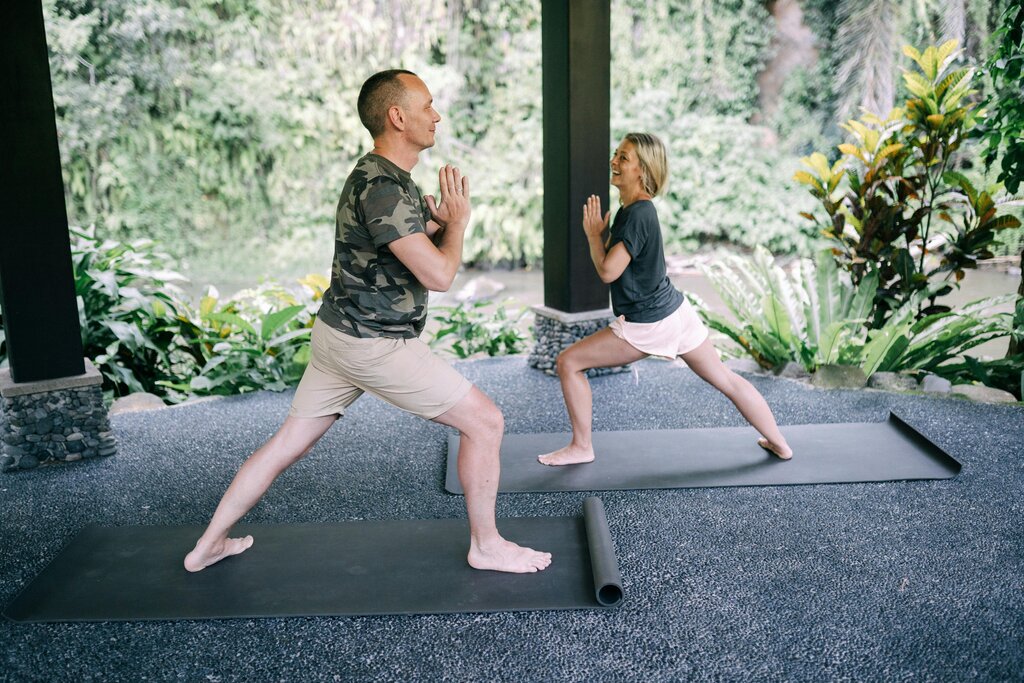
Just as the pelvis anchors the lower body, the shoulder girdle stabilises the upper body. In weight-bearing poses like Downward Dog or inversions, proper alignment protects the delicate rotator cuff muscles. Instead of letting your shoulders shrug up to your ears, think about externally rotating your upper arms (humerus). This simple action creates space in the shoulder joint. Try it now: hold your arms out. When you rotate your upper arms so your biceps face forward, you'll feel your shoulder blades settle down and away from your ears.
This external rotation is crucial for joint stacking—aligning joints vertically to bear weight efficiently. In a handstand, for example, your wrists, elbows, and shoulders should form a straight line. This alignment distributes force through the strong bones of the arm, reducing strain on the muscles and ligaments. Without this structure, the body has to work much harder to find balance, leading to fatigue and potential injury.
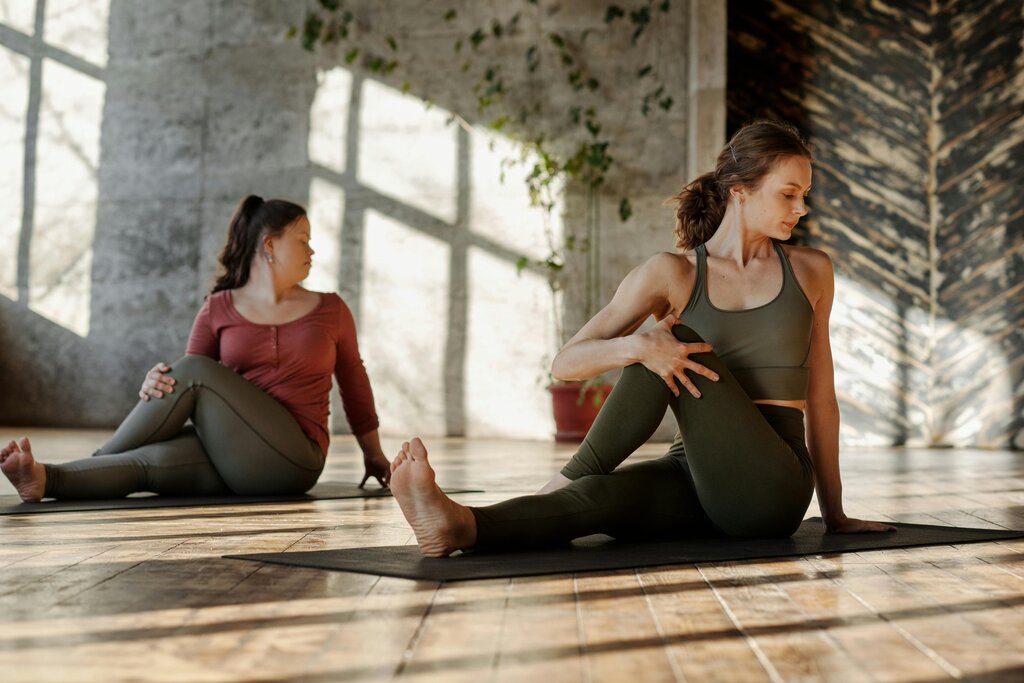
In deep twists like Revolved Triangle (Parivrtta Trikonasana), the spine's integrity is paramount. A common mistake is to initiate the twist from the lower back. The lumbar spine has very little rotational capacity; forcing it to twist can strain the intervertebral discs. The majority of spinal rotation should come from the thoracic spine (the upper and mid-back).
To twist safely, first create length. Inhale to lengthen your spine, imagining the crown of your head reaching away from your tailbone. As you exhale, engage your core to stabilise your pelvis and hips, keeping them as square as possible. Then, initiate the twist from your upper back, letting your ribs revolve around your spine. Your head and neck should be the last to turn. This keeps the twist honest and protects your vulnerable lower back.
Alignment is not a rigid set of rules but a dynamic conversation with your body. It's about finding that sweet spot of Sthira and Sukham in every pose, moving with intelligence, and building a practice that is both sustainable and transformative.
What is the core principle of 'Sthira Sukham Asanam' in yoga alignment?
To safely initiate a deep spinal twist like Revolved Triangle (Parivrtta Trikonasana), the rotation should primarily come from the thoracic spine (upper/mid-back).