Intermediate Spanish Mastery
Past Tense Mastery
Painting the Past
Telling a story in Spanish requires more than just knowing past tense verbs. It's about choosing the right tool for the job. Spanish offers two primary past tenses for storytelling: the preterite (el pretérito) and the imperfect (el imperfecto). Mastering them is the key to moving from basic sentences to rich, detailed narratives.
The essential difference to know is that the preterite is used for past actions that are fully completed and were done once at a specific time and the imperfect is for actions that were repeatedly performed in a past period of time.
Think of the imperfect as setting the scene. It describes the background, ongoing situations, habits, and what was happening. The preterite, on the other hand, describes the main events. These are the completed actions that move the story forward, the things that happened.
Let's see this in action. Suppose you're telling a story about your childhood.
Imperfect (Setting the scene): Cuando yo era niño, vivíamos en una casa pequeña. Todos los veranos, mis abuelos nos visitaban. (When I was a child, we lived in a small house. Every summer, my grandparents would visit us.)
These verbs describe ongoing states (being a child, living) and habitual actions (visiting every summer). There's no specific start or end.
Preterite (The main event): Un día, mi abuelo me regaló una bicicleta. Ese día, aprendí a montarla. (One day, my grandfather gave me a bicycle. That day, I learned to ride it.)
These are completed, one-time events. The giving and learning happened and were finished. The story is moved forward by these specific moments, set against the backdrop of the imperfect.
Irregular Stems
While regular preterite endings are straightforward, many of the most common verbs are irregular. Instead of just changing the ending, their entire stem changes in the preterite. The good news is that once you learn the new stem, they all share the same set of endings.
These verbs don't have accent marks in the preterite. Let’s look at a few common you'll use constantly.
| Infinitive | Preterite Stem | Example (yo) |
|---|---|---|
| tener (to have) | tuv- | tuve |
| estar (to be) | estuv- | estuve |
| poder (to be able to) | pud- | pude |
| poner (to put) | pus- | puse |
| saber (to know) | sup- | supe |
| querer (to want) | quis- | quise |
| venir (to come) | vin- | vine |
| hacer (to do/make) | hic- (hiz- for él/ella/ud.) | hice |
Notice the special case for hacer in the third-person singular (él/ella/usted). The 'c' changes to a 'z' to preserve the 's' sound: hizo. This is a common spelling change rule in Spanish.
Spain vs. Latin America
Here's a key regional difference you need to know. In most of Spain, speakers use the Present Perfect (pretérito perfecto compuesto) for recent past actions, especially those that occurred on the same day. This tense is formed with the present tense of the verb haber plus a past participle.
For example, to say "I ate paella today," a speaker in Madrid would likely say: Hoy he comido paella.
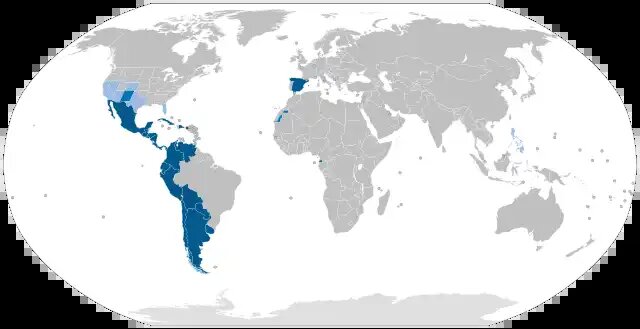
However, in most of , it's far more common to use the simple preterite for any completed past action, regardless of how recent it was. A speaker in Mexico City would almost always express the same idea using the preterite: Hoy comí paella.
Both are grammatically correct, but usage depends heavily on geography. If you're communicating with people from a specific region, adapting to their local preference will make your Spanish sound much more natural.
Now, let's bring it all together. Imagine telling a story about a past job. You'd use the imperfect to describe your routine and the setting, and the preterite for specific events that happened.
Yo trabajaba como camarero en un restaurante italiano. Cada noche, el restaurante estaba muy ocupado. Una noche, el chef renunció en medio del servicio. Todos nos quedamos en shock.
Translation: I worked (used to work) as a waiter in an Italian restaurant. Every night, the restaurant was very busy. One night, the chef quit in the middle of service. We were all in shock.
Ready to test your narrative skills?
Which tense is used to "set the scene" in a story by describing ongoing situations, habits, or what was happening in the background?
Choose the correct verb conjugations to complete the sentence: Mientras yo ______ (cocinar), el teléfono ______ (sonar).
Choosing between the preterite and imperfect will become more intuitive with practice. Try telling simple stories about your day or childhood memories, focusing on distinguishing between the background scenery (imperfect) and the plot points (preterite).