Intermediate Sketching and Form Construction
Advanced Constructive Drawing
Beyond Flat Shapes
You already know how to draw circles, squares, and triangles. The next step is to stop seeing them as flat outlines and start treating them as solid forms in three-dimensional space. Think of spheres, boxes, and cylinders as your fundamental building blocks. Almost any complex object you can imagine can be broken down into these simple, manipulated primitives interacting with each other.
The goal is to construct objects on the page, not just copy their contours. This shift in thinking is what separates sketching from truly understanding form.
Manipulating Forms in Space
A primitive isn't a rigid shape. It's a starting point you can stretch, bend, squash, or twist to match the object you're drawing. A banana can begin as a bent cylinder. A car's body might be a stretched and tapered box. This is form manipulation.
More importantly, these forms can intersect. When one primitive passes through another, you have to understand how their surfaces meet. Visualizing where a cylinder enters and exits a sphere, for instance, is key to creating a believable connection between parts. This isn't just about the final outline; it's about understanding the object's internal geometry.
Capturing the Essence of Form
Before you draw a single confident line, you need to search for the form. Two techniques are essential for this: enveloping and ghosting.
First, you create an envelope. This is a simple, loose shape that contains the entire object. It's not the final outline, but a boundary that captures the overall proportions and gesture of your subject. It helps you place the object on the page and establish its scale.
Once the envelope is set, you begin lines. This means drawing lightly and repeatedly, sketching through the forms as if they were transparent. You aren't committing to any single line. Instead, you're using a flurry of faint marks to find the correct placement of your primitives, define their volumes, and map out how they connect. These ghosted lines build up the internal structure that will support the final drawing.
By understanding the fundamental elements of drawing, such as lines, shapes, and proportions, lays the groundwork for more complex compositions.
Internal Structure vs. External Silhouette
The final outline of your drawing, its , should be a direct result of the solid forms you've built underneath. A common mistake for beginners is to focus only on the silhouette, which leads to flat, lifeless drawings. When you construct an object from the inside out, the final contour lines are simply where the form turns away from you.
Think of an architect's blueprint. The internal structure, supports, and room layouts are all defined before the external walls are finalized. Your drawing works the same way. The ghosted primitives are your structural beams. The silhouette is the facade that becomes believable because of the solid framework supporting it.
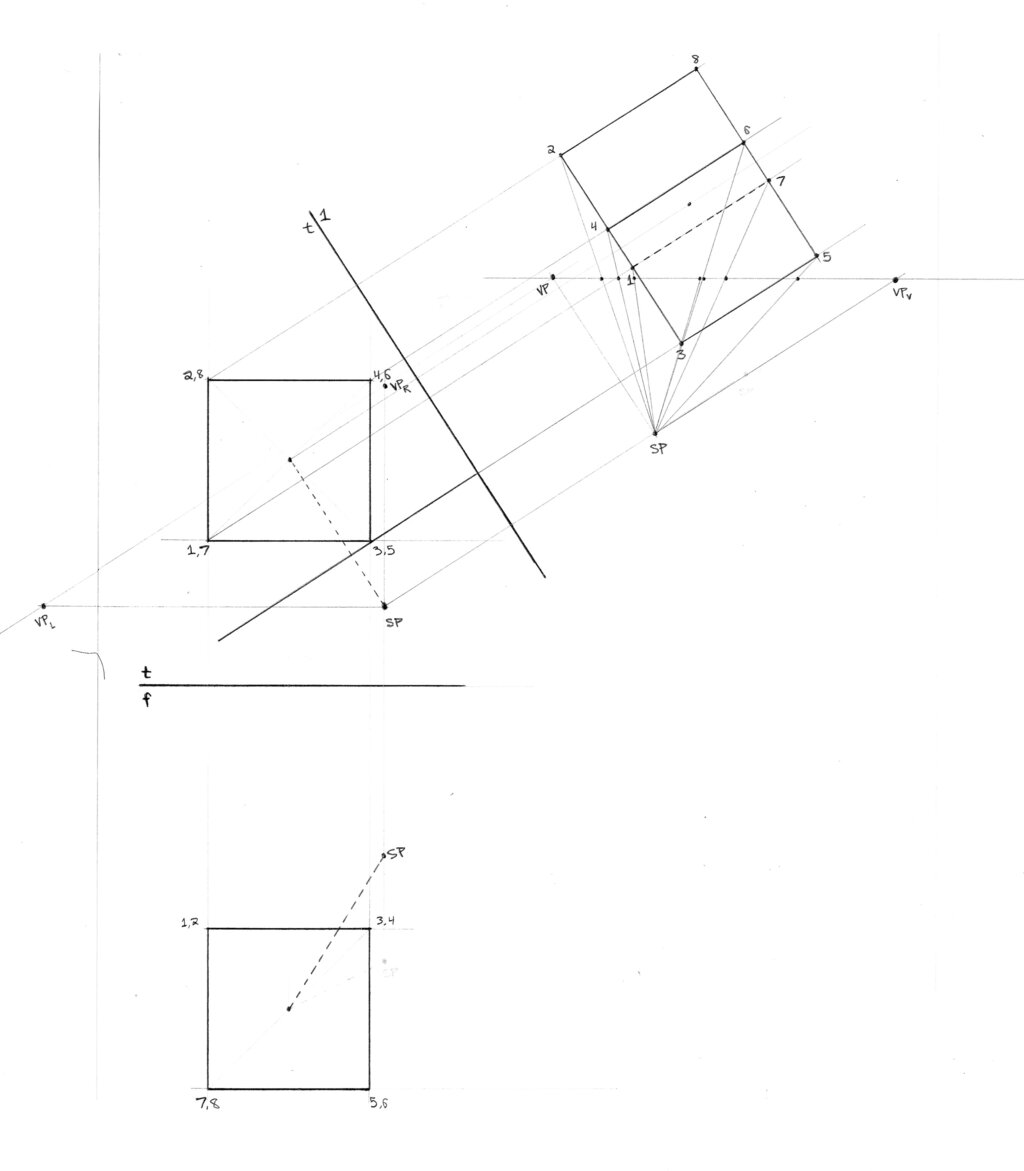
A good exercise is to take an everyday object, like a stapler or a computer mouse, and place it at an unusual angle. Now, try to draw it.
Instead of starting with the outline, begin by identifying the basic primitives. A mouse might be a flattened, tapered box combined with a section of a sphere. A stapler is essentially two long boxes connected by a cylinder at a pivot point. Sketch the envelope first, then ghost in these forms, paying close attention to how they intersect. Only when you feel the object's volume and weight on the page should you begin to refine the final silhouette.
Let's review the core concepts we've covered.
Ready to test your understanding?
What are the fundamental building blocks, or "primitives," for constructing complex objects in three-dimensional space?
A beginner's drawing of a car looks flat and lifeless. Based on the text, what is the most likely reason for this?
Practicing this constructive method will fundamentally change how you see the world. You'll start to deconstruct everything around you into its core geometric components, building a deeper, more intuitive understanding of form.